“Do you know,”
Jhon asked me, shivering slightly in the lengthening afternoon shadows of New York’s Penn Station, “do you know if we can stay here – in America?”
Jhon is a wiry 42-year-old construction worker who fled Ecuador a month ago with his wife and four children. The recent surge of narco-violence there had gotten so bad, he said, that the local school switched to virtual classes for the safety of the students and their parents.
Now, after a trying journey by foot, boat, bus, and train, he was standing in the middle of New York City, bewildered but hopeful.
“I just want to work,” he told me. “I don’t want anyone to take care of me or to rely on anyone else. I just want to be able to work.”
But in those early moments, Jhon and his family did need help – to find their way to New York’s intake center for migrants seeking shelter, to learn to navigate the city’s byzantine health and legal systems, to stay on track with their asylum applications.
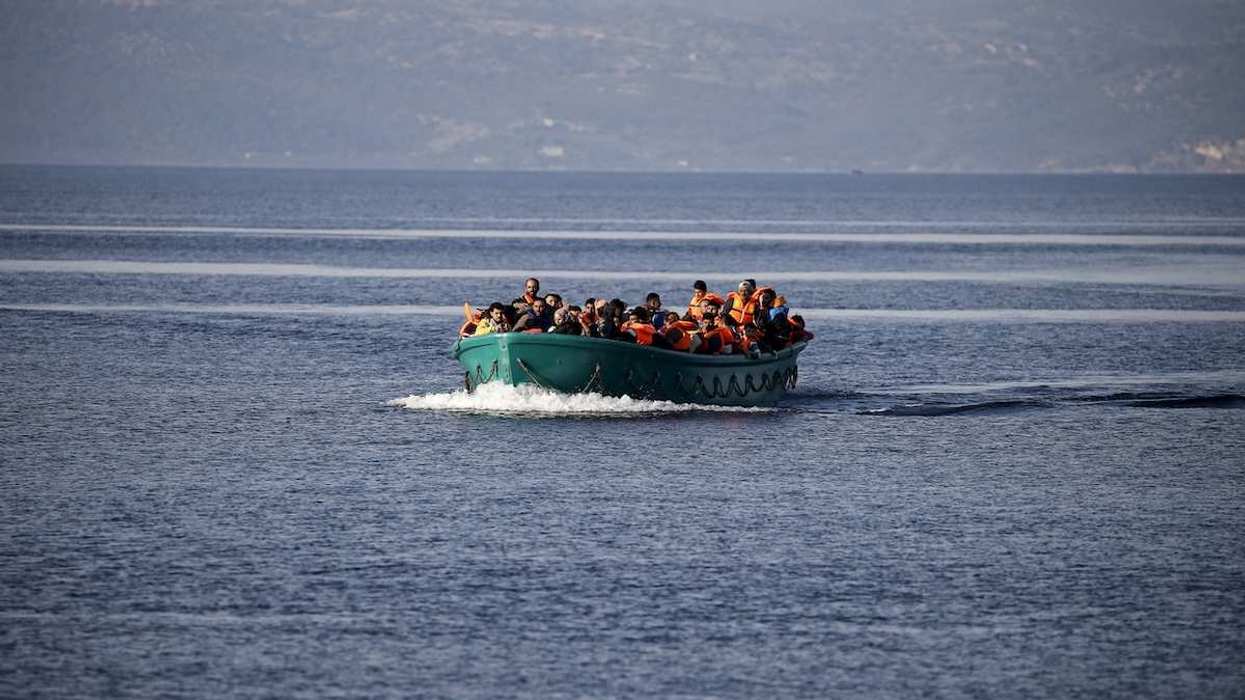
In that way, he is like many of the more than 170,000 undocumented migrants who have arrived in New York City over the past two years, most of them on buses from Texas.
The city government says it’s struggling to deal with the influx. Mayor Eric Adams has warned that providing services to the migrants will “destroy this city” and cost more than $12 billion. But a small group of grassroots non-profits has stepped up to welcome, orient, and support the new arrivals.
I met Jhon while shadowing Power Malu, an Afro-Puerto Rican activist from New York’s Lower East Side, whose Artists Athletes Activists organization is one of the subjects of a new report I’ve been working on for our TV show “GZERO World with Ian Bremmer.”
Nearly every day and night for almost two years, Power’s been at Gotham’s various bus and train stations, welcoming migrants like Jhon, giving a guiding hand to people who arrive in a city of millions after a journey of months and simply don’t know whom to trust or where to go.
Over the past few weeks, we’ve spent many hours with Power and other activists in New York – like Adama Bah, a formerly undocumented migrant from Guinea who has built the largest Black-oriented migrant services network in the city (a big deal given that migrants from Haiti or West Africa are chronically underserved by systems geared mainly towards Latinos), and Ilze Thielmann, who started a free “store” that gives clothing, strollers, and toiletries to recent migrants.
Along the way, we met people like Igor, a refugee from violence in Burundi who left behind a cushy job as an IT manager and traveled through Mexico on foot with his pregnant wife to get to the US. He finally got asylum several weeks ago.
Or Brandon, from Venezuela, who braved the treacherous Darién Gap and the constant gauntlets of extortion, kidnapping, and violence in Mexico on his journey to New York, and who now works with Power to welcome others who followed the same route.
Why did my producer Molly Rubin and I pick this subject? Migration is now the top political issue in America. A recent poll showed close to three in 10 voters say border policy is their primary concern, topping the list for the first time since 2019, and outstripping other perennial contenders like “the economy,” “inflation,” or the always exciting “crime.”
But when it comes to the crisis at the southern border and its impact on Northern cities, the gigantic numbers can dull your sense of what is actually happening here: A story about “millions” of migrants crossing the border, or the “billions” of dollars it will cost, is still a story about individual human beings, with names, who have lived stories of tremendous suffering, perseverance, and dedication.
“Everything is political,” we often say at GZERO. And that’s true. But everything political is ultimately personal too. If it’s not, why would it matter at all?
This is one story that Molly and I hope will drive that home. You can check it out here, and let us know what you think.
Learn more about the organizations mentioned in this report: