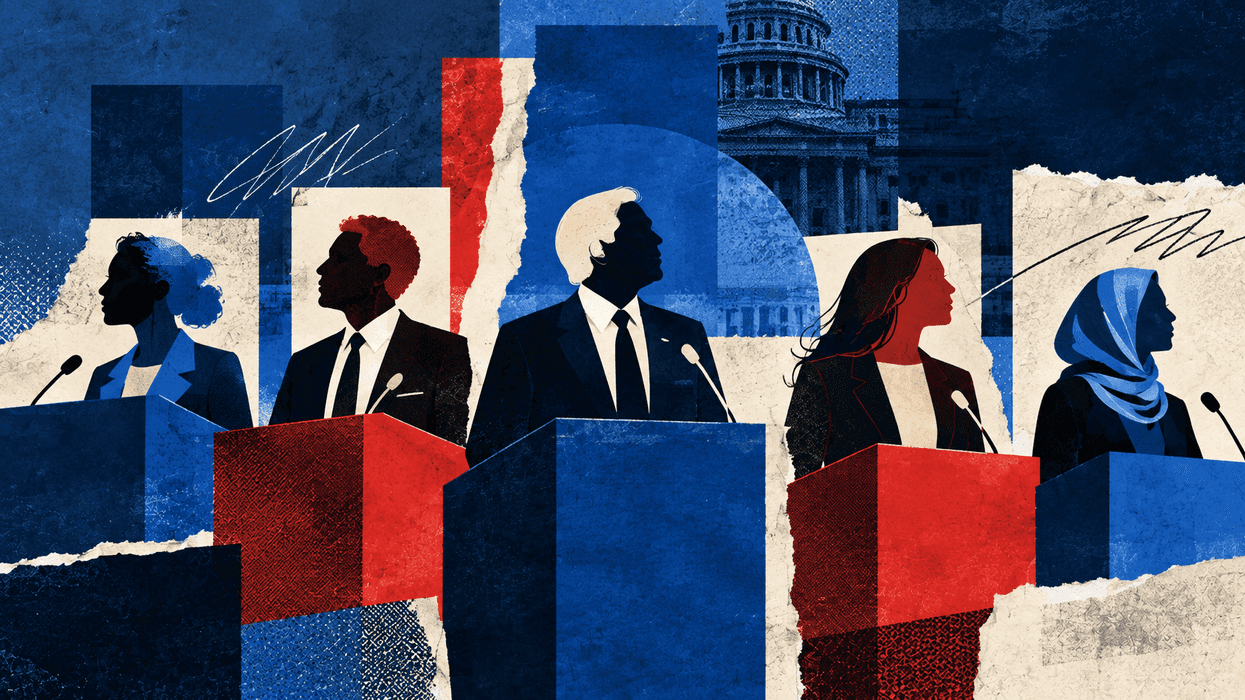
This GZERO 2024 election series looks at America’s changing voting patterns, bloc by bloc.
________________________________
In 2019, Mohamed S, an Egyptian-born investment consultant who had lived in New York for more than 20 years, finally decided to apply for US citizenship, for one reason:
“I wanted to vote against Donald Trump.”
But the pandemic delayed his naturalization until after the election. Next month will be the 47-year-old’s first chance to vote in a US presidential race. But this time, Mohamed says, he’s not going to cast a ballot at all.
Mohamed, who asked that we not use his last name over concerns his views might affect his business, said that while he still opposes Trump, the Biden administration’s Gaza policy has made it impossible for him to support a Democrat this fall.
“Why would I vote for a person who has provided weapons and funding that have been used to kill children who look exactly like my son, speak the same language as my son?” Mohamed asks. “That’s an outrageous thing to expect me to do.”
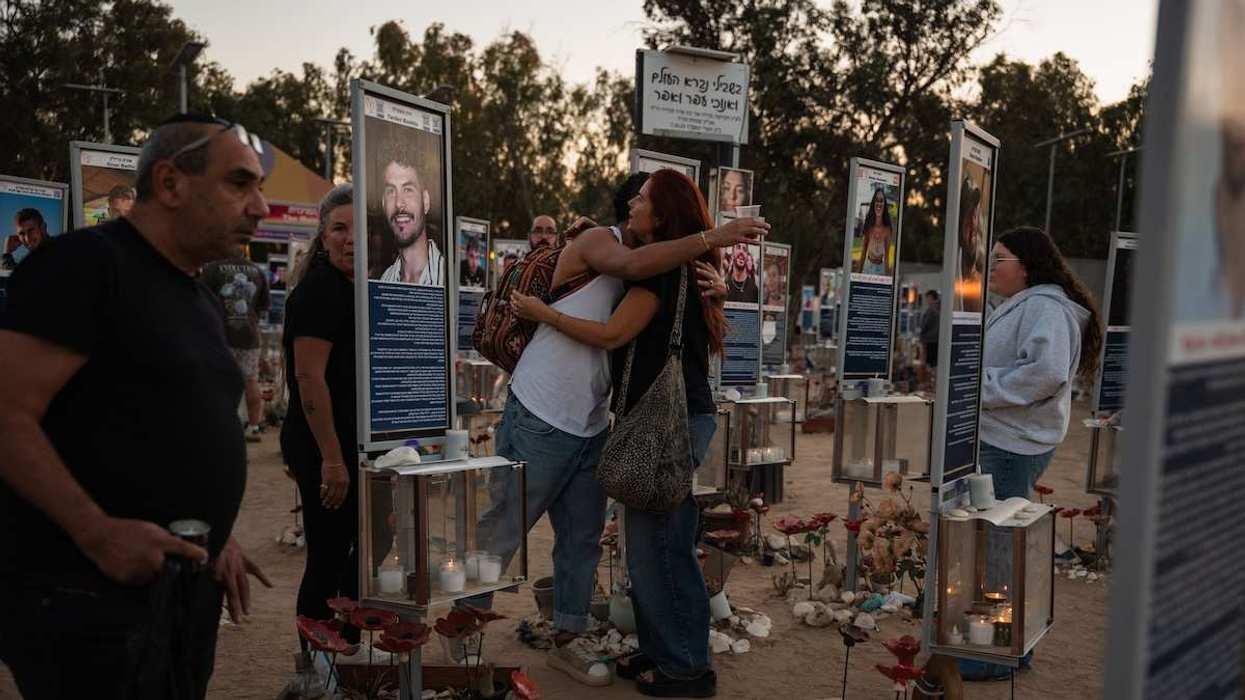
Mohamed’s views echo wider shifts in the Arab American community in the year since Hamas’ murderous rampage through southern Israel on Oct. 7, 2023, provoked an Israeli response that has killed at least 40,000 people in Gaza and displaced nearly 2 million, according to local authorities. Israel has faced charges of genocide in international courts.
A small community with big electoral power
About 4 million people in the United States identify as Arab Americans. They are a community of diverse faiths, national origins, and viewpoints. Roughly two-thirds are Christian, and one-third are Muslim. They have a large presence in key swing states like Michigan, comprising about 5% of the electorate there, and Pennsylvania, where they make up about 2%.
The war in Gaza looms large for them. More than 80% in a recent poll by the Arab American Institute, an advocacy group, said it’s their top election issue.
That marks the first time that any conflict in the Middle East has topped the list of concerns among Arab Americans, says AAI chairman James Zogby.
“It’s a genocide. And the administration’s response has been abysmal,” says Zogby, “not just in its full-throated support for Israel, but in its failure to put any restraint on Israel.”
Democrats are now paying the price
For decades, Arab Americans were a reliably blue voting bloc. Only about a third of the community ever voted Republican. In 2020, Biden got 59% of the Arab American vote against Trump’s 30%.
But the AAI poll, taken in early October, showed Trump edging out Harris 42% to 41% among Arab American voters — a 12-point swing in Trump’s favor. Expected turnout, meanwhile, has fallen from a historical average of 80% to around 60%.
Given that Biden won Michigan by less than three points in 2020, and Pennsylvania by just over one point, Arab American voters’ choices – not only about whom to vote for but whether to vote at all — could shape the outcome in November. At the moment, Harris leads Trump by roughly one point in both states.
Feeling ignored at a fraught moment
Zogby says weak outreach from the Democrat camp has hurt Harris. The Democrats’ rejection of calls for a Palestinian speaker at the Democratic National Convention stung, and the failure to hold high-level meetings with Arab American leaders — as opposed to lumping them in as part of a broader outreach to Muslim Americans — has made the community feel marginalized at a painful time.
“I’d love for her to call for a cease-fire, of course, but if she just got up and gave a speech in Michigan and said, ‘I want your support, I know we have differences, but I know we can talk them through, it would make a difference,” says Zogby.
Some Arab American voters are going further than simply staying home on Election Day.
“Six months ago, I was a Democrat,” says Bishara Bahbah, a Jerusalem-born, Harvard-trained academic and journalist. Now he is the founder of Arab Americans for Trump.
“I came to the conclusion that not only do I not want to vote for Biden or Harris, I want to actually punish them,” says Bahbah, a Palestinian Christian who grew up in East Jerusalem and now lives in Arizona.
Financed by Bahbah himself, Arab Americans for Trump has been coordinating events with Massad Boulos, the Lebanese-born businessman and father-in-law to Trump’s daughter Tiffany, as well as former Ambassador Richard Grenell, who was Trump’s acting director of national intelligence. Bahbah has met with Trump directly at least once, he says.
The Trump campaign has sought to expand its small base of Arab American support with pledges to cut taxes, crack down on undocumented immigration, and defend traditional views on gender, which plays well in many socially conservative Arab households.
A recent endorsement by Amer Ghalib, the Yemen-born mayor of Hamtramck, a Detroit suburb and the only US city with an all-Muslim local government, has helped the Trump effort.
Bahbah dismisses concerns about Trump’s history of strongly pro-Israel policies and his recent pledge to bring the US “closer [to Israel] than it’s ever been.”
“The difference is the Democratic camp has blood on their hands,” says Bahbah, who says he lost three relatives in an Israeli airstrike on an ancient church in Gaza last October. “President Trump does not.”
Bahbah is confident that Trump, without reelection to worry about, would make a push for a two-state solution after all.
“I think he is interested in leaving a legacy of a peacemaker.”
Not everyone who has soured on the Democrats shares that optimism about Trump.
“I’m not naive enough to believe that Trump would be better,” says Mohamed, the New York-based consultant. “I just don’t see a scenario in which Kamala Harris wins and things change in Gaza.”
But Zogby still sees more opportunity with a Democrat in the White House than not.
“There’s a coalition that exists in the Senate around Palestinian rights,” he says. “I would rather be fighting alongside them with a Democratic president than with a Republican president or a Republican Congress that wouldn’t give a shit at all.”
“People tell me it can’t be worse,” he says, “but it can always be worse.”