The “prisoner's dilemma” with AI regulation
In recent days, the bosses of the top US AI companies have supported more stringent regulation of the industry. Their statements came after a viral post from an Anthropic employee who said he quit over fears that AI could “kill us all.” A strong majority of US voters want more regulation, but the companies themselves face a classic “prisoner’s dilemma”: slowing progress only works if everyone does it. But if everyone does, any one company that doesn’t stands to reap huge rewards, given how transformative (and lucrative) the AI race is. Could government keep everyone in line? Maybe, but not everyone thinks that’s a good idea given the geopolitical stakes. President Donald Trump said over the weekend that any “guardrails” shouldn’t hamstring the US in its broader competition with Beijing.
Saudi runs out of routes for its oil
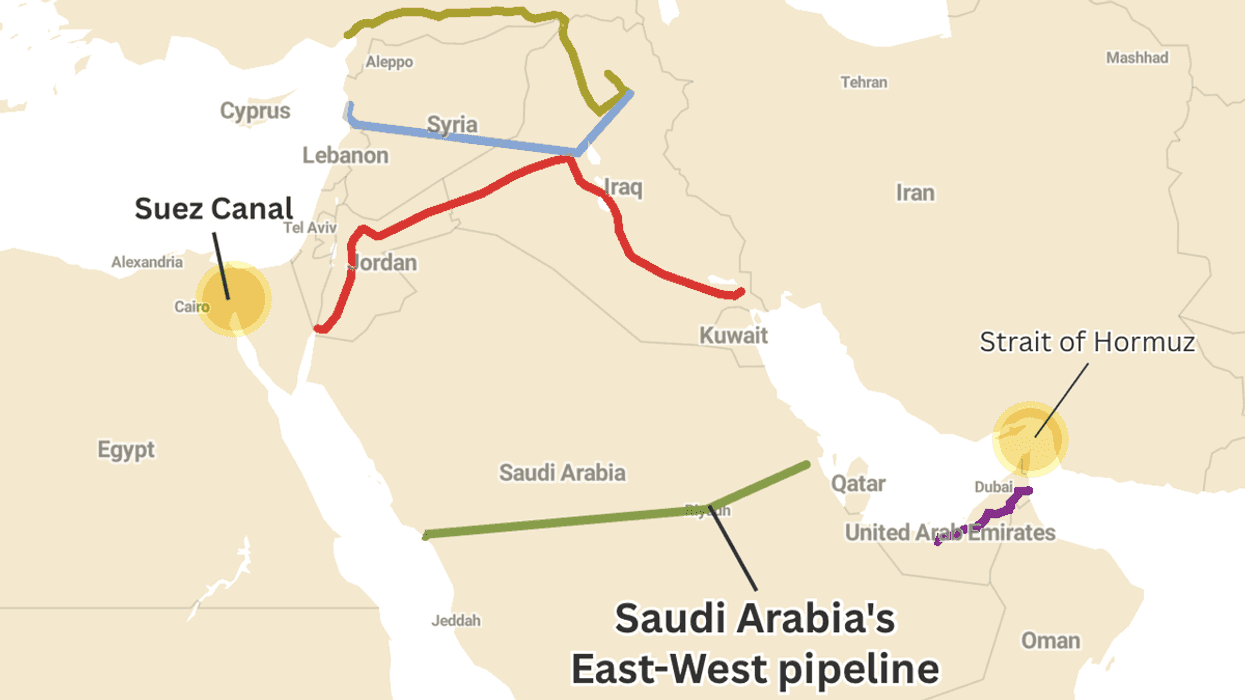
Saudi Arabia has shut down its East-West pipeline over the weekend after drone attacks by Iran-backed militias in Iraq damaged the crucial export route. The move comes just days after the Iran-backed Houthis seized control of the Bab el-Mandeb Strait from Saudi-backed Yemeni government forces following a rapid and unexpected offensive on Friday. Together, the developments are a massive blow to Saudi oil exports. The Kingdom had been sending nearly 75% of its oil through the East-West pipeline and onward through the Bab el-Mandeb amid disruptions to the Strait of Hormuz. Now, with the pipeline offline and the Bab el-Mandeb effectively closed to Saudi shipping, it has few options left to get its oil to global markets. Oil prices have already climbed above $108 a barrel, and the risk of taking Saudi crude – roughly 4% of global supply – off the market could push prices even higher.
Things go left for Sweden’s right
A coalition led by Sweden’s Social Democrats eked out a narrow victory over the current center-right government in Sunday’s general election. The big surprise was the poor performance of the far-right Sweden Democrats, whose hardline immigration message had propelled them to second place in the 2022 election. Although they were still shut out of the governing coalition after that election, they reached an agreement to provide tactical support to the government on key votes. This time around, they are on track to lose 11 seats, their first decline ever. Analysts cited broader unease that the party, which has its roots in (since disavowed) ultra-nationalist and neo-Nazi movements of the 1980s, could actually enter government. But in a sense the party has already won an important victory — over the past four years it successfully pushed for significant restrictions on Sweden’s famously permissive immigration policies. Even under a new center-left government, the country is unlikely to return to that.