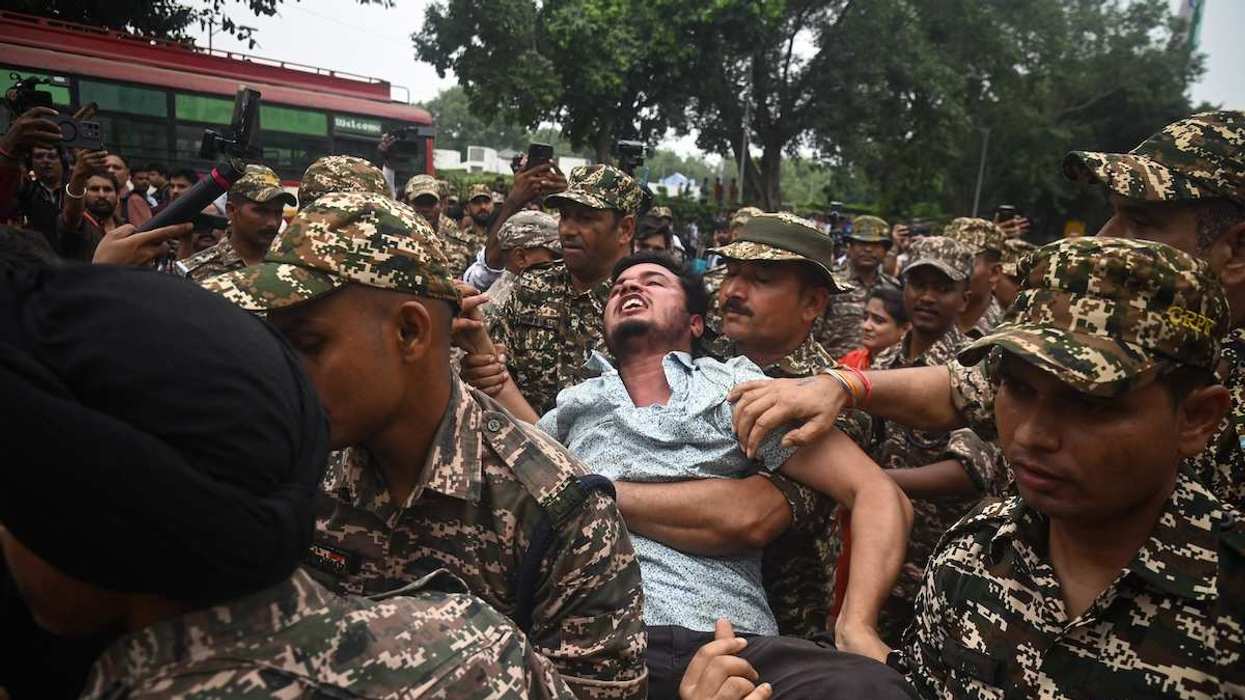
Last Friday, as millions of Spaniards prepared to travel for a national holiday long weekend, residents of Madrid were told to stay put as the left-wing national government declared a fresh state of emergency to curb rising coronavirus cases... overruling the capital region's conservative leader, who wanted only a partial lockdown to avoid deeper damage to local businesses.
As is the norm in Spanish politics nowadays, each side accused the other of playing politics with a public health crisis that has killed nearly 33,000 Spaniards. It's just the latest example of how increasingly poisonous politics are infecting a country now struggling to contain a second wave of COVID-19 while enduring the deepest economic crisis in nearly a century.
Pandemic mismanagement. After Italy, Spain became the second major European country to impose a draconian national lockdown against the coronavirus in March. But soon after the curve of infections and deaths flattened, socialist Prime Minister Pedro Sánchez pushed to reopen — much faster than Italy — in time for the summer tourism season.
Once COVID-19 cases started surging again, the minority coalition government had its hands tied: any enforceable nationwide plan required support from either conservative opposition parties, or from Basque and Catalan nationalist forces.
With few other options, the prime minister delegated to regional leaders. The poorly coordinated response failed to prevent a second wave of the coronavirus, prompting other European countries to tell their citizens to stay away from Spain.
Political impasse. Let's step back for a moment. COVID-19 arrived in Spain at a politically fragile moment, less than two months after its minority coalition government took power following two national elections in 2019 that failed to yield a parliamentary majority. But the political stalemate continues: while the current government has full executive authority, it remains dependent on smaller parties outside the cabinet for the voting majority needed to pass laws.
Catalan separatists, in particular, have so much leverage that, to get his national budget approved, Sánchez has dangled pardons for Catalan separatist leaders who are now in jail for unilaterally trying to break away from Spain in late 2017.
On the other side of the aisle, the conservative opposition is fragmented and mostly unwilling to work with Sánchez. The establishment Popular Party hopes to weaken him enough to win the next election in 2023, but popular support for the socialists has remained steady. Meanwhile, the far-right Vox party continues to rise in the polls with its populist rhetoric against Podemos, the leftist junior partner of the coalition government, over its support for an independence referendum in Catalonia and (alleged) links to Venezuela.
Economy takes a back seat. While Spanish political leaders bicker, the economy is taking a beating. GDP is expected to contract by more than 12 percent this year, the worst decline in the European Union, with tourism and hospitality — which together represent a quarter of the economy — as the hardest-hit sectors.
Spain faces sky-high unemployment and a wave of bankruptcies when the government runs out of money for ailing businesses and furloughed workers. It's too early to say whether a pilot universal basic income program has kept most low-income Spaniards out of poverty.
The government has pinned hopes for economic survival on the 140 billion euros (more than $163 billion) that Spain will get from the EU's coronavirus rescue package. However, most of the money will not be disbursed until at least next year, and is tied to structural economic reforms on the labor market and pensions that Sánchez is reluctant to approve.
The bottom line: No matter how bad things get, though, Sánchez isn't going anywhere. Only an impossible coalition of conservatives and moderate nationalists could remove him before 2023. Even then, the Spanish political representation system — which favors regional parties and punishes fragmentation — means a new vote probably won't swing the balance of power in parliament.
Spain's problems are obvious. Solutions are anything but.