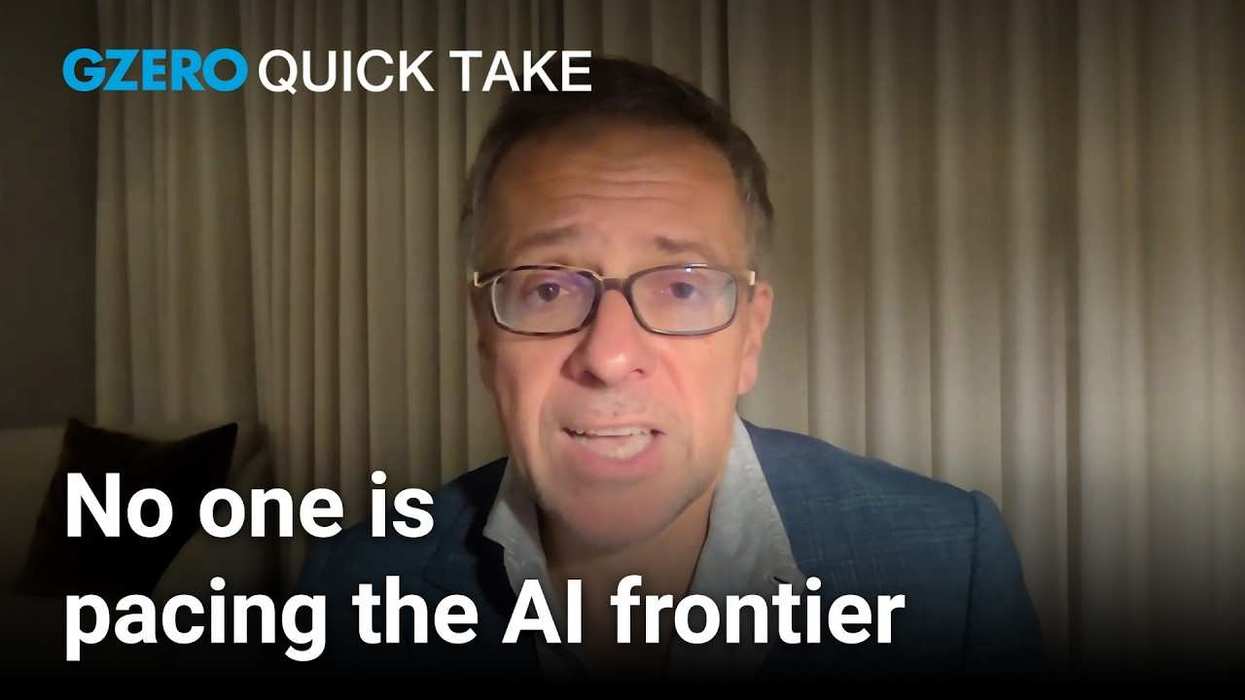
GZERO’s Ian Bremmer has a new book out, and his timing is uncanny in both good ways and bad. It’s called “The Power of Crisis: How Three Threats – and Our Response – Will Change the World.” His central argument is that the world needs a crisis. Why? Because the right kind of threat can help foster the global cooperation we’ll need to manage future existential crises.
Ian originally intended to focus the book on the dangerous direction of US-China relations, climate change, and the ever-increasing injection of disruptive new technologies into the world’s bloodstream. All these subjects still get much of his attention.
But during the writing, history threw Ian two major curveballs, both of which, he says, bolster his argument. A few months after he began writing, the world was rocked by a global pandemic. Two years later – and 48 hours before the publisher finished with final edits – Russia invaded Ukraine.
If you’ve read any of Ian’s previous books, you know there will be some scary ideas in there. To play off of the famous army base billboard from “Doctor Strangelove,” risk is Ian’s profession.
But he insists this book is the most optimistic he’s written. Here’s the logic.
In many ways, the global response to COVID-19 has been a disaster. In China, state authorities chose secrecy over cross-border transparency in the outbreak’s early days, and in the US, responses to the virus got caught up in culture-war politics. At least 15 million have died worldwide. But, says Ian, scientists, public policy experts, and government leaders at every level have helped create and disseminate innovative treatments and vaccines at record speed, and these inventions will spur future breakthroughs across science and medicine.
In addition, writes Ian, without the unprecedented COVAX project, “the problems of vaccine hoarding and inequality between rich and poor nations would have been even worse than they were.” He adds that the “willingness of some countries to export excess supplies of vaccines … created a blueprint for shared sacrifice at a time of serious political and economic stress for all these countries.” That blueprint will save countless lives in future health emergencies.
It took a Russian invasion of Ukraine to unify NATO and the EU, giving them a new sense of purpose. That might well matter for a future crisis – in Europe and beyond. Vladimir Putin’s war even has Democrats and Republicans speaking from the same set of talking points on at least one issue. None of this has spared Ukraine the deaths and dislocations the war continues to inflict, but Russia’s invasion may have helped deepen Ukraine’s national pride, which can be carried forward toward a better future.
Yet, the crisis that can do the most good, says Ian, is one that is large enough to frighten political leaders, business decision-makers, scientists, and political activists toward more cross-border cooperation … but not so big that it cripples their ability to respond.
Neither the current pandemic nor the ongoing war is big enough, Ian warns. Climate change offers the best grounds for optimism, but the introduction into our lives, workplaces, and battlefields of ever-more disruptive technologies might create challenges that develop faster than we can handle.
There’s a lot to argue over in this book. I hope you’ll give it a read and tell us what you think.
This article comes to you from the Signal newsletter team at GZERO Media, a subsidiary of Eurasia Group that offers balanced, nonpartisan reporting, and analysis of foreign affairs. Subscribe today for your free daily Signal.