The bloody conflict between Israel and Hamas is now in its second week. Hamas militants are firing rockets at major population centers in Israel, while the Israeli military continues to pound the densely-populated Gaza Strip with artillery and missiles. More than 200 Palestinians are dead and at least 10 Israelis have been killed.
Given the lopsided death toll and the humanitarian impact of the fighting in the Gaza Strip, critics of Israel's campaign have called on the US, Israel's closest ally, to do more to stop the violence.
Until Monday evening, the Biden administration had pointedly avoided calling publicly for a ceasefire, allowing more time for Israel to respond to the ongoing Hamas rocket attacks, but also deepening the humanitarian impact on the people of Gaza.
Why didn't the US intervene before the death toll mounted? And what kind of leverage does Washington, in practice, have over the situation?
A few things to consider.
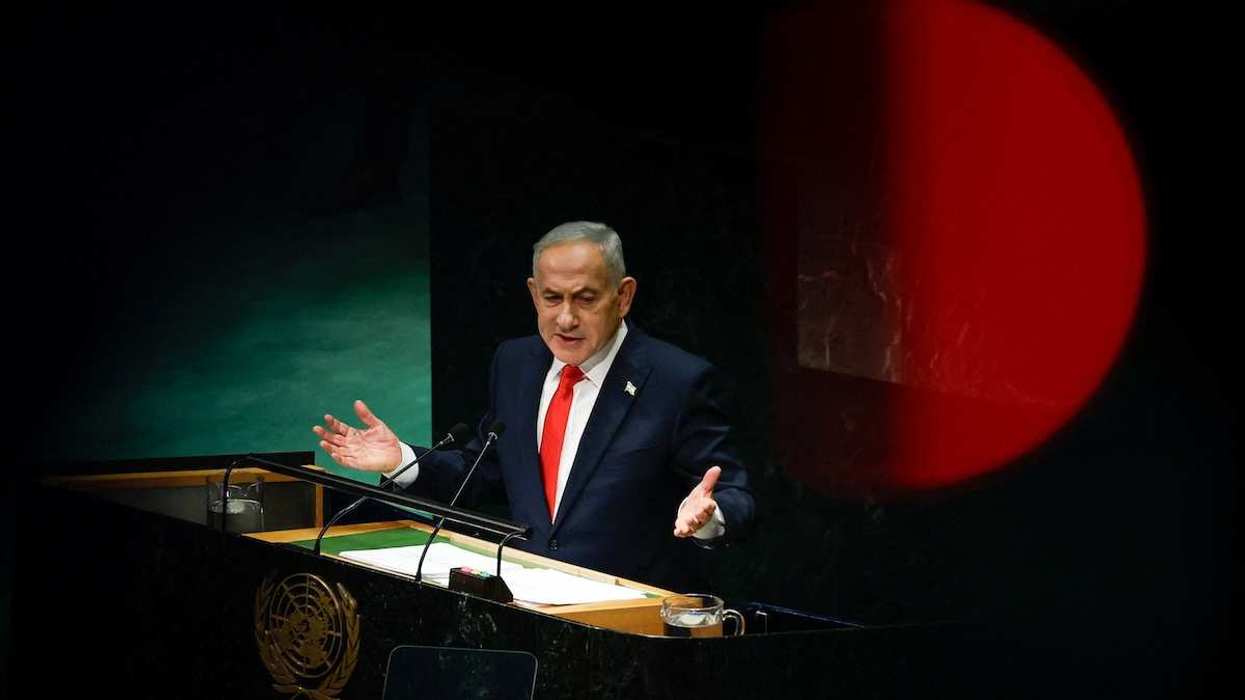
Powerful as the US is, Biden probably can't just pick up the phone and order the Israelis to stop targeting Gaza. If he did, Prime Minister Benjamin "Bibi" Netanyahu would almost certainly ignore him. Yes, the rightwing Netanyahu is ultra-hawkish when it comes to the Palestinians, but it's hard to imagine any Israeli prime minister, even from the left, calling off a strong military response in Gaza while rockets are raining down on Tel Aviv and Jerusalem. Even Merav Michaeli, leader of the leftwing Labor party, hasn't opposed the military campaign itself.
In fact, so far no major Jewish Israeli political leaders, from left or right, have done so. While Jewish Israelis may differ sharply on other aspects of the conflict such as settlements policy or the best path to a two-state solution, on this there is mostly broad consensus. A recent poll showed that 72 percent of Israelis oppose a ceasefire at the moment. That's a wall of support that even a phone call from the US president would be unlikely to crack.
What about holding back arms sales or military aid? The US supplies $3.8 billion in military aid to Israel annually, as part of a decade-long agreement reached in 2016 under the Obama administration. Washington is also Israel's main arms dealer, and in principle, these are powerful tools that Biden could use to influence Israeli behavior. But there are several major caveats.
First, President Biden himself is historically reluctant to use that lever of power: "I have been on record from very early on opposed to the [illegal Israeli] settlements [in the West Bank]," he told reporters in 2019, "but the idea that we would draw military assistance from Israel on the condition that they change a specific policy I find to be absolutely outrageous."
Second, even if — like his one-time presidential rival Bernie Sanders — Biden did want to put that aid in play, oversight of these appropriations lies chiefly with the US Congress rather than with the White House. And in Congress, despite rising concerns from some Democrats about the human rights and humanitarian impact of Israel's Gaza campaign, there's still a bipartisan consensus against using military aid as a tool of influence over Israel.
Last month, more than three-quarters of House representatives signed a letter saying as much. And on Tuesday, the Chair of the House Foreign Affairs Committee, Rep. Gregory Meeks (D-NY), agreed to drop a recent call to review a $735 million shipment of precision guided bombs to Israel. The sale had been approved by the White House before the current violence began.
What are Washington's other points of leverage? The US holds a UN Security Council veto which it has often used to shield Israel from condemnation by the international community. This is a powerful instrument and one that matters for Israel, which is keen to avoid broader international isolation. Over the past week, the US has in fact blocked three UNSC resolutions calling for ceasefires, because the texts did not mention the Hamas rocket attacks as part of the problem.
So… will there be a ceasefire? Observers expect some movement by the end of this week now that the US has explicitly supported one. Both Hamas and Israel are looking to get their last licks in while Egypt leads the effort to broker a halt to the fighting.
But at this point, what pauses the violence may have less to do with US pressure and more to do with the calculations of Israel and Hamas themselves.
UPDATE: Includes polling numbers on Israeli support/opposition to cease-fire in 7th paragraph. 05/20/21