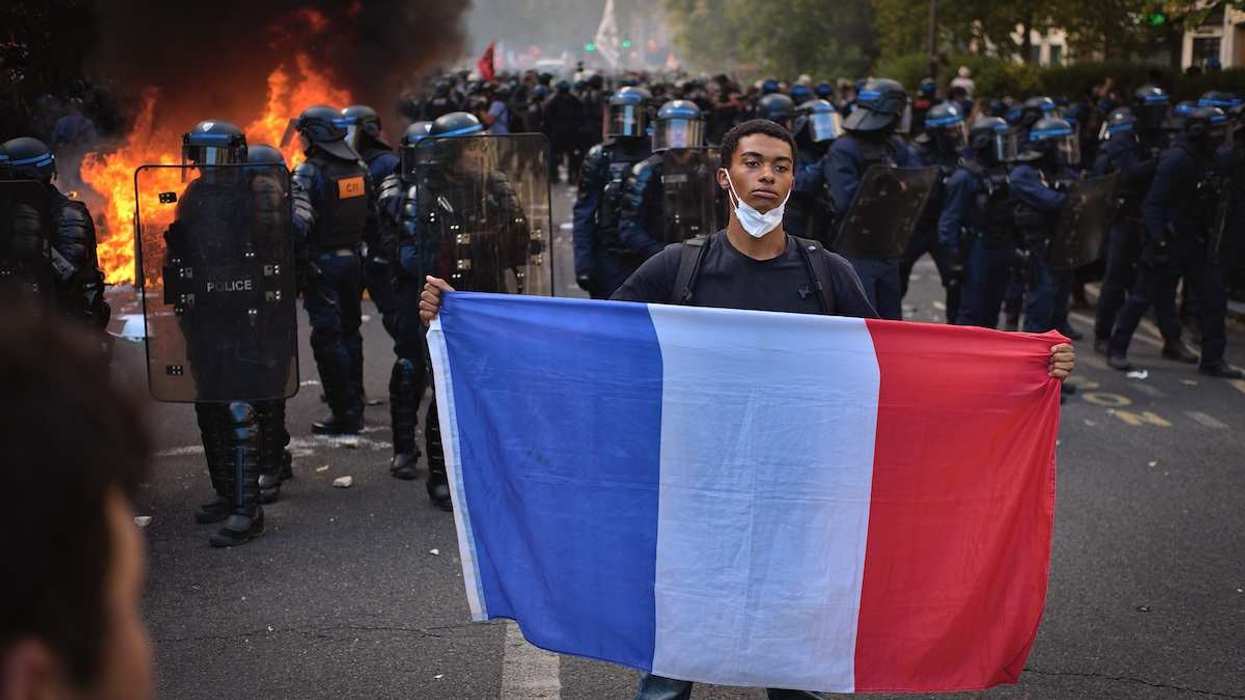
Farmers protest in India: Some 20,000 farmers have descended on the Indian capital of New Delhi in recent days, blocking roads and setting up encampments to protest new agriculture laws that they fear will harm their livelihoods. The measures, passed in September, eliminate requirements for farmers to sell their produce to government-run wholesale markets. That creates more market opportunities for farmers, but they worry it will mean the end of government-guaranteed prices that they can depend on, opening the way to exploitation by large agriculture corporations. In a country where farming is the primary source of income for nearly 60 percent of the population, farmers' welfare is a huge political issue. At the moment, things are deadlocked in Delhi: the government of Prime Minister Narendra Modi says it's willing to negotiate with the farmers, but not until they decamp from the center of the city. The farmers, meanwhile, say they won't budge until talks start. We're watching to see who blinks first.
NATO seeks to define itself, again: NATO foreign ministers are currently gathered for two days of soul-searching, as the 71-year old alliance searches for a new purpose in the 21st century. Ever since the end of the Cold War — which gave rise to the pact first signed in 1949 — that purpose has been somewhat unclear. Among the challenges the alliance now faces are waning US interest in the war in Afghanistan, which for 17 years has been NATO's primary engagement, as well as the problem of Turkey — an increasingly combative and undemocratic member of the club which has developed military ties with... Russia. A new report under discussion at the summit proposes focusing more on countering the strategic and political threat of China. That idea comes on the heels of a proposal from the EU — home to 28 of NATO's 30 members — to form a more explicitly anti-China technology alliance with the incoming US administration of Joe Biden.
Israel's (fourth) election threat: With the Knesset, Israel's parliament, mired in deadlock — in part over the national budget — Israel is inching closer to yet another election, its fourth in less than two years. Much depends on how the centrist Blue and White party, led by Benny Gantz, who joined Prime Minister Benjamin Netanyahu's coalition government seven months ago after a bitter election cycle, votes Wednesday on a bill to disband parliament. (Gantz gave a scathing speech Tuesday that suggests he will likely vote to dissolve the government.) But either way, the coalition agreement stipulates that if no state budget is passed by December 23 for 2020 and 2021, the government automatically collapses, and fresh elections will be called. It's a delicate dance for all sides: Gantz has been trying to ensure that if this government survives, he still gets to rotate in to become prime minister next fall (this was also a part of the coalition deal). Netanyahu, for his part, wants to retain the top job, but eventually weed out Blue and White so he can cobble together a strong majority that will help him pass an immunity law and avoid a corruption trial. While Netanyahu's Likud party and Gantz's Blue and White loathe each other, neither leader really wants to go back on the campaign trail so soon. It now seems they will have to anyway.