Israel is facing its worst domestic terror wave in nearly a decade after 11 people were killed in three cities in just one week.
Prime Minister Naftali Bennett, who’s been focused on high-stakes international diplomacy in recent weeks, is now mounting a full-court press to contain the deteriorating security situation at home.
What are the domestic and international implications of the brutal terrorism plaguing Israel?
The attacks. On Sunday, two Israeli Arabs linked with the Islamic State killed two people in the city of Hadera north of Tel Aviv. Last week, another assailant killed four people in the southern city of Beersheba.
On Tuesday, a 27-year-old Palestinian man from the West Bank broke through a security barrier before gunning down five people in a suburb of Tel Aviv. Two of the victims were Ukrainian nationals.
The timing of this terror surge could not be worse. It comes just days before the holy month of Ramadan, during which many Muslims make a pilgrimage to the al-Aqsa mosque in Jerusalem’s Old City, a pressure cooker at the best of times.
Before the attacks, Israeli authorities had been planning to increase entry permits for elderly Muslims to pray at al-Aqsa and to ease freedom of movement for Palestinians during Ramadan. The Biden administration, for its part, had asked the Bennett government to take preemptive steps to avoid the sort of clashes seen in Jerusalem last May that contributed to an 11-day war between Israeli forces and Hamas in the Gaza Strip.
Despite the uptick in violence, Israel will keep this plan in place, says Anna Ahronheim, a military correspondent for the Jerusalem Post. “I think Israel will try its best to allow those with permits – including the 20,000 from Gaza – to continue to work in Israel,” she says. But that will involve “heavy scrutiny on those crossing.”
What’s more, Ramadan this year coincides with both Easter and Passover, meaning that amid the already-heightened temperature there will be more Jews, Muslims, and Christians making their way to flashpoint sites in Jerusalem.
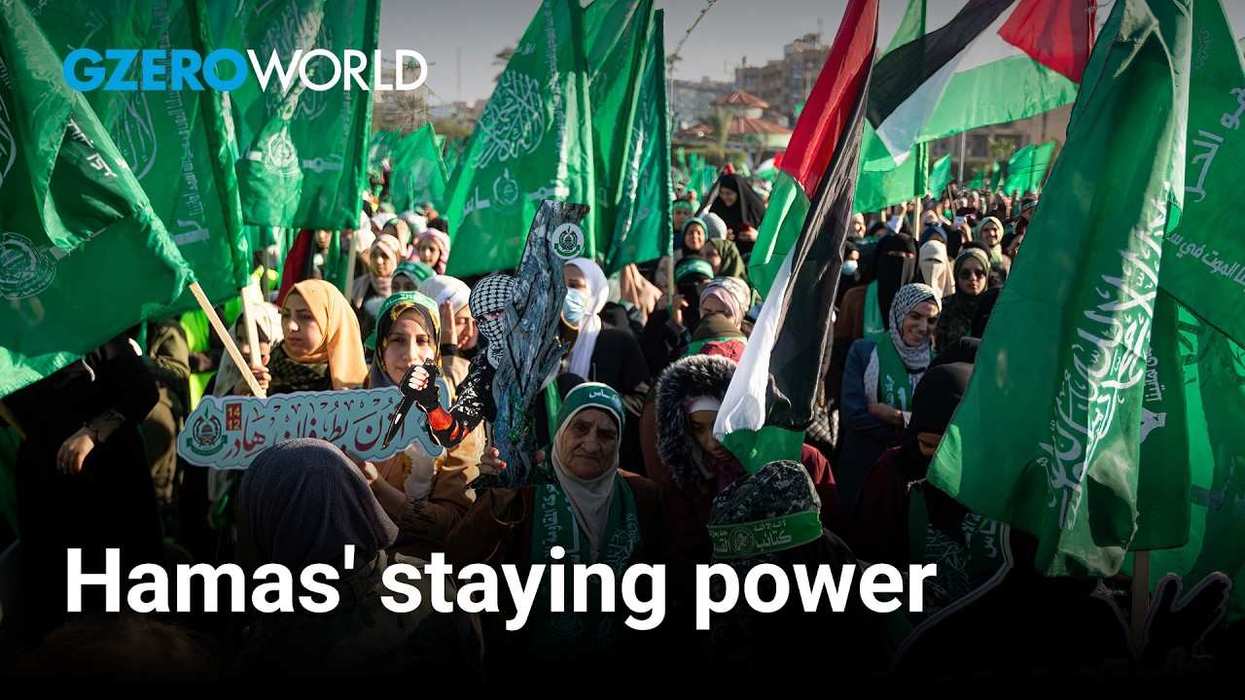
"This all relates back to the events of last May," says Kobi Michael, a senior researcher at the Tel Aviv-based Institute for National Security Studies. “It is part of a system of terror. Everything is related, and Hamas [in the Gaza Strip] is a very significant generator of this system."
The deteriorating security situation comes as Bennett has been trying to establish himself as an international statesman. Since coming to office last year, Bennett has sought to change the perception among some Israelis that Likud stalwart Benjamin Netanyahu, his longtime predecessor, is the only politician capable of representing Israel’s complex strategic interests on the international stage.
And Bennett’s been doing fine on that count. Just this week, his government hosted four Arab states – Bahrain, Morocco, the United Arab Emirates, and Egypt – as well as the United States, for a summit in the Negev desert focused on boosting Israeli-Arab relations. While there were no actionable items on the agenda, it does highlight Israel’s growing clout in the region.
More crucially, Bennett’s image as an elder statesman has been further burnished by his middleman status in the Russia-Ukraine quagmire. He recently visited Moscow to try and broker a truce, and the Financial Times has described the Israeli PM as the “primary international mediator” between the warring sides. Most recently, a Ukrainian delegation led by a top aide of President Voldoymr Zelensky arrived in Jerusalem on Wednesday to review a potential cease-fire with Russia – a plan discussed during high-level peace talks in Istanbul earlier in the week.
Some sources say Bennett has moved the Ukraine issue to the back burner so long as the security situation at home remains precarious. But Michael disagrees. He doesn't think the situation at home will distract from mediation efforts in Ukraine because the Bennett government can walk and chew gum at the same time.
To be sure, it’s unclear how crucial the Israelis are to ongoing negotiations between Russia and Ukraine, or, for that matter, how serious the Kremlin really is about de-escalation. Still, Moscow and Kyiv have made clear that Israel is one of very few countries they both trust, so Bennett pulling back from mediation efforts doesn’t bode well for peace efforts.