Sam Altman, CEO of OpenAI, needs more chips. He needs a lot more chips. The only thing stopping his $100 billion startup — if you can still call it a startup — may be the current supply of powerful chips.
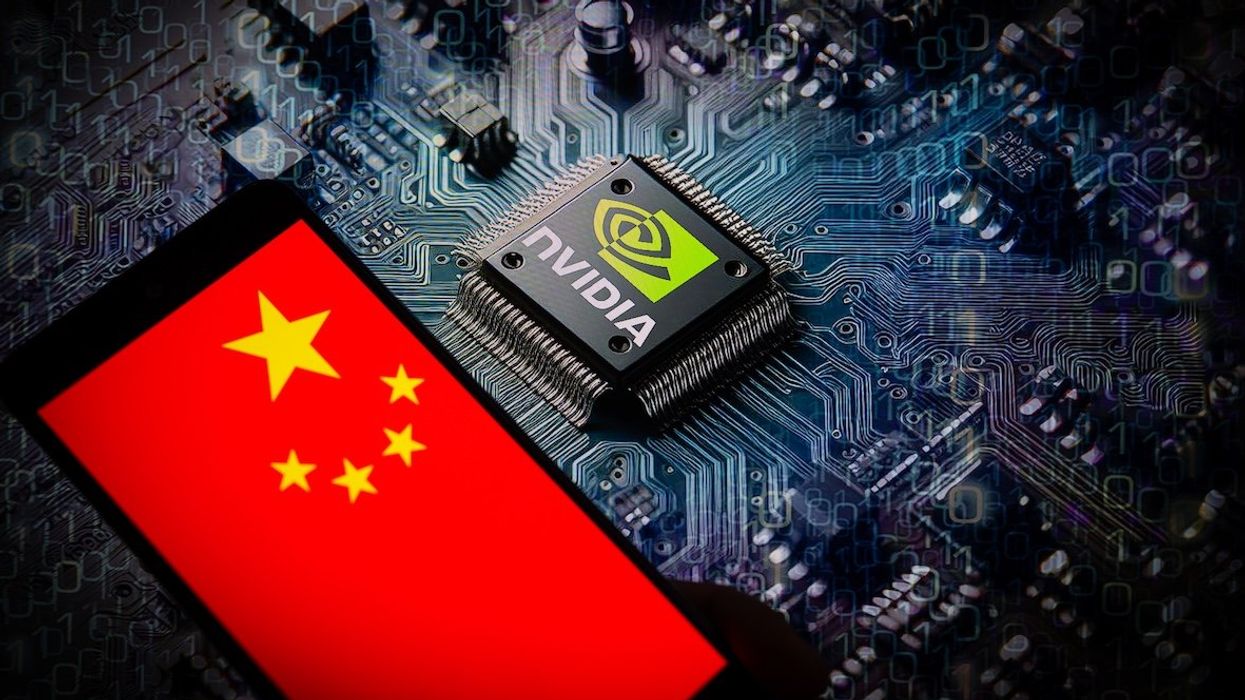
The semiconductor fabrication process is notoriously slow and expensive, and the global supply chain runs through a few big, highly specialized firms. There are only a small number of companies that actually design chips made for generative AI — AMD, Intel, and Nvidia. And they’re pricy: Nvidia, which is set to take 85% of the market next year by one estimate, sells its H100 chips for about $40,000 a pop.
Naturally, Altman wants to make his own chips, but to make that dream a reality, he’s asking for an obscene amount of money.
How much does Altman want to raise?: According to the Wall Street Journal, Altman is deep in talks with investors with the goal of raising $5-7 trillion for a new chip venture.
“The dollar amount he’s reportedly trying to raise — $7 trillion — eclipses not just the semiconductor investments made by governments, including the United States’ $39 billion investment in chip manufacturing, but also the size of the entire semiconductor industry,” says Hanna Dohmen, a research analyst at Georgetown University's Center for Security and Emerging Technology. “It cannot be overstated how massive this sum of money is.”
Eurasia Group’s Director of Geotechnology Alexis Serfaty calls the sum “preposterously high and also seemingly arbitrary,” and says while it helps that OpenAI would be a built-in customer for this new chipmaker, the semiconductor industry is a difficult one with a propensity for demand gluts and supply chokepoints at every turn. Also, it would require strong leadership. “There are only so many people in the world with the expertise and experience to run an advanced fab, let alone the 300 [facilities] that $7 trillion would buy,” he adds.
Money can buy a lot — but it might not be able to solve the problems that every chipmaker already faces.
Who’s going to give him all that money? Altman has reportedly met with Masayoshi Son, CEO of the influential Japanese investment company SoftBank, and officials from Taiwan Semiconductor Manufacturing Company, one of the world’s largest chip fabrication companies, about investing in his new venture. Altman reportedly wants to “raise the money from Middle East investors and have TSMC build and run” new chip fabrication plants.
But the real eyebrow-raising potential investor isn’t in East Asia; it’s in the Middle East. In recent weeks, Altman has reportedly met with Sheikh Tahnoun bin Zayed al Nahyan, the United Arab Emirates’ security chief, to discuss the venture. OpenAI already struck a deal in October with the Emirati technology company, G42, to bring AI solutions to the Middle Eastern market, laying the foundation for additional business support from the wealthy nation.
This is going to cause geopolitical headaches, right? Almost definitely. Washington is extremely touchy about foreign investment in US companies and even more hesitant when it comes to scarce critical infrastructure such as semiconductors.
“While the US government is eager to bring chip manufacturing to the United States, it would likely be reluctant to do so with the involvement of the UAE government given existing concerns about Emirati companies’ relations with Chinese counterparts,” says Dohmen, who notes that, under US law, companies need licenses to even export certain semiconductors to the UAE.
America’s number one concern is China. Not only has the Biden administration invested heavily in the US chip industry, but it has launched a no-holds-barred campaign to prevent China from getting its hands on chips or even cloud-based AI. Over the past few years, the Biden administration has exacted stringent export controls that seek to prevent any global semiconductor technology, if it’s made with US parts, to do business with China, who it fears will use AI to supercharge its military. Dohmen adds that lawmakers are worried that G42 is already “dealing with blacklisted Chinese firms.”
Simply put, Serfaty says, “Altman’s partnerships with foreign governments could conflict with this US national security strategy.”
Could the US take action against this new venture? Yes. The US government has taken the extraordinary step to block foreign investment in chip companies. In 2018, the Trump administration blocked the sale of the US-based Qualcomm to the then-Singapore-based Broadcom, citing national security concerns. (Broadcom has since moved its headquarters to the US). That administration also blocked the sale of Lattice Semiconductor to a US private equity firm funded by Chinese capital.
Altman could be inviting antitrust scrutiny, as well. If he controls both the country’s most important generative AI company and the chip supply chain it relies upon, he’ll raise eyebrows with any antitrust regime — even if it’s not the current tech-hungry one overseen by the FTC’s Lina Khan and the DOJ’s Jonathan Kanter. The government is already starting to look into Microsoft’s $13 billion investment in OpenAI.
In short, all eyes are on OpenAI. The ChatGPT maker and its once-embattled, now-emboldened chief have their sights set on global AI domination. Whether it’s $7 trillion or far less, they’re due to make a real attempt to solve the chip problem that appears to stand in the way of true unbridled success.