It’s not quite the $64 million question, but it sure is the “100,000 rockets-and-missiles” question, as that’s the estimated size of the powerful Lebanese militant group’s current arsenal.
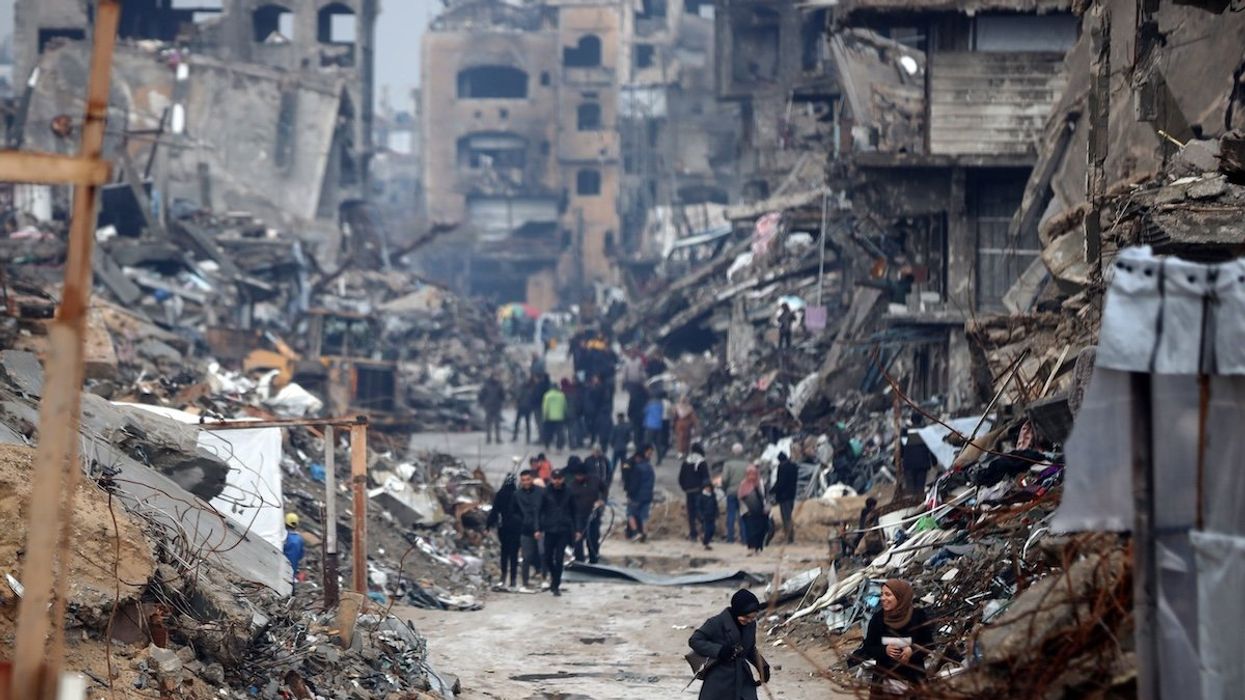
Hezbollah, which is backed by Iran and has close ties with Hamas, has threatened an “earthquake” if Israel launches a full-scale ground invasion of the Gaza Strip as part of the ongoing response to Hamas’s Oct. 7 terrorist rampage in southern Israel. And recently, Hezbollah and Israeli forces have exchanged a patter of cross-border fire, while civilians on both sides of the frontier have been evacuated.
Why would Hezbollah get involved in the conflict? It wouldn’t be to defeat Israel militarily, something that even the powerfully armed Hezbollah has no realistic chance of doing. Rather, the aim would be to draw Israel into a conflict in the north that makes it impossible for the Israel Defense Forces to fully focus on destroying Hamas in the south. Keeping Hamas afloat is an important objective for the broader, Iran-backed anti-Israel axis in the region, according to Firas Maksad, a senior fellow at the Middle East Institute in Washington, DC, who has studied Hezbollah for years.
“If there were no longer a Palestinian component of this axis,” he says, “Hezbollah itself would become much more exposed and at risk with Israel.”
But it’s a trickier calculus than you might think. Any conflict would risk a crippling backlash from Israel that could increase the suffering of millions of Lebanese already mired in a years-long economic crisis. Israeli PM Benjamin Netanyahu drove that point home over the weekend, warning of “devastation” if Hezbollah moves in. Since Hezbollah’s political wing has seats in the Lebanese parliament, this is something the group has to consider alongside the regional and strategic considerations.
“The most ideal situation for Hezbollah,” says Maksad, “is to be wielding the threat of force against Israel without actually having to use it.”
For more information about Hezbollah, check out our primer here.