With so much of the world in geopolitical flux these days, it’s hard to pick clear winners or losers. But one leader who could be pretty happy about how things are going at the moment is Recep Tayyip Erdogan.
The Turkish president has been in power for more than 20 years. Now he’s angling to stick around even beyond his current term limits, which expire in 2028. Luckily for him, a number of things are suddenly going right at once.
“He has more of a chance to realize his foreign policy, security, and economic objectives than he’s had in well over a decade,” says Emre Peker, Eurasia Group’s top Turkey expert.
Let’s take a look at the hit parade:
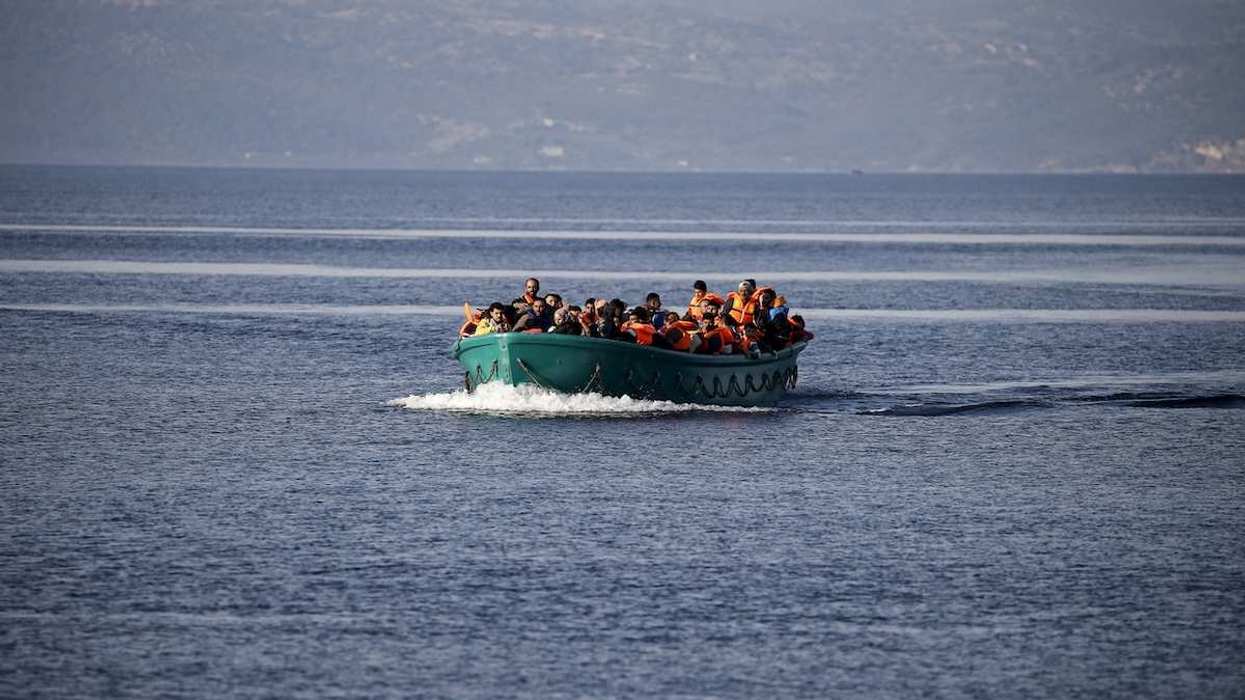
First, the Assad regime in Syria is gone. Erdogan had worked towards this for years, hoping that Bashar Assad’s fall and the end of the Syrian civil war would hasten the return of millions of Syrian refugees living in Turkey – so far more than 80,000 have returned – while also opening up opportunities for Turkish economic and strategic influence in the country.
Ankara has already laid the groundwork for a military partnership with the new Syrian government of Ahmad al-Sharaa, whose HTS militia overthrew Assad back in December with Turkish help.
Second, the Kurdish problem may be nearing a resolution. The main Kurdish militant group, the PKK, has suggested it is willing to lay down its arms after 40 years of armed struggle against the Turkish state. (See more here.) If so, it would bring to an end a once-intractable conflict that has left tens of thousands dead.
Third, a possible ceasefire in Ukraine could be a boon, opening up reconstruction opportunities in Ukraine for Turkey’s world-class construction firms. Erdogan, who has good ties with Russia but has also positioned Turkey as a potential peacemaker in the war, has taken care to show support recently for Ukrainian President Volodymyr Zelensky, even as Washington distances itself from Kyiv.
And if the Trump Administration really does reduce its defense commitments to Europe – as the EU now vividly fears – Turkey could benefit both as a supplier of arms to the EU and as a critical interlocutor between the continent and Russia, with whom Erdogan has cultivated friendly relations, to the chagrin of its NATO allies.
Lastly, the economy is perking up. True, inflation is still at 39%, but that’s the lowest level in nearly two years, and the central bank has been cautiously cutting rates to keep up the economic momentum: Turkey’s GDP grew 3.2% last year, beating expectations.
But there are huge caveats to all of this, says Peker.
First, Syria could just as easily blow up as glow up. The country is a sectarian patchwork ravaged by decades of dictatorship and years of civil war. The new government of jihadist-turned-statesman al-Sharaa has yet to prove that it can achieve stability. On Friday, violence exploded between government forces and the Alawite minority that the Assads themselves hailed from.
“If that spirals out of control,” says Peker, “it will encourage other militias to try to secure more autonomy for themselves, which could create instability on Turkey's border – in which case Erdogan’s dreams of economically benefiting from the new Syria would go down the drain.”
Second, the Kurdish solution will require a careful compromise. Erdogan’s Islamist AK party is supported by the far-right MHP party. But even together they don’t have the votes that Erdogan needs to change the constitution or call early elections – the only two ways he can get around the 2028 term limit.
The support of Kurdish parties could get Erdogan over the line, but it’s a narrow path: Erdogan will need to grant the Kurds just enough autonomy and cultural rights to seal the end of the conflict, but without giving them so much that his nationalist partners in the MHP balk.
Third, Trump’s realignment won’t necessarily help Erdogan.
Turkey can in principle benefit from Europe’s new plans to Trump-proof itself by spending more than $800 billion on defense, but European governments may prefer to keep that spending – and the resulting jobs – in the EU rather than give Turkey a piece of the action.
And if Washington really does fold up its European security umbrella and go home, Ankara could be in big trouble. Turkey’s Incirlik airbase is home to dozens of American nuclear weapons and thousands of US troops.
“Turkey is a massive beneficiary of the American security umbrella,” says Peker. “If that were to deteriorate, that would be detrimental to Turkey regardless of how robust its defense industry is becoming.”
In all, it’s more of a mixed bag for Erdogan than it may at first appear. Although a lot of things are coming up aces for Erdogan these days, says Peker, “it’s hardly a given that Turkey really comes out of this strengthened, victorious, and able to throw its weight around however it wants.”