
Skip to content
Search

Latest Stories

Europe

Presented by

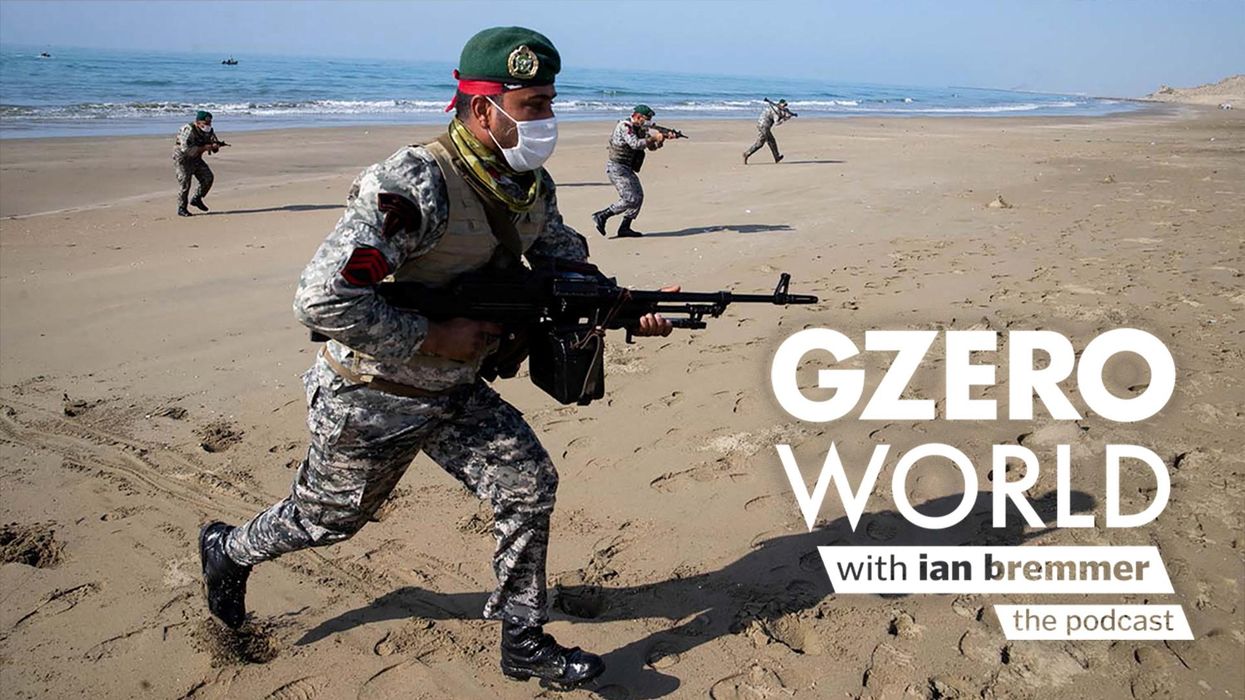
A soldier on a beach in the Middle East.  Is the US Misjudging the Middle East’s Power Shifts?

Podcast: Is the US misjudging the Middle East’s power shifts? Vali Nasr's view

Listen: President Biden is determined to turn Washington's attention from the Middle East to Asia once and for all as he moves to confront a growing China. But according to Johns Hopkins University Middle East Scholar Vali Nasr, President Biden's approach to the Middle East will have to adapt to the once-in-a-generation power grab occurring between Iran, Israel, and Turkey while Arab nations in the region increasingly lose influence.

Transcript

Listen: "Pivot to Asia." It was the catchphrase floating around Washington DC's foreign policy circles in 2009 when President Obama first took office. And yet twelve years later, the Middle East continues to consume the attention of the United States' military and diplomatic efforts. Now President Biden is determined to change that, and to turn Washington's attention to Asia once and for all as he moves to confront a growing China. But according to Johns Hopkins University Middle East Scholar Vali Nasr, President Biden's approach to the Middle East will have to adapt to the once-in-a-generation power grab occurring between Iran, Israel, and Turkey while Arab nations in the region increasingly lose influence.
Subscribe to the GZERO World Podcast on Apple Podcasts, Spotify, Stitcher, or your preferred podcast platform to receive new episodes as soon as they're published.
Next Page

More from GZERO World Podcast

Viktor Orbán's last stand, and the future of Europe's far right with Ivan Krastev

For sixteen years, Viktor Orbán has dominated Hungarian politics, rewriting rules, consolidating power, and positioning himself as Europe's leading nationalist and Donald Trump's closest ally on the continent. But with parliamentary elections approaching on April 12th, his aura of invincibility is finally cracking. Opposition candidate Péter Magyar, a conservative former Orbán insider, is polling ahead by double digits, and the Trump administration is scrambling to help keep its favorite European in office.

Keep reading... Show less

Ian Bremmer sits down with Ivan Krastev, Chairman of the Centre for Liberal Strategies and political scientist, to discuss Hungary's consequential upcoming election and what it means for the far... More >

How the Iran war is affecting Europe’s economy

In this episode of GZERO Europe, Carl Bildt examines how the war in Iran is driving up energy prices, fueling inflation, and raising stagflation fears across Europe.
Keep reading... Show less

In this episode of GZERO Europe, Carl Bildt examines how the war in Iran is driving up energy prices, fueling inflation, and raising stagflation fears across Europe.... More >

Rahm Emanuel on Trump’s missed drone opportunity

The US is falling behind Ukraine in the race to build and deploy cutting-edge drone technology, and it’s the Pentagon’s fault, says Rahm Emanuel.

A year ago, Rahm Emanuel made a blunt recommendation: don’t ask Ukraine for mineral rights—ask for their drone technology. Now, that warning looks prescient. “They produce new drone technology every four weeks,” he tells Ian Bremmer on stage at the 92nd Street Y in NYC, while “the Pentagon can’t get an RFP out… in four years.”

On the battlefield, Ukraine is rapidly iterating in real time, turning combat lessons into new companies, software, and capabilities almost instantly. Meanwhile, Emanuel says, the US dismissed those innovations just months ago, insisting “we don’t need your technology.” Now, Washington is scrambling to catch up.

The result: a growing gap between the speed of modern warfare and the pace of American defense bureaucracy—and a missed opportunity that could reshape how future wars are fought.

The US is falling behind Ukraine in the race to build and deploy cutting-edge drone technology, and it’s the Pentagon’s fault, says Rahm Emanuel.... More >

India and Russia rekindle ties, US-China competition in DRC heats up, Another middle power trade deal in the making

India rekindles old friendship to fill energy shortage

To fill the massive energy void from the closure of the Strait of Hormuz, Delhi has turned once again to an old friend: Moscow. Soon after the Iran war began, the US temporarily allowed India to buy more Russian crude, after spending the preceding six months urging them to stop. The two Soviet-era pals are now set to go further: the South Asian behemoth is reportedly preparing to buy Russian liquefied natural gas for the first time since the Kremlin began its full-scale invasion of Ukraine in 2022. What’s more, India will reportedly double its imports of Russian crude.

Keep reading... Show less

To fill the massive energy void from the closure of the Strait of Hormuz, Delhi has turned once again to an old friend: Moscow.... More >

GZERO Podcasts

Ian Bremmer sits down with Ivan Krastev, Chairman of the Centre for Liberal Strategies and political scientist, to discuss Hungary's consequential upcoming election and what it means for the far... More >

Listen: What does global energy transition look like in a time of major geopolitical change, including rebalancing of trade? In this special episode of "Energized: The Future of Energy,” host JJ... More >

Creating artificial human retinas in zero gravity. Mining rare minerals on the moon. There seems to be no limit to what could be possible if we continue to take our more important industries to... More >

Ian Bremmer sits down with Ivan Krastev, Chairman of the Centre for Liberal Strategies and political scientist, to discuss Hungary's consequential upcoming election and what it means for the far... More >

In this episode of The Ripple Effect: Investing in Life Sciences, host Dan Riskin speaks with Patrick Horber, President of Novartis International, and David Gluckman, Vice Chairman of Investment... More >