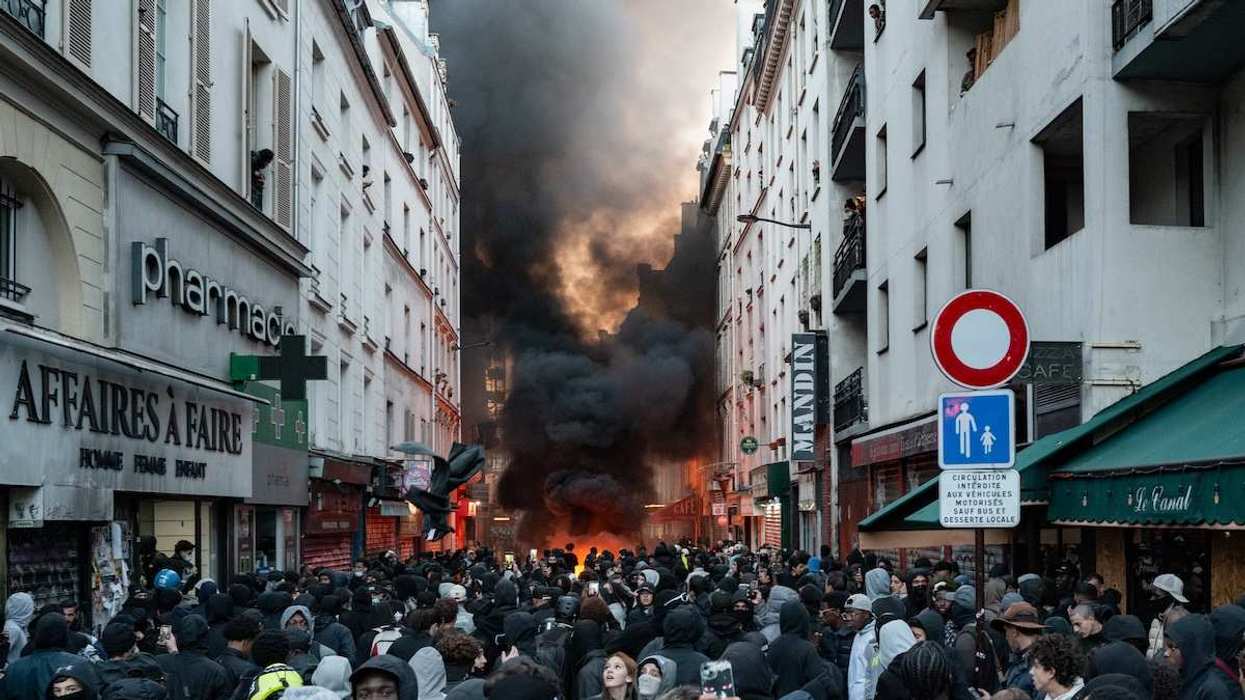
Germany has been the European center of political attention in recent months, as punk-rock god Angela Merkel exits the stage after almost two decades at the helm. But there’s another big election heating up in Europe. The French will head to the polls in just twelve weeks, and the race has started to get very interesting.
What’s the state of play?
The slate of presidential candidates is now finalized after Les Républicains on Saturday elected Valerie Pécresse to head the ticket. Pécresse, the first woman to head the center-right party of Charles de Gaulle, is hoping to reinvigorate a group that’s been marginalized in French politics in recent years as anti-establishment sentiment has gripped the electorate.
She faces off against incumbent President Emmanuel Macron, a wishy-washy centrist who is not particularly popular and would reap about a quarter of votes if elections were held today.
Trailing Macron in the polls is Marine Le Pen, head of the far-right National Rally party, who in recent years has abandoned part of her populist economic agenda to broaden her appeal. And more recently, far(ther)-right firebrand Éric Zemmour — a media shock jock who likes to say provocative things to get attention — has entered the political fray.
Center right vs right vs far right. The French electorate is now decidedly right-leaning. This is in part because the once-potent French left has imploded since former President François Hollande of the Socialist Party left office in 2017 as one of the country’s most unpopular leaders. The French progressive movement remains split as a result of intra-party infighting and ideological differences. Young progressive voters are disengaged from politics.
As a result, big electoral debates over immigration, law and order, and France’s influence on the world stage are playing out almost entirely on the right. For Macron, who has for years tried to paint himself as a pragmatic, liberal political outsider, this swerve to the right has not been too difficult to navigate. He’s talked tough on immigration and Islamic extremism to appeal to right-leaning voters who have staunch views on security and French identity, while distinguishing himself from his far-right opponents whom he dubs as myopic kooks.
But Pécresse’s entrance into the race indeed throws a spanner in the works. The 54-year-old, who served as budget minister in former President Nicolas Sarkozy’s government and was an advisor to party stalwart Jacques Chirac, is no provocateur à la Zemmour and Le Pen. She's a run-of-the-mill conservative who has vowed to get tough on immigration and rein in big government. Pécresse describes her brand as “one-third Thatcher, two-thirds Merkel.”
This is a somewhat nightmarish situation for Macron. For the French president, it’s easy to play up his sensible middle-of-the-road politics (on the right, that is) when you have Le Pen’s and Zemmour’s respective Wikipedia pages to draw upon. But Pécresse can hardly be branded as a far-right loon. What’s more, as current chief of Paris’ regional government she has experience balancing budgets and overseeing social programs.
France has a runoff presidential voting system — if no one cracks 50 percent in round one, the two top finishers face off in a second bout. A new poll shows that Pécresse would beat Macron in a runoff, while the incumbent would thrash Le Pen or Zemmour.
Does it even matter who wins? Sort of. Pécresse does not have a track record on foreign affairs, and unlike Macron, would be unlikely to advocate for European strategic autonomy or push for France to lead European policymaking.
Zemmour, on the other hand, is avowedly Euroskeptic, while Le Pen doesn’t like Brussels but says breaking away would be too damaging.
Domestically, tightening immigration rules and cracking down on crime will be priorities for all of the presidential candidates given that large swaths of the French electorate support such moves. But passing legislation through the French parliament is going to be hard for whoever wins the race because no party is likely to win a majority.
Looking ahead. Pécresse has quickly risen to third place, and is just two points behind the second-placed candidate. If she makes up the difference over the next few months, all bets are off.