Skip to content
Search

Latest Stories

popular

What We’re Watching: Trouble in Bosnia, China shifts Ukraine tone

What We’re Watching: Trouble in Bosnia, China shifts Ukraine tone

Republika Srpska President Milorad Dodik in 2018.

REUTERS/Dado Ruvic
Make us preferred on Google

Fears rise of new Bosnian conflict. As if one major conflict brewing on Europe’s doorstep wasn’t enough, rising nationalist rhetoric and threats over the possible breakup of Bosnia and Herzegovina are prompting fears of another. Bosnia’s Serb President Milorad Dodik wants to withdraw his Republic Srpska (RS) from key Bosnian institutions, most notably the armed forces, to establish Serb-only government bodies instead. Any such move would violate the 1995 Dayton Peace Accords and could spark another violent conflict in the Balkans. While Dodik — notably a Srebrenica genocide denier — has long threatened to secede, his talk of setting up a separate RS army is what’s causing real alarm. The US has threatened to use sanctions should the Bosnian Serbs secede and formally join Serbia. European foreign ministers met in Brussels on Monday to discuss the situation. While many European countries want to impose sanctions, Croatia, Hungary and Slovenia — in addition to Russia — are expected to stand behind Dodik.


China toughens stance on Ukraine. It seems like just yesterday when Xi Jinping and Vladimir Putin said there were “no limits” to the China-Russia relationship as the two gathered ahead of the Olympic opening ceremony in Beijing earlier this month. What a difference an invasion makes. In recent days, China has warned against a Russian invasion of Ukraine, a tonal shift that diplomats say reflects Beijing’s desire to not further strain its relationship with Washington. “The sovereignty, independence and territorial integrity of any country should be respected and safeguarded,” China’s Foreign Minister Wang Yi told the Munich Security Conference by Zoom over the weekend. “Ukraine is no exception.” Beijing may not want to risk suffering from the financial fallout of sanctions against Russia, but Putin is a more natural ally to him than Biden, so how long can China stay out of the fray?

More For You

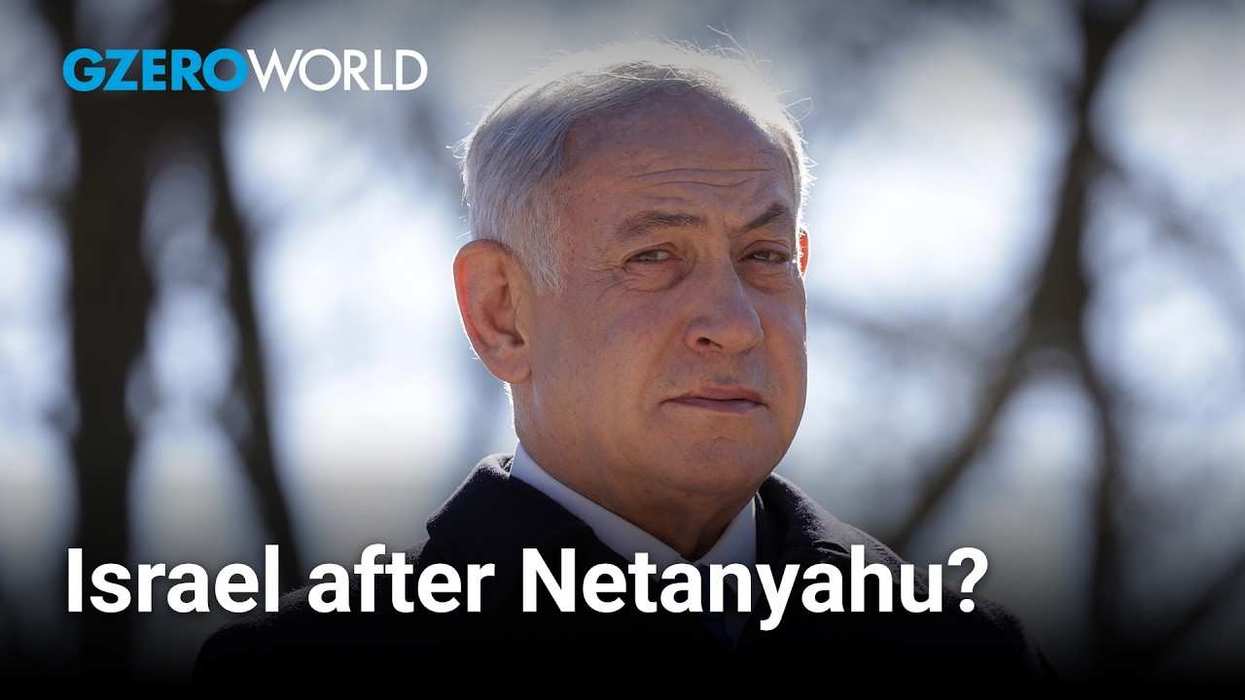
​Israel’s Prime Minister Benjamin Netanyahu attends a ceremony commemorating Israel’s Remembrance Day for fallen soldiers on Mount Herzl in Jerusalem, on April 21, 2026.

Israel’s Prime Minister Benjamin Netanyahu attends a ceremony commemorating Israel’s Remembrance Day for fallen soldiers, or Yom HaZikaron, at the Military Cemetery on Mount Herzl in Jerusalem, on April 21, 2026.

ILIA YEFIMOVICH/Pool via REUTERS
The United States and Iran seem to be moving closer to a deal to end the war, recent skirmishing and mixed signals notwithstanding. If concluded – still a big if – this agreement would reopen the Strait of Hormuz, lift the US blockade, unfreeze Iran’s frozen assets (via Qatar), and extend the ceasefire – while kicking nuclear negotiations down the [...]
You vs. the News collage
Think you know what's going on around the world? Here's your chance to prove it. [...]
The tide is turning in the Russia-Ukraine war
In the early hours of May 17, more than 500 Ukrainian drones punched through three of Moscow’s four air-defense rings. They hit oil infrastructure, military-industrial plants, and apartment buildings in and around the capital, killing at least four and wounding a dozen. Coming three days after a deadly Russian barrage that Ukrainian officials [...]
Russia's costly invasion
Eileen Zhang
Russian President Vladimir Putin heads to China this week to meet his counterpart Xi Jinping. Under the leadership of these two men, who have met dozens of times, Russia and China have forged what they call a “no limits” partnership. Russia is a major source of natural resources for China, while Beijing has helped Moscow weather increasingly harsh [...]