Skip to content
Search

Latest Stories

popular

A Marshall Plan For Central America

A Marshall Plan For Central America

Mexico's newly-inaugurated president, Andres Manuel Lopez Obrador (AMLO), may have just scored a big political victory after a rocky start to his tenure.


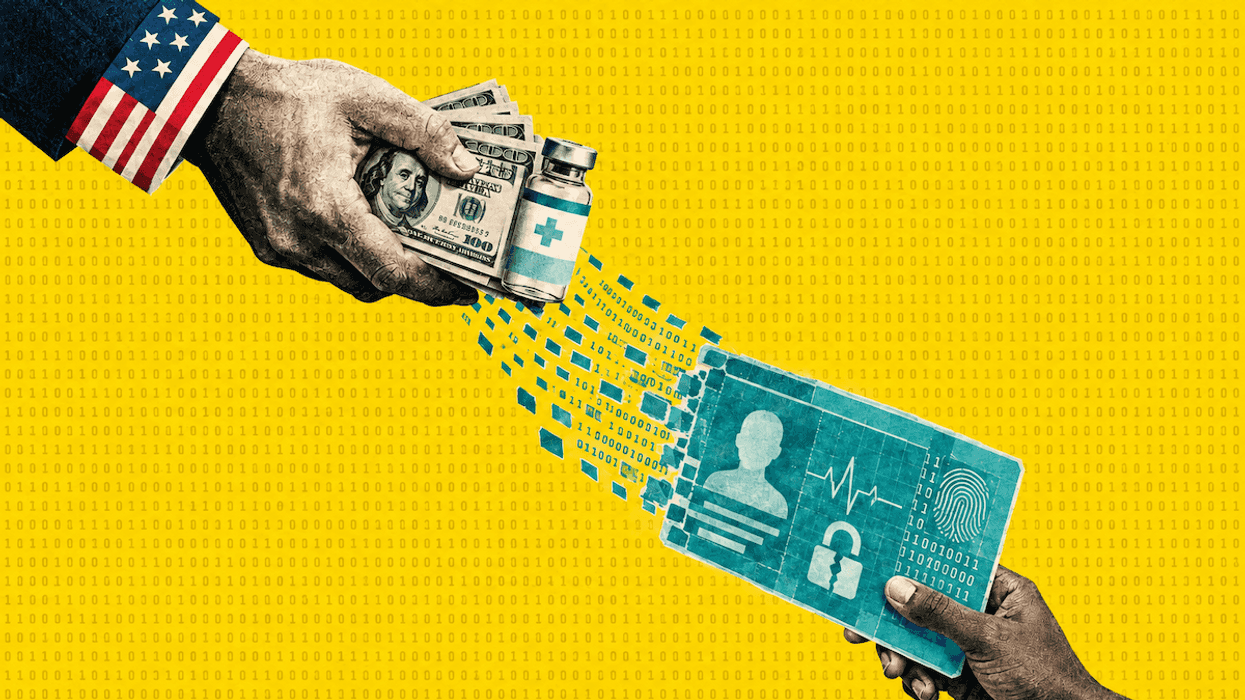
The US State Department announced yesterday its intention to deliver $5.8 billion in aid and investment to Central America to stem the tide of migrants flocking toward the US border. While much of the support falls under existing commitments, Mexico's foreign minister welcomed it as "good news for Mexico."

AMLO has worked energetically since taking office to sell the White House on a "Marshall Plan" of support to address the region's growing migrant crisis. The US commitment is a preliminary sign that he's at least being heard.

The big picture: Upon taking office, the Mexican president was caught between an irresistible force and an immovable object. To his south, people fleeing poverty and violence in Central America have been crossing Mexico's porous southern border on their way to the United States. To his north, President Trump has made tightening border security his number one domestic political issue. AMLO didn't want to antagonize Mexico's main trading partner by letting more migrants pass through.

The domestic picture: AMLO, who is grappling with a high crime rate and strained resources at home, also recognizes that taking in migrants creates its own set of political headaches. Asylum requests in Mexico have skyrocketed over the past five years, reaching 14,544 in 2018. Those numbers were expected to rise after AMLO's administration committed to take in asylum seekers with cases currently pending in the US. While he campaigned as a compassionate voice on immigration, Mexico's new left-wing leader spied the need for a grand solution. The US funding will contribute to a $30 billion of aid package envisioned by AMLO.

The global picture: AMLO even dangled the prospect of Chinese investment to bring Trump to the table, according to the NY Times – reasoning that the US might be more willing to pay up if it feared that China might try to expand its influence in the region by opening its wallet. For context, Beijing is already a big investor and trading partner in the more prosperous parts of Latin America. While a quixotic idea to build a canal through Nicaragua hasn't really gone anywhere, China has been investing in infrastructure in some smaller Central American markets. It's also offered carrots to regional governments to get them to drop diplomatic recognition of Taiwan in favor of Beijing.

Whatever the motivation for the US decision, the support for Mexico's investment and aid program is an important political reprieve for Lopez Obrador just a few weeks into his term.
More For You

Immigration and Customs Enforcement (ICE) agents check the identity documents of a group of agricultural workers at a grocery store parking lot during an immigration raid in Mecca, California, U.S. December 19, 2025.

Immigration and Customs Enforcement (ICE) agents check the identity documents of a group of agricultural workers at a grocery store parking lot during an immigration raid in Mecca, California, U.S. December 19, 2025.

REUTERS/Daniel Cole
A year into US President Donald Trump’s second term, America’s immigration policy has undergone one of its most sweeping resets in decades. Unauthorized border crossings are at 50 year-lows. While the administration says its focus is the “worst of the worst” criminals, immigration enforcement has expanded to include all undocumented immigrants, [...]
You vs the News collage
Think you know what's going on around the world? Here's your chance to prove it. [...]
​President Donald Trump delivers an address to the nation from the Diplomatic Reception Room of the White House, in Washington, D.C., U.S. Wednesday, Dec. 17, 2025.

President Donald Trump delivers an address to the nation from the Diplomatic Reception Room of the White House, in Washington, D.C., U.S. Wednesday, Dec. 17, 2025.

Doug Mills/Pool via REUTERS
Less than one day after US President Donald Trump declared a military blockade of sanctioned oil tankers from Venezuela, he addressed the nation during a rare primetime speech – but didn’t talk about Venezuela. Instead, he touted the economy, arguing that it’s doing better than many Americans believe it is.“Boy, are we making progress,” Trump said [...]
French President Emmanuel Macron, German Chancellor Friedrich Merz, Ukrainian President Volodymyr Zelenskiy, U.S. Special Envoy Steve Witkoff and businessman Jared Kushner, along with NATO Secretary-General Mark Rutte and otherEuropean leaders, pose for a group photo at the Chancellery in Berlin, Germany, December 15, 2025.

French President Emmanuel Macron, German Chancellor Friedrich Merz, Ukrainian President Volodymyr Zelenskiy, U.S. Special Envoy Steve Witkoff and businessman Jared Kushner, along with NATO Secretary-General Mark Rutte and otherEuropean leaders, pose for a group photo at the Chancellery in Berlin, Germany, December 15, 2025.

Kay Nietfeld/Pool via REUTERS
The European Union just pulled off something that, a year ago, seemed politically impossible: it froze $247 billion in Russian central bank assets indefinitely, stripping the Kremlin of one of its most reliable pressure points. No more six-month renewal cycles. No more Hungarian vetoes. The money stays locked up, full stop.Turns out that was the [...]