The war in Ukraine “is the most severe geopolitical conflict since World War II and will result in far greater global consequences than [the] September 11 attacks.” So wrote Hu Wei, a Shanghai-based academic affiliated with a Chinese state research council, in a paper published by the Carter Center earlier this week.
In response, wrote Hu, China must unload “the burden of Russia as soon as possible.”
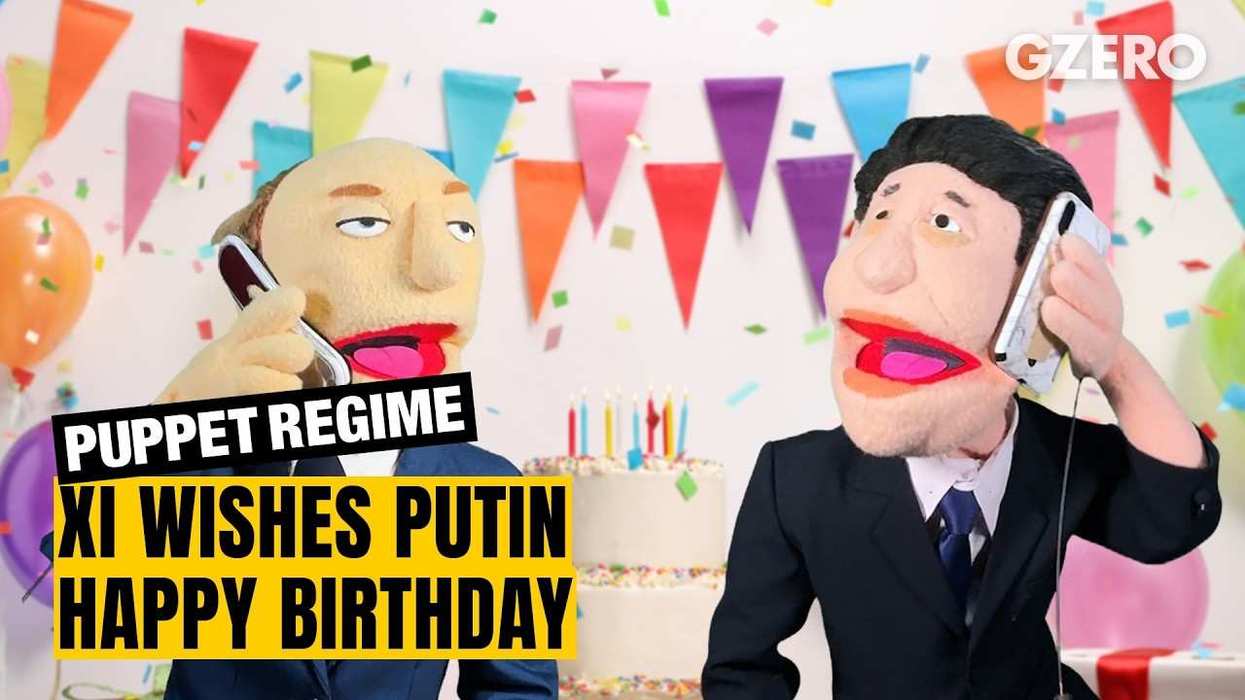
Chinese state censors blocked the paper almost immediately. That’s hardly surprising since China’s President Xi Jinping remains sympathetic to Russia’s President Vladimir Putin, his fellow traveler in efforts to push back against global US power.
Russia hopes China remains onside. After all, China is its second-biggest export market after the EU, and it could resupply Russia’s military with weapons, as the US and Europeans are doing for Ukraine.
China has decisions to make, and they come at a delicate moment. Xi hopes for smooth sailing into this fall’s 20th Party Congress, where Communist Party officials will break dramatically with past practice to award him a third term as China’s leader. Instead, China’s economy continues to slow, Omicron is testing China’s zero-COVID policy and forcing the lockdown of tens of millions of people, relations with the US remain under significant strain, and now China’s “no limits” friendship with Russia threatens to make matters even more complicated.
So far, China has remained publicly neutral on the war, by abstaining on UN resolutions, denying any plan to supply Russia with weapons, and offering humanitarian help to Ukraine. But China’s state media coverage of the war paints a decidedly pro-Russian version of events, underlining Beijing’s intentions to protect relations with Russia and its aversion to aggressive US or NATO action.
The war does offer China some opportunities. The most important, according to Eurasia Group’s Michael Hirson, an Asia expert, is that it focuses US and European minds on Russian aggression “rather than strategic competition with China.” Beijing knows that Western governments hope to peel China away from Russia – and that assurances from Beijing could ease tensions between China and its largest trade partners. In fact, Xi may keep that in mind when he speaks for the first time in months with President Joe Biden on Friday.
China can also benefit economically from Russia’s isolation. It’s a major buyer of fuel and food, two of the main products Russia has to sell. As the Russians lose customers elsewhere, China can buy larger volumes of these essentials – perhaps at discount prices.
But the war also creates risks. “China can import agricultural and energy commodities from Russia without violating sanctions,” says Hirson, “but as the economic hit worsens in Russia, Moscow’s need for help will become more difficult for Beijing to navigate without US retaliation.” Last week, China’s foreign minister said in a statement that “China is not a party to the crisis, nor does it want sanctions to affect China.”
And China knows what’s needed to protect its economy. China-Russia trade set a record last year, but China’s largest trade partners are in Europe, America, and East Asia. Russia is well down the list of China’s most important customers.
More broadly, China has profited not only from the Western-led globalization of trade and investment of recent decades but from divisions between and within America and Europe over how to respond to China’s rise. Russia’s war has now brought Americans and Europeans together like nothing since the Cold War ended, potentially undermining Beijing’s longer-term bid to avoid coordinated Western containment of China’s growing geopolitical clout.
Bottom-line: While China was quick to censor Mr. Hu’s call to unload “the burden of Russia,” its leaders will likely follow his broader advice to “respond flexibly” to Russia’s war, and to “make strategic choices that conform to [China’s] long-term interests.”