Ever since Russia invaded Ukraine almost a year ago, China has strived to keep a low profile in the war by remaining officially neutral yet refusing to condemn Russian aggression. But over the past few days, top US and European officials say they see signs that China plans to intervene by supplying lethal aid — weapons and ammo — directly to the Kremlin.
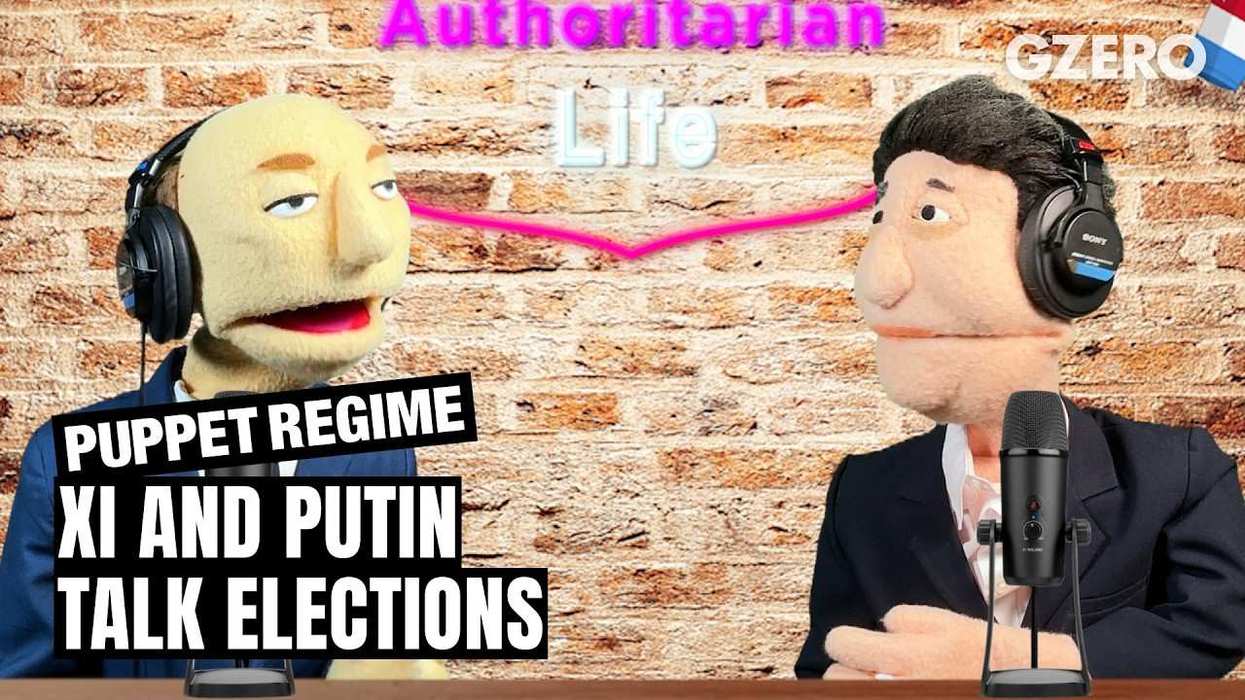
The Chinese deny this, publicly at least, and accuse the US of meddling in the “no-limits” partnership between Beijing and Moscow. The relationship remains "rock solid," top diplomat Wang Yi told Russian Foreign Minister Sergei Lavrov on Wednesday before meeting Vladimir Putin in Moscow.
To be clear, so far the accusation comes only from Western governments. But the fact that US Secretary of State Antony Blinken, British PM Rishi Sunak, and NATO chief Jens Stoltenberg have all blown the whistle suggests that something is in the works.
If true, sending arms to Russia would come at a potentially big cost to China. At a minimum, it would put Beijing — and the Chinese economy, the world’s second-largest — at risk of tougher and more expansive Western sanctions.
It certainly would not endear China to the European partners it has been working so hard to woo as Beijing recovers from the economic wreckage of zero-COVID. Finally, it would also throw a wrench into the already fraught US-China relationship just as both sides are working to deflate balloon-gate.
Yet driving a wedge between Ukraine’s allies might be part of the point. If some European members of NATO start to believe that China could get involved directly in a way that significantly bolsters Russian capabilities, they might think twice about giving Ukraine open-ended military support. The alliance also faces a split if some Europeans fear that upcoming US secondary sanctions against China will hurt them too.
Meanwhile, China says it will soon present its own proposal to end the conflict. Watch out for a few tidbits in Xi Jinping’s planned speech to mark the one-year anniversary of the war on Friday. So far we only know that Xi’s plan might call for an end to military assistance for either side.
"If that’s delivered as an ultimatum — China will help Russia unless the US and its allies stop aiding Ukraine — then we will be forced to conclude that the Chinese have decided to play chicken with NATO,” says Anna Ashton, Eurasia Group's top China analyst.
Why is China doing this? For Ashton, China is seeking to draw a contrast between its motives and those of the US by presenting itself as the only major power offering an off-ramp that might not be palatable to Ukraine or its Western friends "but that the developing world would like to see.”
China’s peace narrative, she explains, resonates in Global South countries that have not taken sides in the conflict yet continue to pay the price for it in high energy and food costs.
What's more, this is perhaps the opportunity China’s strongman leader was waiting for to boost his country's diplomacy game. After all, at last year's 20th Communist Party Congress, Xi already flagged that he wants China — which last entered a major conflict outside its borders in the Korean War — to play a more active role in global security. (On Tuesday, Beijing followed up by publishing the first concept paper for Xi’s much-touted Global Security Initiative.)
Just a decade ago, the idea of China suddenly reversing a longstanding foreign policy of neutrality in foreign conflicts would have been almost impossible. But that was before Xi became the most powerful Chinese leader since Mao Zedong.
Indeed, intervening to help Russia in Ukraine would be the most striking example to date of “Maximum Xi,” Eurasia Group’s No. 2 top geopolitical risk for 2023. The notion basically means that China’s leader has unfettered power to pursue whatever policies he wants with almost zero constraints and challenging views.
But with more power come "more surprising decisions, more impunity, more opportunity to make mistakes, which is likely a factor here," Ashton says.
Thought bubble: What if the mere threat of arming Russia puts China in a position to actually affect the outcome of the war? Imagine a Russian military suddenly recharged by vast amounts of Chinese-made weapons. That might scare some governments into settling for peace before things get very ugly for Ukraine.
And China has a plan for that.