Search
AI-powered search, human-powered content.
scroll to top arrow or icon

The fight to “connect every last person” to the internet

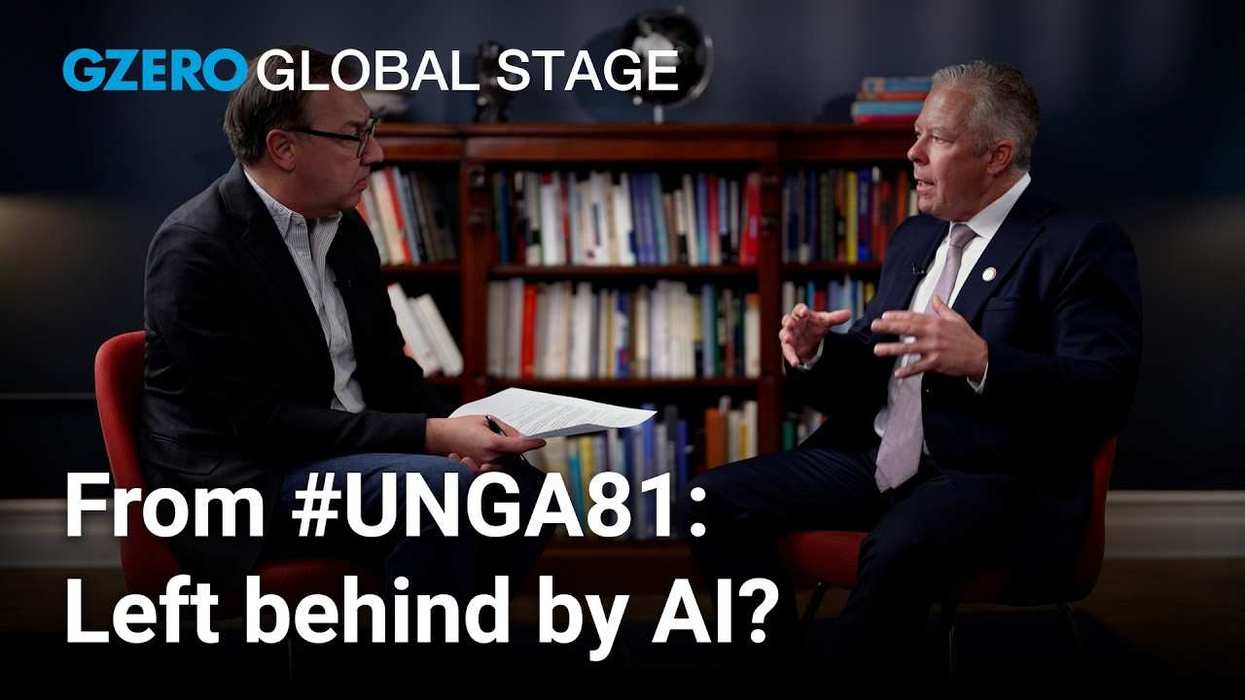
Doreen Bogdan-Marin spends a lot of time thinking about how to keep the world connected as the Secretary-General of the International Telecommunications Union. The biggest frontier in that realm is expanding internet access to those in the developing world who struggle to get online.


To that end, she organized Partner2Connect, which hopes to raise $100 billion by 2026 to “connect every last person” on the planet to the internet. Doing so could help progress on the UN’s Sustainable Development Goals, which are woefully behind schedule.

She and GZERO’s Tony Maciulis discussed the potential benefits of worldwide connectivity, as well as AI’s potential to help close the gap.

More at the UN General Assembly: Global Stage.

More from Global Stage

Can we use AI to secure the world's digital future?

How do we ensure AI is safe, available to everyone, and enhancing productivity? It’s a big topic at this year’s UN General Assembly. That’s why GZERO’s Global Stage livestream brought together leading experts at the heart of the action for “Live from the United Nations: Securing our Digital Future,” an event produced in partnership between the Complex Risk Analytics Fund, or CRAF’d, and GZERO Media’s Global Stage series, sponsored by Microsoft.

Is the Europe-US rift leaving us all vulnerable?

As the tense and politically charged 2025 Munich Security Conference draws to a close, GZERO’s Global Stage series presents a conversation about strained relationships between the US and Europe, Ukraine's path ahead, and rising threats in cyberspace.

Gender gap in AI job displacement

Who benefits from AI and who is left behind? Speaking at the United Nations, Sarah Steinberg highlighted the disproportionate impact of AI on women in the workforce. One in three women works in a job "likely to be disrupted or significantly changed by AI compared to one in four men globally,” Steinberg said. At the same time, women account for only a third of those building AI skills, creating a skills gap that could limit access to emerging jobs.

How can AI improve everyday life for citizens?

How can artificial intelligence improve everyday life for citizens? Speaking at the United Nations, Parvathaneni Harish highlighted India’s approach to digital public infrastructure. “Today in India, the cost of access to internet is the lowest in the world… and data usage per capita is one of the highest,” he said.

Preparing the workforce for AI

How will artificial intelligence reshape the global workforce, and who will be ready for it? Speaking at the United Nations, Doreen Bogdan-Martin said the rapid growth of AI will transform jobs worldwide, making large-scale workforce training essential. “We’ve seen estimates that 170 million new jobs will be created; maybe 90 million jobs will be lost,” she said. “So how do we ensure that we’re prepared?”

Expanding AI access worldwide

Could AI deepen global inequality or help close the gap? Lisa Monaco, President of Global Affairs, Microsoft, says it all comes down to trust. She argues that “people won’t use technology that they don’t trust,” especially as geopolitical tensions raise concerns about the reliability and resilience of digital infrastructure.