Skip to content
Search

Latest Stories

GZERO AI

AI election safeguards aren’t great

​A man views a computer screen displaying the AI-crafted speech of former Prime Minister Imran Khan, to call for votes ahead of the general elections in Karachi, Pakistan, in early February 2024.

A man views a computer screen displaying the AI-crafted speech of former Prime Minister Imran Khan, to call for votes ahead of the general elections in Karachi, Pakistan, in early February 2024.

REUTERS/Akhtar Soomro
The Center for Countering Digital Hate has been testing the most popular AI tools to see if they’re able to be manipulated to generate election disinformation despite public promises and usage rules to the contrary.

The British nonprofit used Midjourney, OpenAI's ChatGPT, Stability.ai's DreamStudio, and Microsoft's Image Creator for testing in February, simply tying in different text prompts related to the US elections. The group was able to bypass the tools’ protections a whopping 41% of the time.

Some of the images they created showed Donald Trump being taken away in handcuffs, Trump on a plane with alleged pedophile and human trafficker Jeffrey Epstein, and Joe Biden in a hospital bed.

Generative AI is already playing a tangible role in political campaigns, especially as voters go to the polls for national elections in 64 different countries this year. AI has been used to help a former prime minister get his message out from prison in Pakistan, to turn a hardened defense minister into a cuddly character in Indonesia, and to impersonate US President Biden in New Hampshire. Protections that fail nearly half the time just won’t cut it. With regulation lagging behind the pace of technology, AI companies have made voluntary commitments to prevent the creation and spread of election-related AI media.

“All of these tools are vulnerable to people attempting to generate images that could be used to support claims of a stolen election or could be used to discourage people from going to polling places," CCDH’s Callum Hood told the BBC. “If there is will on the part of the AI companies, they can introduce safeguards that work.”
More For You

What we learned from a week of AI-generated cartoons
Courtesy of ChatGPT
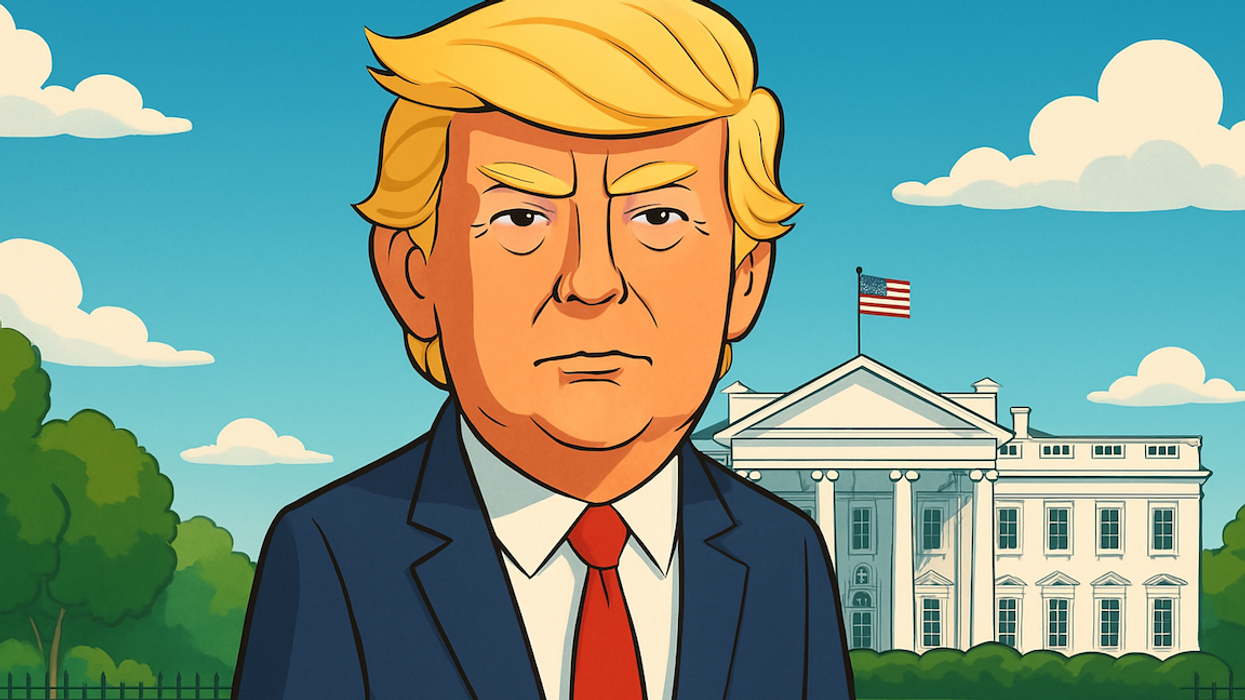
Last week, OpenAI released its GPT-4o image-generation model, which is billed as more responsive to prompts, more capable of accurately rendering text, and better at producing higher-fidelity images than previous AI image generators. Within hours, ChatGPT users flooded social media with cartoons they made using the model in the style of the [...]
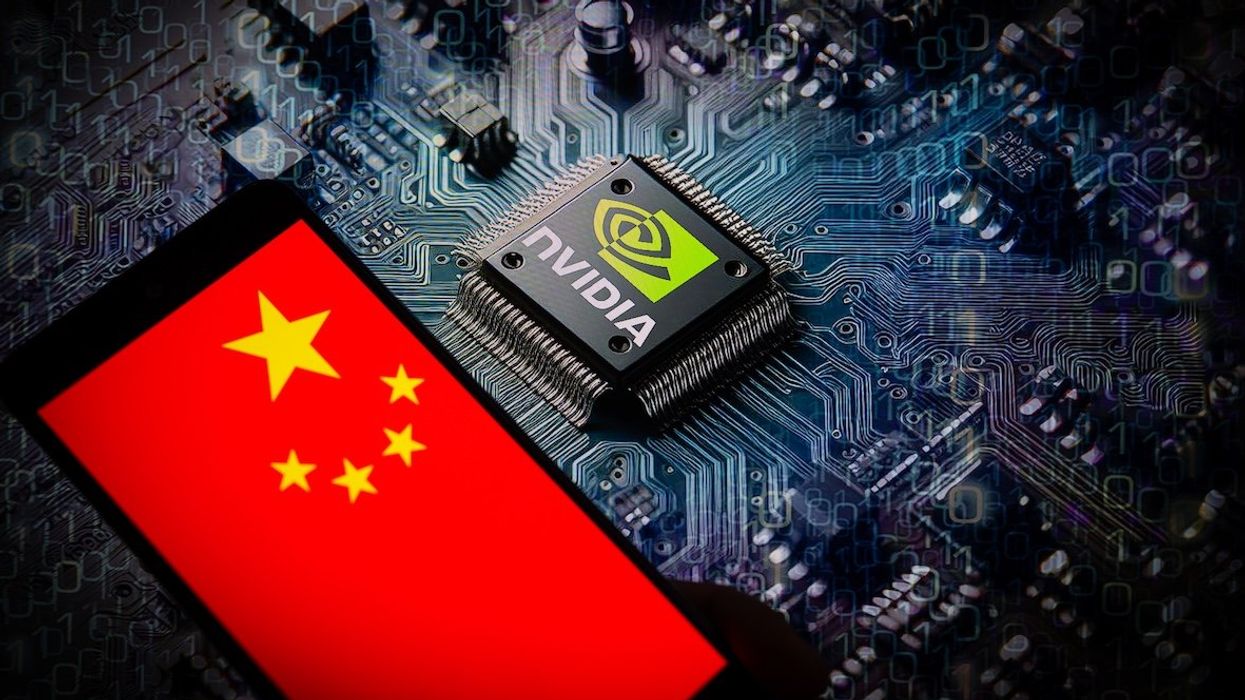
The flag of China is displayed on a smartphone with a NVIDIA chip in the background in this photo illustration.

The flag of China is displayed on a smartphone with a NVIDIA chip in the background in this photo illustration.

Jonathan Raa/NurPhoto via Reuters
H3C, one of China’s biggest server makers, has warned about running out of Nvidia H20 chips, the most powerful AI chips Chinese companies can legally purchase under US export controls. [...]
​North Korean leader Kim Jong Un supervises the test of suicide drones with artificial intelligence at an unknown location, in this photo released by North Korea's official Korean Central News Agency on March 27, 2025.

North Korean leader Kim Jong Un supervises the test of suicide drones with artificial intelligence at an unknown location, in this photo released by North Korea's official Korean Central News Agency on March 27, 2025.

KCNA via REUTERS
Hermit Kingdom leader Kim Jong Un has reportedly supervised AI-powered kamikaze drone tests. He told KCNA, the state news agency, that developing unmanned aircraft and AI should be a top priority to modernize North Korea’s armed forces. [...]
The logo for Isomorphic Labs is displayed on a tablet in this illustration.

The logo for Isomorphic Labs is displayed on a tablet in this illustration.

Igor Golovniov/SOPA Images/Sipa USA via Reuters
In 2024, Demis Hassabis won a Nobel Prize in chemistry for his work in predicting protein structures through his company, Isomorphic Labs. The lab, which broke off from Google's DeepMind in 2021, raised $600 million from investors in a new funding round led by Thrive Capital on Monday. The company did not disclose a valuation. [...]