There are very few places on earth where a dispute over license plates can threaten to ignite a war, and the city of Mitrovica, in northern Kosovo, is one of them.
The city is located in Albanian-majority Kosovo, but most of its inhabitants are ethnic Serbs who don't recognize the Kosovo government at all. There are government offices of both Serbia and Kosovo there, sometimes operating in the same buildings. No one knows who’s really in charge, but everyone has strong ideas about who should be.
The limbo of places like Mitrovica is the unfinished business of Kosovo’s unilateral declaration of independence from Serbia, which happened 15 years ago on Friday. After all these years, why is it still so hard for Kosovo and Serbia to bury the hatchet?
First, some background: Serbs, who are almost all Orthodox Christians, consider Kosovo their historic and spiritual heartland. But for at least 150 years the area has been inhabited primarily by Muslim Albanians. In the 1980s, Serb-Albanian tensions flared as broader Yugoslavia splintered along ethnic lines. In 1989, Serbian President Slobodan Milošević stoked Serb nationalism over Kosovo while crushing the province’s political and cultural autonomy. An armed uprising by Kosovar militants in the late 1990s drew a ferocious Serbian response, prompting NATO to bomb Belgrade in 1999 to stop Milošević’s attempts at ethnic cleansing of the region.
After living for several years under UN and NATO protection, Kosovo unilaterally declared independence in 2008, with support from the US and EU. But Serbia, backed by Russia and China, refused to recognize the move.
Where do things stand now?
Kosovo is a de facto independent state but has no representation in international bodies like the UN. The US and much of the EU recognize its independence, but most of Latin America, Sub-Saharan Africa, and Asia do not. Meanwhile, thousands of NATO troops are still on the ground to protect the country’s roughly 2 million people.
EU-backed normalization talks between Kosovo and Serbia have gone on for more than a decade now, but despite both countries’ ambitions to join the EU itself, there’s been little progress, and experts say things aren’t getting any better.
“There’s just zero trust,” says Marko Prelec, a Balkans expert at Crisis Group, “and active hostility on both sides.”
Much of that tension centers on Mitrovica and other areas of northern Kosovo, where the local Serb minority uses Belgrade-run schools and hospitals, and chafes against Kosovo’s attempts to impose its authority.
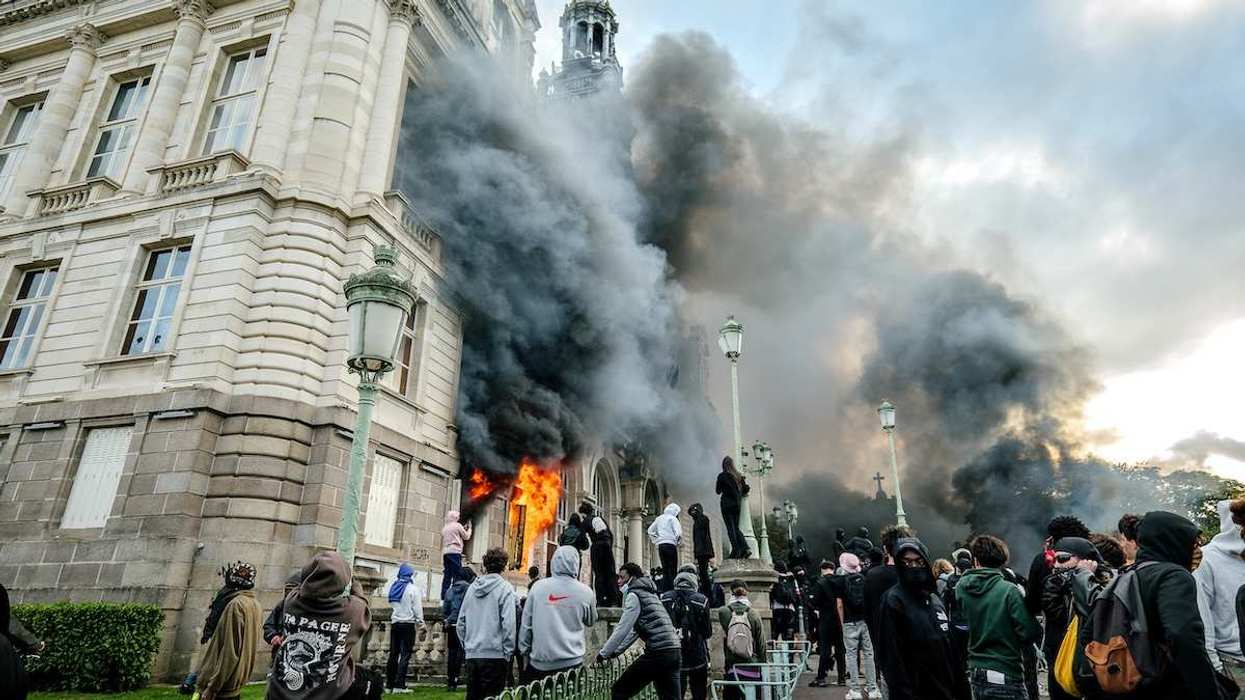
Last year, Kosovo's clumsy attempt to establish more direct control over the region backfired, sparking disputes over policing and even the use of Kosovo-issued license plates. Up went the barricades, and weeks of violent clashes followed. In a chilling echo of the 1990s, Belgrade briefly threatened to send troops across the border.
Is there a peace plan? A recently leaked US- and EU-backed outline centers on mutual recognition of the border, Kosovo getting a seat at the UN, and Kosovo granting Serb minorities in Kosovo a measure of formal autonomy. Neither side would have to formally “recognize” the other as a state.
Sounds fair enough, why can’t that work? There’s a personality problem, for one thing. Serbian President Aleksandar Vučić and Kosovo’s PM Albin Kurti are both headstrong nationalists who despise each other. Vučić recently called Kurti, who joined the Kosovo militants in the 1990s, “terrorist scum.”
But it’s mainly a problem of who has to do what first. Serbia says Kosovo is already committed to giving autonomy to the Kosovo Serbs under a framework agreement from 10 years ago. The Kosovars, for their part, say “nothing doing” until Serbia stops blocking their right to a seat at the UN.
“Both sides reasonably assume that the other will try to cheat them out of whatever it is they sign,” says Prelec, “so they both insist on getting what they want up front, and that’s problematic.”
The EU, with US backing, is keen to see a resolution to the problem – after all, the last thing Brussels wants is another ugly war on its doorstep. But with so much bad blood and so little trust, 15 years is still too little time to reach a durable peace.“The history plays a role here,” says Prelec, “and that history is actually very recent history.”
CORRECTION: An earlier version of this piece stated that the EU recognizes Kosovo's independence. While the European Union provides political and economic support to Kosovo, and is actively backing the conflict resolution process between Kosovo and Serbia, the EU does not formally have a common position on Kosovo -- five EU member states (Cyprus, Greece, Romania, Slovakia, Spain) do not recognize Kosovo's independence. We regret the error.