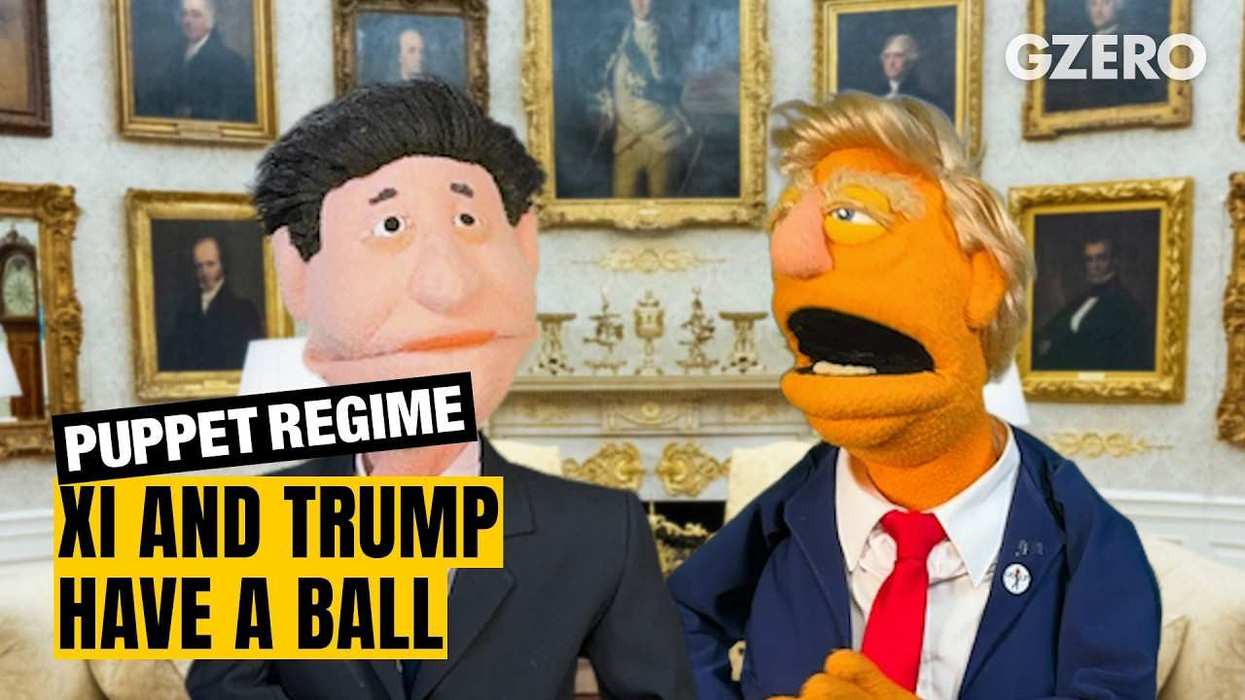
A week into the second Trump administration, the conviction held by many that the world was more prepared for Donald Trump in the US presidency has quickly faded. This weekend’s flare-up between Trump and Colombian President Gustavo Petro over tariff threats for deportation flights further strained any remaining optimism. In its place is a stark reality: Trump is back with a bang.
Trump launched an opening salvo – a campaign not of military might but of the pen. Dozens of executive orders and presidential actions have papered the field, overwhelming and scrambling forecasts of a much hoped-for manageable Trump 2.0.
Within his record-breaking number of executive actions, Trump has begun to lay out a roadmap for the “Golden Age” of America he intends to deliver.
Setting the stage
Trump held the (virtual) spotlight late last week at the World Economic Forum’s annual sessions in Davos, Switzerland, an emerald city showcasing the world’s who’s who. With the global community eager to hear him contextualize his plans, Trump featured a highlight reel of his young administration’s greatest hits including negotiating the ceasefire in Israel-Gaza, saying, “We have accomplished more in less than four days … than other administrations have accomplished in four years. And we are just getting started.”
Many of the headlines relating to these early accomplishments have been devoted to the set of Trump executive orders with clear and specific implications. The decision, for instance, to pardon or commute sentences for certain offenses relating to Jan. 6, 2021, sent ripples through the domestic political environment. As did his order to instruct the attorney general not to take action to enforce the so-called TikTok ban for 75 days. A move by a federal judge in Washington state to place a nationwide temporary restraining order on Trump’s Day 1 “Birthright Citizenship” executive order previews the court challenges ahead for the president’s targeted initiatives.
A Trump 2.0 blueprint
Yet, there is a second set of presidential actions with broader impact that deserve deeper scrutiny. In these, Trump and his team have been more open-ended, memorializing their ambitions across trade and economic policy, national security, and foreign policy for the months and years ahead.
On trade, there was initial relief abroad when Trump did not impose blanket tariffs on Day 1. Instead, he issued a wide-ranging action laying out an “America First Trade Policy,” which includes an instruction to the Department of Commerce, Treasury, and United States Trade Representative to undertake a host of investigations and reviews to address unfair and unbalanced trade. This includes the creation of an External Revenue Service to collect tariffs, duties, and other foreign trade-related revenues. Paraphrasing former vice-presidential candidate Tim Walz during the 2024 campaign – you don’t create a new governmental organization if you don’t plan on collecting the tariffs. Alluding to these plans in his Davos remarks, Trump suggested that if firms do not make their product in America – which is their “prerogative” – they will have to pay some tariff.
In addition to the spat with Colombia, Trump has threatened to impose 25% tariffs on imports from Canada and Mexico on Feb. 1. Trump’s near-term focus on his northern and southern borders is almost certainly to apply pressure for concessions on immigration but also ahead of forthcoming renegotiations of the USMCA agreement. And while Europe may escape the first round unscathed, it would do well to pay attention. If Trump can impose tariffs on US allies close to home, he can easily do the same across the Atlantic, where he will be looking for leverage on US LNG sales, European automotive manufacturing, NATO defense spending, and his emerging dream of bringing Greenland into the US fold.
On foreign policy, Trump has set for himself an aspiration agenda. Gone are the days of isolationism, now replaced by eyes that roam from Canada to the Panama Canal and the “Gulf of America.” In his inaugural address, Trump suggested that the US is a nation “more ambitious than any other.” In a directive to the Secretary of State, Trump codifies this expansionist vision: “From this day forward, the foreign policy of the United States shall champion core American interests and always put America and American citizens first.” To that end, the administration placed an immediate 90-day hold on all new US foreign development assistance pending review and consistency with US foreign policy. A consequential development for US relationships and soft power worldwide.
As the conversations across Europe and the world shift from an election post-mortem to looking forward, the focus has narrowed to an essential question: What kind of America are we in for, and where do we go from here? With a flurry of activity since taking office, Trump has cast aside (misguided) expectations of restraint. His government will be busy on many fronts laying a path toward a golden age.
Lindsay Newman is a geopolitical risk expert and columnist for GZERO.