Skip to content
Search

Latest Stories

News

What We're Watching: US Fed's next move, China's stimulus, Chile's president needs a win

What We're Watching: US Fed's next move, China's stimulus, Chile's president needs a win

Federal Reserve Chairman Jerome Powell arrives to testify before the US Senate.

Tom Williams via REUTERS
Make us preferred on Google

All eyes on Powell at Jackson Hole

Updated Aug. 26: Heard of Jackson Hole, Wyoming? That's where all the economic bigwigs from around the world are gathering for an annual three-day event focused on the state of the global economy. In a stark departure from his position throughout much of the pandemic that inflation would be “transitory,” US Federal Reserve Chair Jerome Powell said in a keynote address Friday that there would be “some pain” for households and businesses in the months ahead, noting that inflation continues to soar. Powell also said it’s likely that we’ll see a “softening of labor market conditions,” suggesting that record low unemployment – the current silver lining of the economy – could tick upwards. Indeed, the Fed chair sought to defend his track record to economists and central bankers, many of whom have been critical of him for waiting too long to raise interest rates. Many observers took Powell’s address as a sign that the Fed will continue to tighten monetary policy in the months ahead as inflation tops 8% over the previous year. What's more, some economists say the Fed could soon raise rates as high as 4% (its current target rate is 2.25-2.5%), sparking fears of a sharp recession. Still, inflation is mild in the US compared to parts of Europe, particularly the UK, where inflation is estimated to hit a whopping 18.6% early next year.


China grabbing at stimulus straws

China has announced an additional $44 billion worth of stimulus spending on infrastructure to breathe some life into its battered economy. Struggling businesses certainly need help: the real estate sector is drowning in debt, factories are shutting down due to a heat wave and an energy crunch, and rural banks are failing. But more importantly, zero-COVID is hurting both productivity and consumer confidence in a rebound anytime soon — and the government has no plans for relaxing the policy in the near term. It's an open secret that Xi Jinping knows annual GDP growth will fall far short of Beijing's 5.5% target for 2022. In fact, it'll probably end up at around 3% — a dismal performance for the world's second-largest economy. The timing could not be worse for Xi, who's getting ready to secure a norm-defying third term as secretary-general of the ruling Communist Party at the much-anticipated 20th Party Congress this fall. China's leaders are a bit distracted by Taiwan these days, but if they continue to drop the ball on the economy, the CCP’s marriage of convenience to the Chinese people since 1949 might be tested.

Chile’s embattled president needs a win

Chile's President Gabriel Boric is pulling out all the stops ahead of a crucial national vote on Sept. 4 over whether to adopt a new draft constitution that would ditch the Pinochet-era text. Boric – a former student leader who came to power in December 2021 as a change candidate – reintroduced a bill this week to slash the working week from 45 to 40 hours within 5 years. (The legislation has been dead in the water since 2017.) This push comes as Boric, largely seen as a symbol of the region’s “Pink Tide,” is being thrashed in the polls due to soaring inflation, the deteriorating security situation, and some rookie missteps. As a result, many Chileans have soured on the draft constitution (although it was drafted by an independent political body elected by voters) which has sought to entrench Indigenous rights and beef up the role of the state to reduce economic inequality (around 46% say they will vote against the text; 33% in favor). It’s a big shift considering that in 2020, almost 80% of Chileans supported rewriting the constitution. Boric needs a political win, and losing the plebiscite vote would be another big setback for his government.

More For You

Labour takes the lead
Farida Dowidar
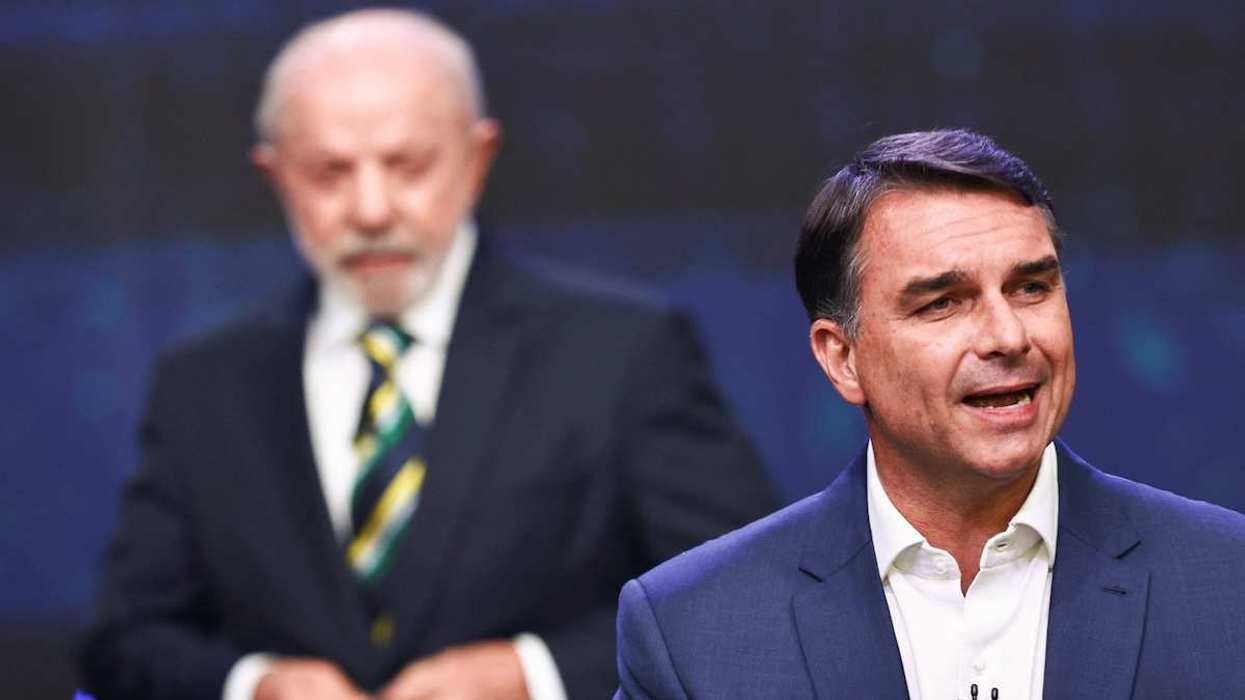
Support for the UK’s incumbent Labour party has surpassed that of the far-right Reform UK for the first time since March 2025, according to weekly pollsters More in Common. Labour is now at 28%, Reform is in second place at 24%, while the Tories trail just behind at 22%. Labour’s poll bounce has been labeled the “Burnham Bounce”, thanks to new [...]
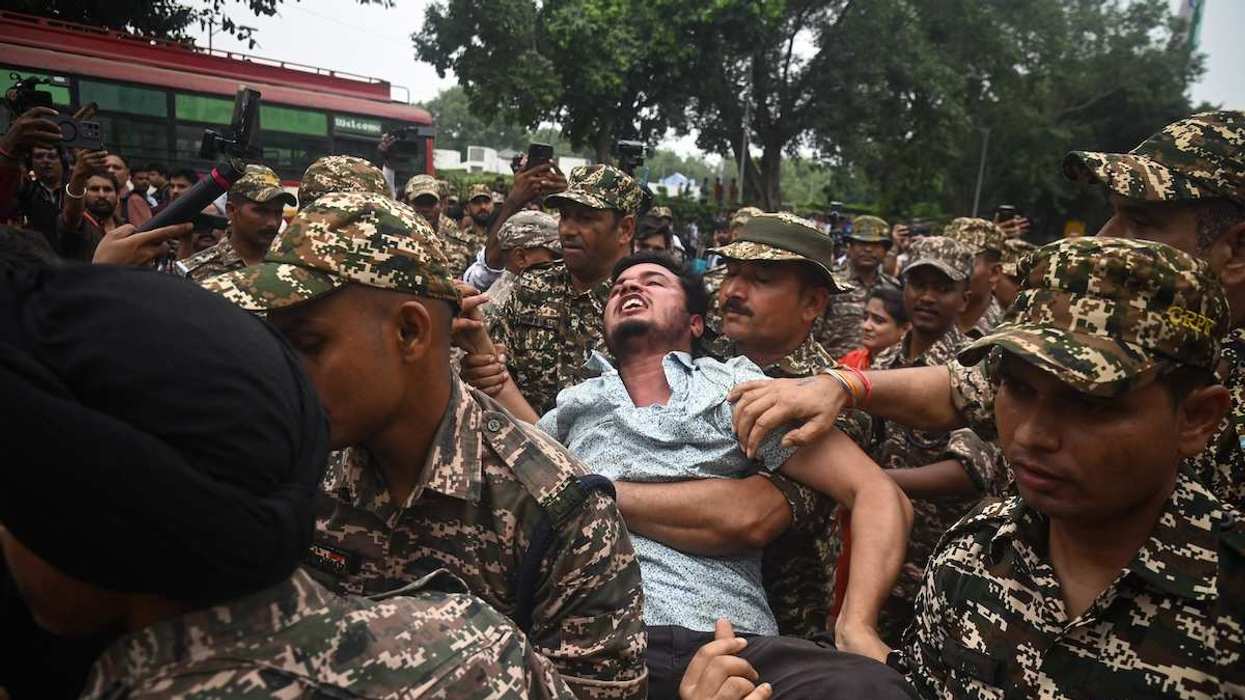
People chant slogans as they walk during a protest and shutter-down strike called by the banned Joint Awami Action Committee (JAAC), an alliance of civil society groups, in Neelum Valley, Pakistani Kashmir.

People chant slogans as they walk during a protest and shutter-down strike called by the banned Joint Awami Action Committee (JAAC), an alliance of civil society groups, in Neelum Valley, Pakistani Kashmir, June 21, 2026.

REUTERS/Naseer ud Din
Contested elections in Pakistan-administered KashmirRegional parliamentary elections began in the Pakistan-administered portion of Kashmir on Monday, but the first round of voting has been racked with violence. It's the latest flare-up in what’s been weeks of clashes in the region between police and protesters, who are organized by the Joint Awami [...]
Kimi K3 is released by Moonshot AI at the World Artificial Intelligence Conference (WAIC) 2026 in Shanghai, China

Kimi K3, a new-generation AI model with 2.8 trillion parameters, is released by Moonshot AI at the World Artificial Intelligence Conference (WAIC) 2026 in Shanghai, China, July 20, 2026. It is currently the world's largest open-source model.

Oriental Image via Reuters Connect
On Monday, Beijing-based Moonshot AI released Kimi K3 for public download, an “open-weight” model that made headlines last week for reportedly matching – and in some cases outperforming – the most advanced systems from US rivals at a fraction of the cost. [...]
Why the US and Iran still can’t reach a deal
- YouTube
In his latest Quick Take, Ian Bremmer discusses the on-again off-again ceasefire between the United States and Iran and why it has failed to hold, arguing that both sides remain locked in a fundamental disagreement over who has the leverage. [...]