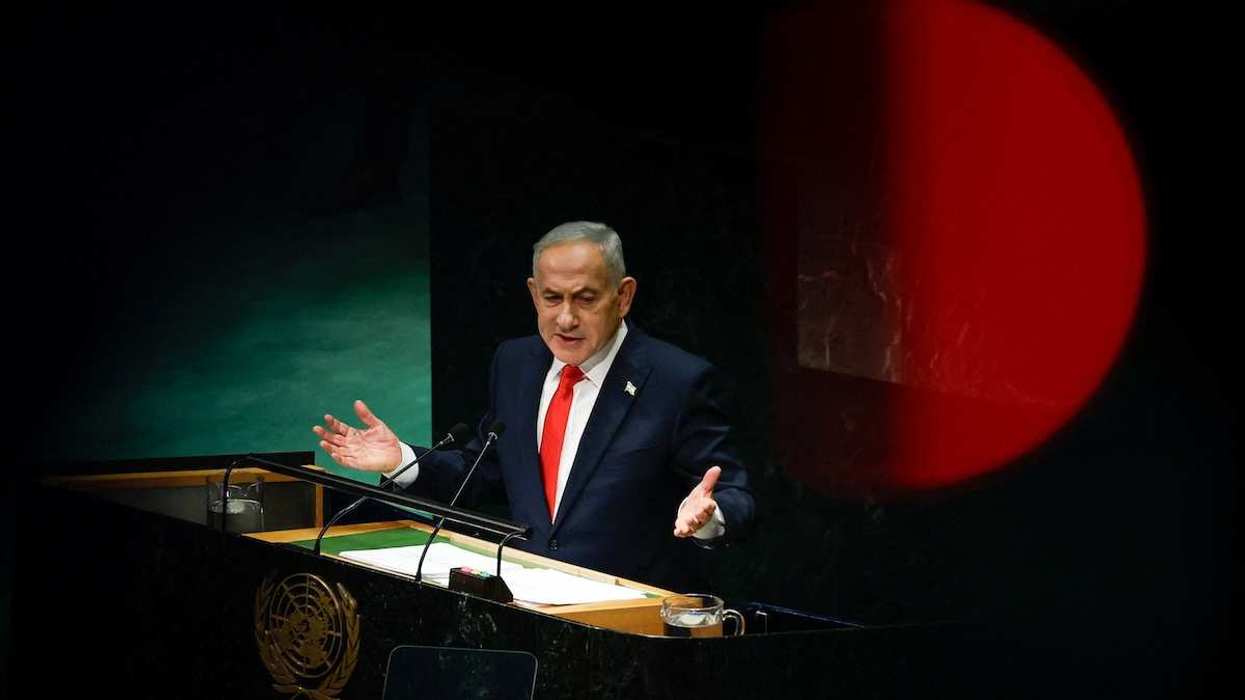
Bibi on trial as deadlock continues: One political commentator described it as "the ultimate Israeli split screen." As Prime Minister Benjamin "Bibi" Netanyahu's corruption trial finally kicked off after months of delay because of the coronavirus pandemic, political parties were meeting with Israel's President Reuven Rivlin to "recommend" whether the incumbent PM or the opposition should be given the first shot at trying to form a new coalition government after Israelis recently went to the polls for the fourth time in two years. Back in court, the prosecutor said that the PM made "illegitimate use" of his power to obtain favorable media coverage and other luxury perks, with Bibi responding by calling the trial an "attempted coup." The political temperature could not be hotter right now: though Netanyahu is likely to have the votes to try and form a government in the next few weeks, political stalemate persists, making it increasingly unlikely that he will be able to hobble together a workable coalition. Netanyahu also must appear in court three times a week, a massive distraction as he tries to save his political career. All this comes as Israel tries to revive its post-pandemic economy without a stable government or a national budget. The prospect of a fifth election looms large.
Iran talks finally resume: After months of speculation over how to revive the 2015 Iran nuclear deal, which the US unilaterally abandoned under the Trump administration, most signers of the pact — France, Germany, the UK, China, and Russia — will meet in Vienna on Tuesday to chart a path forward. But there's a catch: representatives from the US and Iran will be present but they will not meet face-to-face. Why? Because the Iranians still insist that the US immediately lift all 1,600 economic sanctions — worth $1 trillion in economic damages — first. The US, meanwhile, says that the Iranians — who have enriched uranium well beyond the deal's limits in recent years — must fall back into compliance with the accords themselves. The other signatories will try to bring Washington and Tehran closer, but that won't be easy. Trust on both sides has cratered after six years of bluster and confrontation, with the Americans insisting Tehran cease its support of terrorist proxies across the Middle East. But time is of the essence: Iran is set to hold national elections in June and if hardliners win the presidency and parliamentary seats, Tehran could lose interest in engaging with America at all.
Kosovo parliament elects a president just in time: With just one day until a deadline that would have triggered snap parliamentary elections, the tiny Balkan nation of Kosovo's legislators on Sunday elected 38-year old lawyer and activist Vjosa Osmani as president, representing the ruling leftwing nationalist Vetëvendosje movement. The post had been formally vacant since last November when her predecessor stepped down over war crimes accusations. Two prior attempts to elect a president in recent days had failed because boycotts by opposition parties and ethnic-Serb parties prevented the body from reaching quorum. Osmani and Prime Minister Albin Kurti, who founded Vetevendosje himself as an anti-establishment party more than a decade ago, have styled themselves as a younger and more liberal generation of Kosovar leaders. One of the biggest challenges, in addition to a massively struggling economy, is to chart further progress in peace talks with Serbia, which — with backing from China and Russia — still refuses to recognize the independence of its former province. (Kosovo, with support from NATO, declared independence in 2008 after more than a decade of struggle against the threat of ethnic cleansing at the hands of Serb nationalists.) The Trump administration brokered a partial normalization of economic ties last year but deep misgivings remain on both sides.