Who's Japan's new PM? The world's third largest economy has a new prime minister after the Japanese parliament voted to elect Yoshihide Suga to the top job just weeks after Shinzo Abe, Japan's longest serving prime minister, resigned because of health problems. Suga, a former cardboard factory worker and close political confidant of Abe for almost a decade, was elected to head the governing Liberal Democratic Party (LDP) with 70 percent of the parliamentary vote. There's widespread consensus among political observers that Suga, known as a pragmatist, will seek to continue Abe's political agenda and legacy, with one commentator dubbing him an "Abe substitute." Suga's cabinet also includes many former Abe loyalists, suggesting a continuation of his policies. Japan now faces twin economic and health crises, while experts say a second wave of infection has already hit the country. One key decision for Suga is whether to move forward with the Olympic games, which Tokyo is still slated to host next summer despite uncertainty about the pandemic.
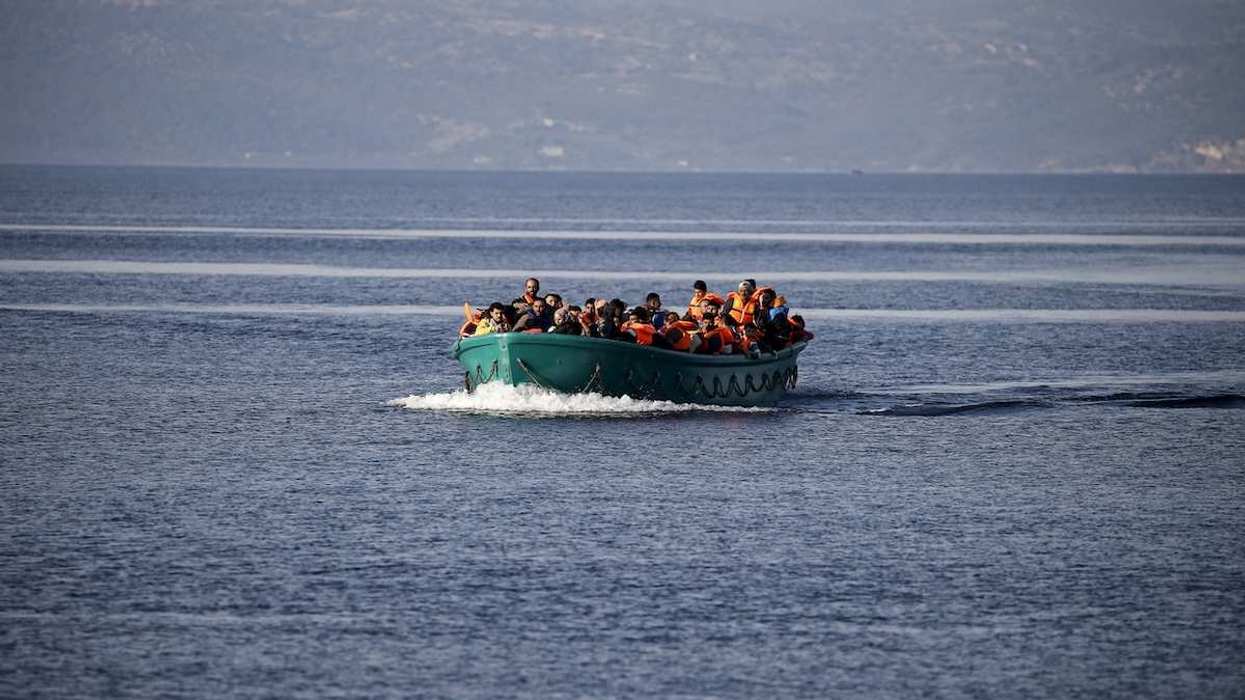
Moria refugees in limbo: More than a week since a fire ripped through the Moria refugee camp on the Greek island of Lesbos, thousands of refugees remain in limbo, sleeping on the streets with little access to food, water, or shelter. Of the nearly 13,000 displaced refugees — who hail from 70 different countries — the Greek government has been able to resettle about 1,200 in temporary migrant camps. In part, that's because many of the migrants are refusing to go to new camps, demanding to be resettled permanently elsewhere in Europe. Moria, an overcrowded camp originally intended to house just 3,000 people, became a symbol of despair in 2015 when thousands of refugees fleeing conflicts in Afghanistan, Syria and parts of Africa began arriving at the Mediterranean coast in droves in the hopes of permanent resettlement in Europe. This week, Germany said it will take in more refugee families from Greece, but as Lesbos descends into chaos (yet again), critics say the offer doesn't go far enough. The plight of Moria has long been a symbol of the deep divisions over migrant policy that continue to plague the 27-member European Union.
Lebanon's blown deadline. With their country in turmoil, Lebanon's leaders had one job. Under a plan drawn up earlier this month by France, the country's ever-squabbling sectarian political factions agreed to form a new, reform-oriented government by September 16. In exchange for that, Paris was supposed to help unlock massive amounts of foreign financial support for the crisis-wracked country. That one job proved to be too much. Clashes over key posts, and resistance from parliament speaker Nabih Berri — an ally of Hezbollah, the Iran-backed Shiite group, who has criticized the French plan and called for the US to drop its sanctions against the group — scuttled the talks. As Lebanon staggers through a crippling economic crisis and the aftermath of last month's devastating port explosion, the stakes couldn't be higher. Prime Minister designate Mustapha Adib, whose job it is to form a government, says "god willing, all will be well." As Lebanon's human leadership continues to fail, God's will may be all that can help at this point.