Violence spreads in Sudan
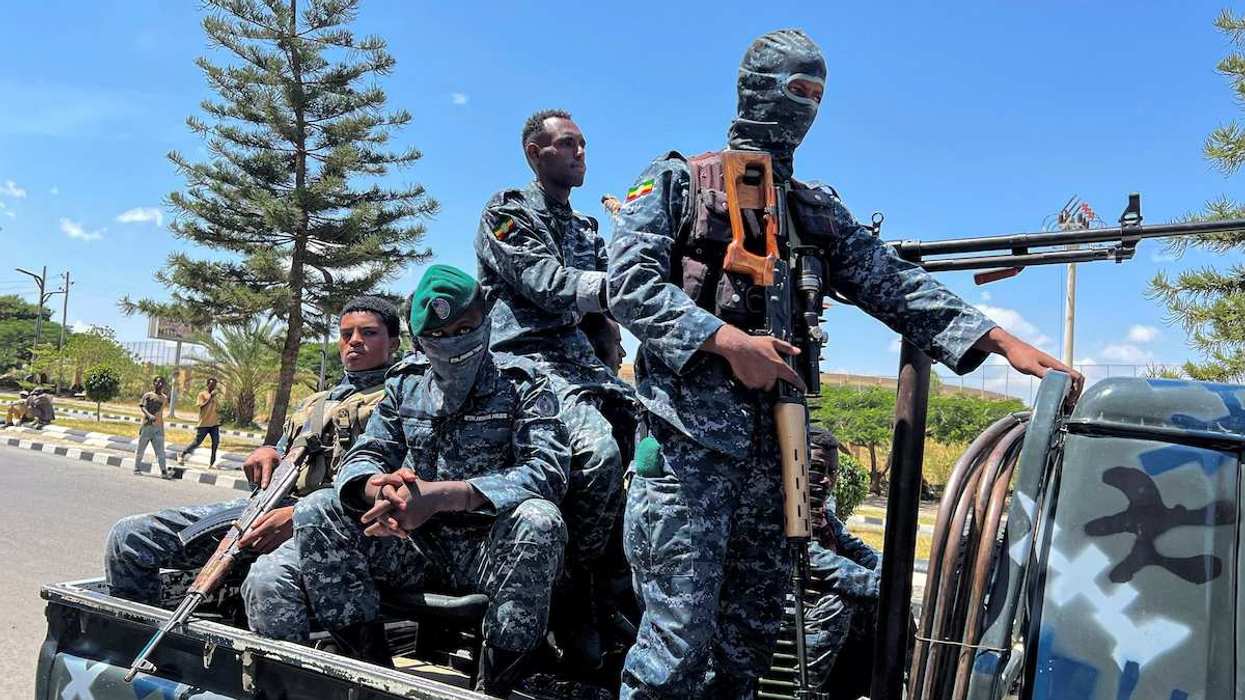
Fighting in Sudan raged on for a fourth day Tuesday, and it’s unclear who is now in control of the country. Many of Khartoum’s 5 million residents are hiding in their homes as street fighting and air raids continue in the capital. So far, more than 1,800 people have been injured, while the death toll is nearing 200.
Who is fighting? Two military factions are vying for control of the oil-rich country that’s been trying to transition to democracy since longtime despot Omar al-Bashir was ousted in 2019. Gen. Abdel-Fattah Burhan, the country's army chief and de facto leader since 2021, is facing off against Mohammed Hamdan Dagalo, head of the RSF militia. (For more on the rivalry, see here.)
Amid a battle for control of key infrastructure, Khartoum's international airport has been subject to ongoing shelling, while a US diplomatic convoy also came under attack Tuesday. And while the UN, US and regional bodies have called for a truce, both sides have rejected ceasefire calls.
Still, we’re watching to see whether regional heavyweights – including Egypt and the United Arab Emirates – that have a vested interest in the outcome have any luck in getting the two sides to stand down.
What’s Biden waiting for?
Anyone who has paid attention to his comments over the past few weeks knows that Joe Biden is running for reelection. On Friday, as he finished his much-ballyhooed visit to Ireland, he told reporters that, “I told you, my plan is to run again” and that a formal announcement was coming “relatively soon.”
So, what’s the holdup? Will Biden, as some have speculated, announce on April 25, the four-year anniversary of the formal announcement of his 2020 candidacy? Or might he wait longer? By announcing soon, the president would end any remaining speculation that he might change his mind, a shock move that would open the field to other Democrats. It might also help him avoid the suggestion, whispered by some Democrats and shouted by many Republicans, that he’s indecisive or hiding from the cameras.
But by waiting he could keep the media focused a while longer on Donald Trump’s legal problems and on the squabbling among Republicans. Why hurry, some ask, when Biden faces no viable challenge from within his party? It’s his decision to make, of course, and he’ll surely decide soon on how, when, and where to take on the combined roles of president and presidential candidate.
Russian foreign minister visits Latin America
Sergey Lavrov spent Monday in Brasilia, where recently elected President “Lula” Da Silva has already irked Washington by both-sidesing the Ukraine war and refusing to sell weapons to Kyiv.
For Russia, it’s no small thing that one of the world’s largest democracies is at least sympathetic to the Kremlin’s version of the Ukraine story. The fact that Russia exports lots of fertilizer to Brazil’s powerful farm industry probably helps.
Lula, meanwhile, has long sought to carve out a role as a leader of the Global South, where many view the faraway Ukraine war chiefly through the lens of food and energy price inflation and are skeptical of American arguments about defending democracy or the “rules-based order.” Still, he has to tread carefully – os gringos are Brazil’s largest foreign investors and key partners on Lula’s climate change agenda.
While Lavrov thanked Lula for his support, the White House, in a tough rebuke, accused the Brazilian president of "parroting Russian and Chinese propaganda without at all looking at the facts.”
After Brasilia, Lavrov will visit old Kremlin comrades in Cuba, Venezuela, and Nicaragua. All are countries where US sanctions have enabled Russia to gain significant footholds in energy, arms sales, and general “rogue-state” bonhomie.
But beyond that, Russia lags well behind the region’s two major external players: China and the US. See our GT below for more.
US cracks down on China’s foreign police stations
The US Justice Department on Monday arrested two US nationals of Chinese origin and charged them in connection with allegedly running a secret police station in New York City. Separately, the Feds also accused 34 Chinese cops of using fake social media accounts to harass California-based dissidents. The indictments are part of a wider yearslong DOJ probe into China's efforts to go after ethnic Chinese who are openly critical of Beijing in America.
This is a big deal because it's the first time any criminal charges have been filed against anyone suspected of operating one of China's alleged 100 overseas police stations. Also, the fact that the indictments were handed down in the US will surely shine a brighter spotlight on China's foreign policing shenanigans, putting other countries in a tough spot amid worsening ties between China and the West.
But the charges of conspiring to act as agents for the Chinese government fall short of actual espionage or unlawful detainment on US soil. And making them public might send China the wrong message, encouraging its consulates to do a better job of covering up their foreign police ops, which many fear seek to lure dissidents back to the mainland. Either way, expect a fiery response from Beijing.