GZERO World Clips
Iran is protecting itself through restraint in Israel-Hamas war, says Kim Ghattas
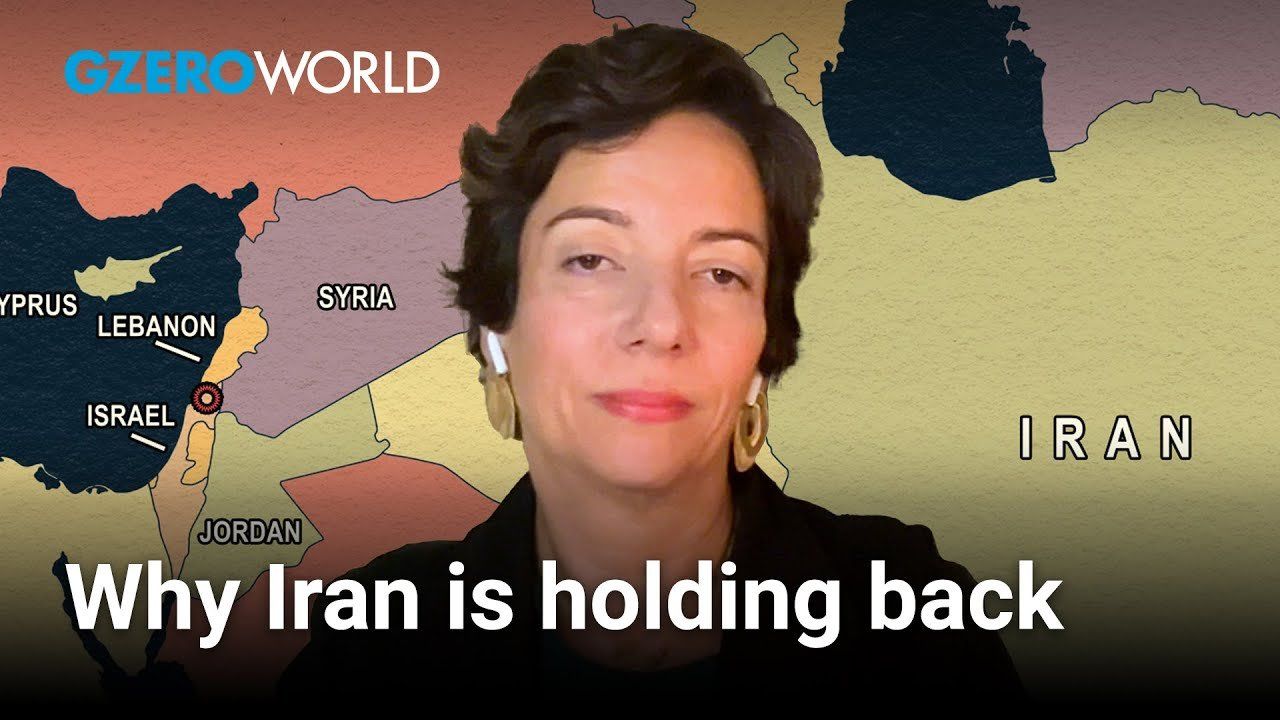
Iran is protecting itself through restraint in Israel-Hamas war, says Kim Ghattas | GZERO World
Will Iran use Hezbollah fighters to help Hamas in Gaza?
On GZERO World, Ian Bremmer spoke with Beirut-based journalist Kim Ghattas about the rising tensions on Israel’s northern border with Lebanon, as Israeli Defense Forces and Hezbollah fighters exchange daily rocket fire and thousands of people on both sides flee their homes. Like Hamas, Hezbollah has an eradicationist ideology that calls for the destruction of the state of Israel, a position that could be untenable if the border clashes continue to escalate. Hezbollah is Iran’s most powerful proxy, but Ghattas doesn’t think it’s in Tehran’s interest to use the militant group to further Hamas’s goals.
“For 44 years Iran has claimed that is a supporter of the Palestinian people,” Ghattas explains, “I think Iran has come to realize that its use of the Palestinian cause has bumped up against the limits of what’s possible.”
Ghattas points out that Hezbollah’s primary purpose for Iran is to serve as a deterrent against potential strikes by Israel or the United States. The biggest priority now is to find a diplomatic solution to the Palestinian question. Given the urgency of the situation in Gaza, Iran may be more willing to discuss the possibility of a two-state solution, a position that would have been impossible to imagine even a few years ago.
In this special edition of “ask ian,” Ian Bremmer reflects on the life and passing of his beloved dog, Moose.
2.8 is way above the UN target of 1.5 degrees that was set by the 2015 Paris Agreement.
Prime Minister Giorgia Meloni has deployed 500 troops to Milan and tightened nationwide anti-rioting laws in an effort to quell unrest that has gripped the city since the weekend.
President Trump has changed course on Ukraine before. We all remember the Oval Office pyrotechnics (and the reconciliation). But his latest turn toward Russia could prove harder to reverse.