With everything going on in the Middle East, Ukraine, the United States, and elsewhere, you could be forgiven for not thinking much about North Korea lately. But while we’ve all been looking away, the “hermit kingdom” and its Supreme Leader Kim Jong Un are emerging from the G-Zero world in their strongest geostrategic position in decades.
North Korea’s economy grew 3.7% in 2024 according to the South Korean central bank – its fastest rate in eight years. Satellite imagery analysis by a South Korean think tank found that its nighttime lights – a proxy for economic activity – are glowing roughly three times brighter than they did five years ago, and not just in the capital, Pyongyang. It’s a far cry from 2020, when the Covid-19 pandemic, food shortages, and sanctions were hammering North Korea, and Kim went on national television to apologize. “I am really sorry,” he said, weeping. “My efforts and sincerity have not been sufficient enough to rid our people of the difficulties in their life.”
Kim owes the turnaround to Russian President Vladimir Putin. When Russia’s war in Ukraine stalled, Kim offered him men and munitions. In return, North Korea got hard currency, energy, food, and military technology the country had spent decades trying to acquire illicitly (including help developing nuclear-powered submarines). Pyongyang netted billions of dollars from arms sales and gained valuable combat experience on drone warfare, air defense, and modern tactics. Perhaps more valuable than money or weapons, Russia also recognized North Korea as a de facto nuclear weapons state – a significant breach for a permanent Security Council member that had long pushed for denuclearization and backed UN sanctions.
It was the first crack in a 30-year containment wall … but not the last.
Russia’s growing influence with Pyongyang forced a reluctant China to counterbalance it. Beijing had long been North Korea’s principal patron, accounting for more than 90% of its trade. But Chinese President Xi Jinping had kept Kim at arm’s length for years – enforcing UN sanctions under US pressure, cutting bilateral trade by roughly half, and working to avoid the image that a close embrace of Kim would project. Beijing also worried that too visible a partnership risked accelerating nuclear ambitions in Japan and South Korea. Now that Russia had given him an outside option, however, Kim was no longer as dependent on China. And Beijing wouldn’t allow itself to be outbid in its own sphere of influence.
The first visible concession came when Xi invited Kim to China’s September 2025 “Victory Day” celebrations – a Kim’s first multilateral engagement since the Korean War era – and stood publicly alongside him and Putin, undermining years of work to prevent any appearance of an alliance with both autocrats. Xi continued the charm offensive by dispatching his premier to Pyongyang in October and Foreign Minister Wang Yi in April, before flying there himself in early June for a two-day state visit (the first since 2019) in what was his first foreign trip of 2026 – an honor Beijing reserves for its most important bilateral relationships.
(Xi had an additional motivation to make this trip: he sees Russia losing the war in Ukraine, and he’s worried about a cornered Putin becoming more risk-acceptant; engaging Kim directly offers more information, and perhaps a hedge, against that tail risk.)
That’s what leverage looks like in a G-Zero world. Kim has played Russia and China off each other, getting both to effectively accept North Korea as a nuclear state without conceding a thing to either. That acceptance was surely a precondition for Kim to show up in Beijing last September – the official communiqué from that summit and the readout from Xi’s June visit both omitted any reference to denuclearization, which was a first. He was so confident in his position that Kim unveiled a new uranium enrichment facility and announced plans to grow North Korea’s nuclear arsenal “at an exponential rate” days before the Chinese leader flew into Pyongyang. Beijing didn’t protest.
The big question is whether the United States will move in the same direction. And given who currently sits in the Oval Office, the answer is … maybe?
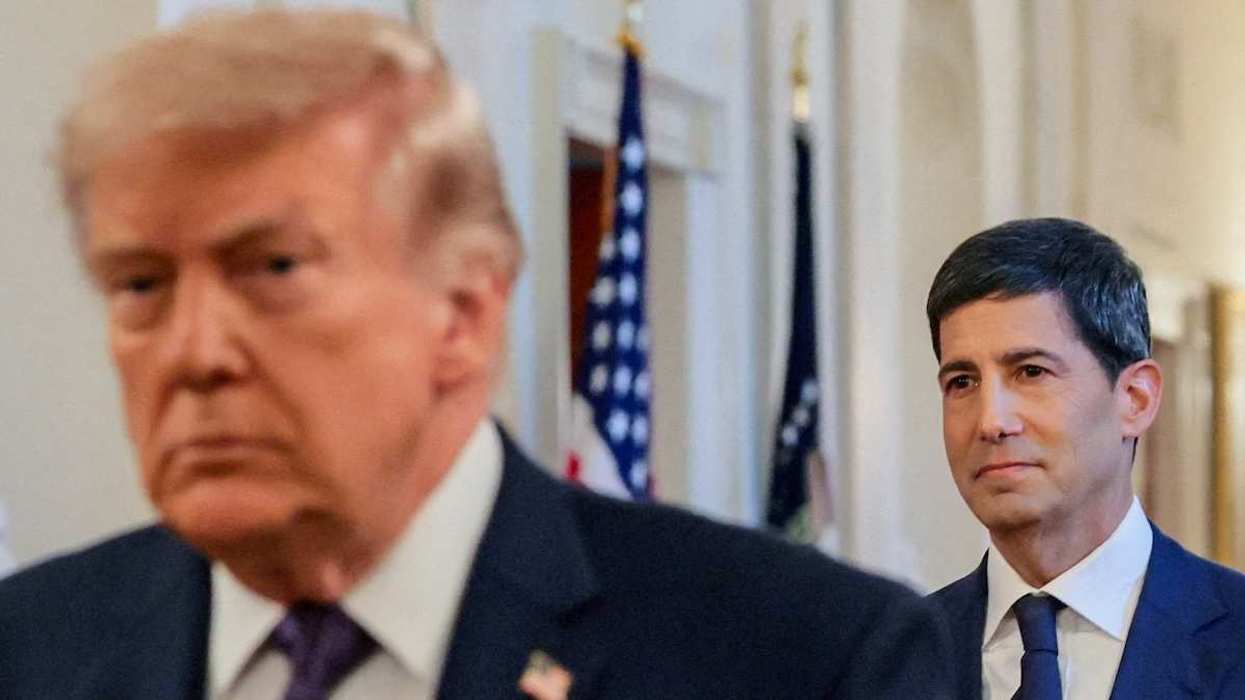
President Donald Trump sees Kim as the one that got away. His first term ended with unfinished business between them: 27 “love” letters, three friendly summits, a freeze-for-freeze (military exercises for missile tests) … but no grand bargain. The US leader wants to give it another shot. In his first bilateral with South Korean President Lee Jae-myung last year, the first thing Trump wanted to discuss was Kim. Trump has also asked Xi to arrange a meeting with the North Korean leader; Xi likely used the Pyongyang visit to gauge Kim’s appetite for one – potentially at China’s APEC gathering in November – and position Beijing as the indispensable intermediary.
Kim’s price for resuming talks with Washington remains dropping denuclearization as a precondition. Trump is contemplating paying it. After all, he doesn’t see recognition of North Korea’s nuclear status as much of a concession – similar to how he doesn’t see recognition of Crimea as Russian territory as anything other than just acknowledging what everyone already knows. His second administration’s National Security Strategy didn’t even mention North Korea as a threat. With Ukraine diplomacy stalled, the Iran war ending in disaster, and Trump’s Nobel Peace Prize obsession unabated, a summit with Kim is one of the few remaining foreign policy legacy plays on the table.
Whether such a summit could produce anything beyond the US recognition itself is a different question. Kim, who spent his early years in power desperately seeking a bargain with the United States, appears less interested in dealmaking now than he was in 2019. His position is stronger and he knows it. But having already secured de facto nuclear recognition from Russia and China, just getting Trump to follow suit – contra three decades of bipartisan US policy – would be the achievement of a lifetime.
The G-Zero is making the world’s most extreme authoritarian state a “normal” nation-state.