For the past 100 days, the narrative in the West on the Russia-Ukraine war has been remarkably consistent. Against all odds, vastly outnumbered and outgunned Ukrainians have time and again humiliated the Russian forces, supported by a relentlessly united Western front doing more and more each day to help Ukraine win the war.
As the conflict goes on, however, that will no longer be the dominant story. Increasingly, the narrative will be punctured by more frequent Russian military wins and Ukrainian losses, with cracks emerging in Ukraine’s information war and with American and European support for Ukraine getting close to peaking.
This narrative shift won’t happen immediately or suddenly. There’s still momentum behind Ukraine’s counteroffensives in Kharkiv and Kherson, Kyiv is still winning the information war (though not in the developing world), and much of the West is still committed to helping it defeat Russia.
Want to understand the world a little better? Subscribe to GZERO Daily by Ian Bremmer for free and get new posts delivered to your inbox every week.
But we’re already seeing the military tide turn a bit, with Russian forces slowly but steadily gaining territory in the Donbas, taking about a kilometer of land every day. On Tuesday, they seized most of Severodonetsk and made headway toward Lysychansk, two of the last remaining Ukrainian strongholds in the Luhansk region. They are also gaining territory in Donetsk, threatening the cities of Sloviansk and Kramatorsk. So in addition to having won the battle for Mariupol and secured a land bridge to Crimea, Russia is now getting close to capturing much of the Donbas—its stated aim for the “second phase” of the war.
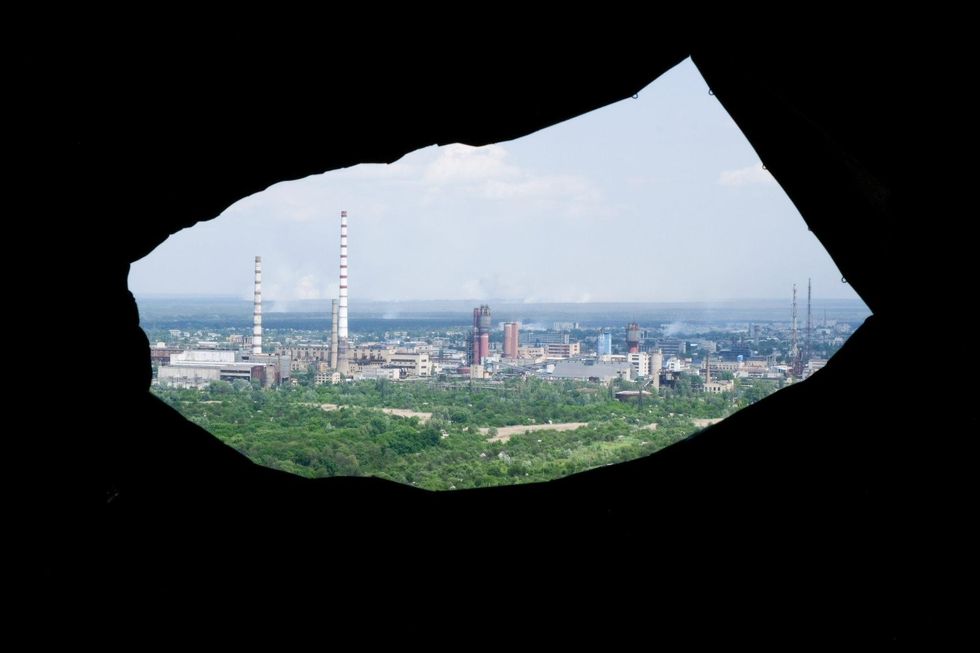 View of Severodonetsk from damaged building in the outskirts of the frontline city.Rick Mave/SOPA Images/LightRocket via Getty Images
As Russians continue to make gains in the Donbas, the Ukrainians will find it harder to win the information war as overwhelmingly as they have thus far. We’re going to see more negative stories like the one published in the Washington Post on May 29, the first since the war started to shine a light on Ukraine’s military losses and attrition problems.
Moreover, as neither side is able to eke out a decisive victory and war fatigue sets in, the limits of the West’s support for Ukraine will start to show.
The latest move from Europe came late Monday, when European Union leaders agreed on a sixth round of sanctions effectively banning most Russian oil imports. In a compromise reached after weeks of wrangling with Hungary’s Viktor Orbán—Russian President Vladimir Putin’s best friend in Europe—the embargo blocks oil delivered by sea but temporarily (albeit indefinitely) exempts imports via pipeline, which make up one-third of all imports. Hungary, Slovakia, and the Czech Republic, which are highly dependent on piped Russian oil, will be excluded from the ban.
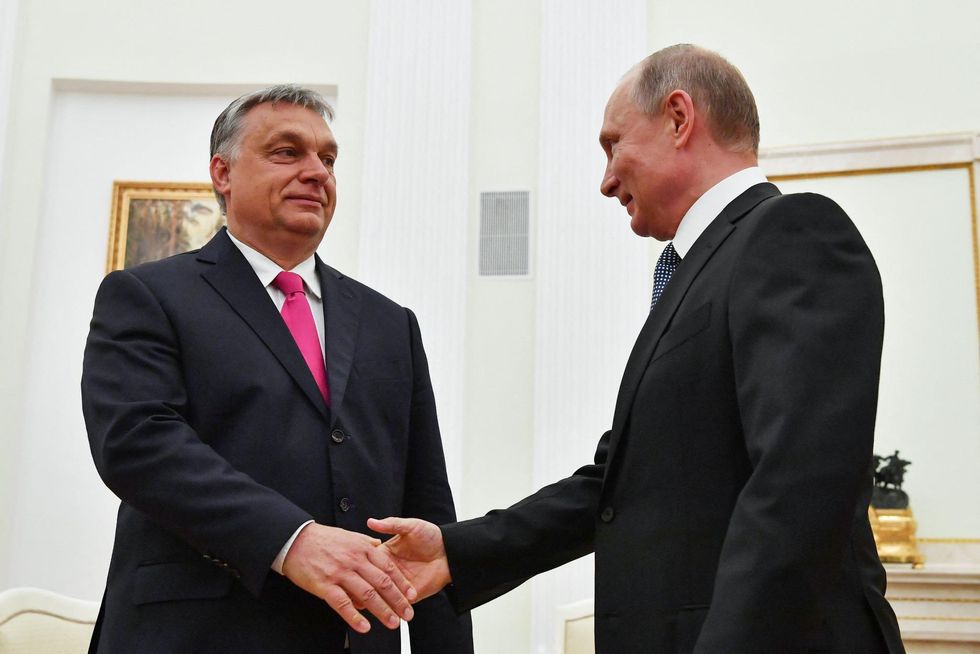 Hungary's Prime Minister Viktor Orban shakes hands with Russian President Vladimir Putin. Yuri Kadobnov/AFP via Getty Images
The partial embargo, which is expected to be finalized this week, comprises two-thirds of all the oil Europe gets from Russia. Add to that Germany and Poland’s pledge to voluntarily wind down their piped oil imports by the end of 2022, and 90% of Russian crude exports to Europe will be effectively cut off. That’s a big deal for a nation that has been described as “a gas station masquerading as a country,” depriving the Russian war machine of billions of dollars every year.
Some of that revenue they’ll make up on the back of higher oil prices, with Brent crude rising to over $120 per barrel following the embargo announcement. And some of that oil they’ll be able to sell at a discount to other countries around the world, especially China and India. But some of it they won’t be able to offload at all, because the EU and the United Kingdom are also set to prohibit European underwriters from insuring Russian oil shipments to third countries. Given that most of the world’s oil trade is insured by European companies, the measure will make it hard for Russia to redirect oil to Asia and other non-aligned markets.
As they reach the top rungs of the sanctions ladder, though, European leaders will find it increasingly hard to keep their steady escalation going to include a ban on piped oil imports, a gas embargo, and secondary sanctions—especially after having agreed to water down the oil ban at the behest of Orbán. These measures would inflict considerable economic pain on their citizens and risk political backlash, therefore requiring more resolve than European leaders have displayed so far.
Meanwhile, the Americans continue to send billions of dollars’ worth of aid and advanced weaponry to Ukraine, but the Ukrainians want more, most recently pleading for long-range advanced multiple launch rocket systems (MLRS) they say they desperately need in order to counter Russia’s long-range firepower and challenge its artillery dominance in the Donbas. The White House wants to do everything it can to help Ukraine win, but not at the expense of risking a direct confrontation with Russia. While President Biden confirmed the US will supply medium-range rockets, he ruled out sending long-range rocket systems “that can strike into Russia” and expand the war.
Western leaders won’t tolerate unlimited pain and risk to support Ukraine. The longer the war continues and Russia hangs on, the more likely it is those limits will be exposed—especially as the U.S. gets closer to midterm elections and winter threatens European homes with soaring energy costs.
Debates will shift from how to best help Ukraine win to whether Ukraine can actually win and what their endgame should be. The allies will become increasingly split over whether to keep ramping up their support of Ukraine’s quest for total victory, and calls to end the conflict and normalize relations with Russia will become more common. Wavering Western backing will in turn further embolden Russia and hurt Ukraine’s chances.
To be clear, the Ukrainian government is still standing—that’s not about to change, and it’s a reality that flies in the face of Putin’s war goals. But the Russian military is unlikely to melt away anytime soon, and increasing Western support is contingent on what happens on the battlefield and at home. That makes a drawn-out (and not particularly stable) stalemate all the more likely.
🔔 And if you haven't already, don't forget to subscribe to my free newsletter, GZERO Daily by Ian Bremmer, to get new posts delivered to your inbox.