China announced last Friday it had brokered a deal to restore diplomatic relations between Iran and Saudi Arabia for the first time in seven years. Beijing will also reportedly host a summit later this year, bringing together representatives from Iran and the six-nation Gulf Cooperation Council. Like all early stage diplomatic breakthroughs, this one remains fragile. It will take at least two months to hammer out details, and Iranians and Saudis aren’t about to become fast friends. But President Xi Jinping wouldn’t trumpet this news unless he believed all relevant parties were sincerely interested in an agreement of substance.
This is something Joe Biden might call a “big F deal.”
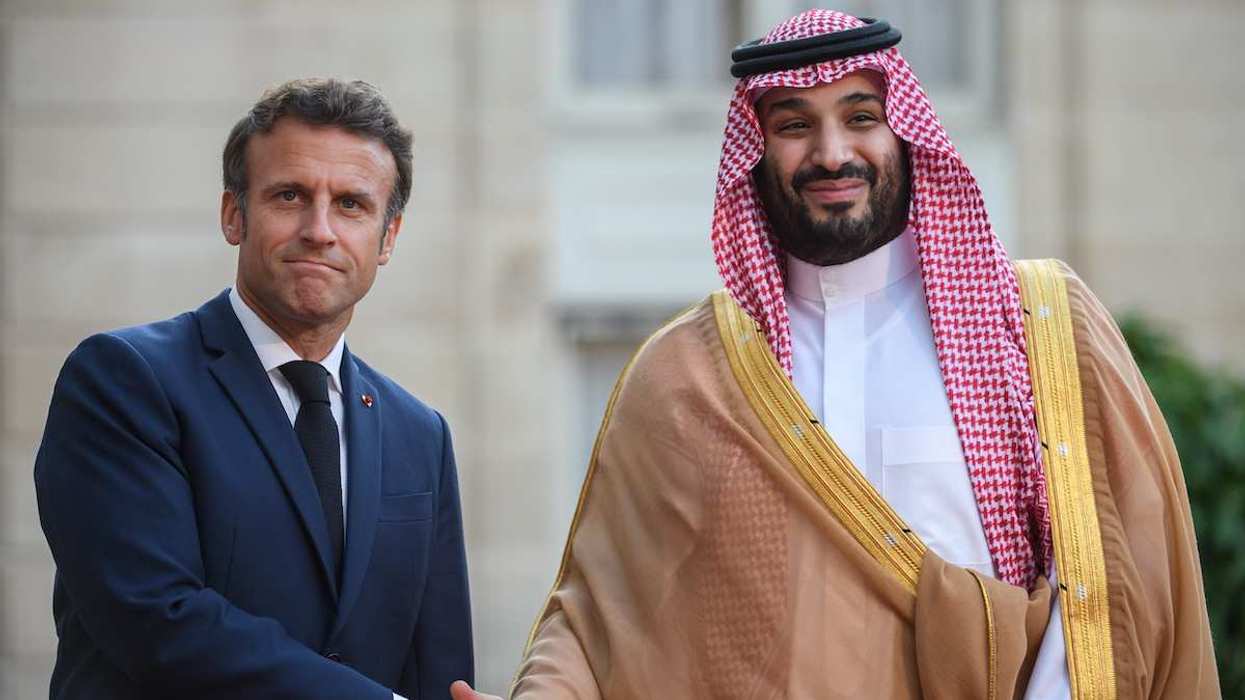
First, any handshake that puts a floor under relations between Iran and Saudi Arabia, the two most important rivals in a critically important region, matters for stability.
Second, China is swimming into uncharted waters here. In the past, Beijing confined its leadership in diplomatic interventions to Asia, avoiding direct involvement in anything not directly relevant to China’s national security. And now we see China brokering a Middle East deal that Americans and Europeans could not have made.
It’s also a big deal because China might successfully hold Iran to its promises to not build a nuclear weapon, a point toward which Iran appears to have edged ever closer in recent weeks. That would be good for the region, for the world, and for US and Israeli national security.
It’s also impossible to end the horrible war in Yemen, and the humanitarian catastrophes it has triggered, without bringing Iranians and Saudis to the table. The agreement China announced is only a first step, but the newly pragmatic relations could bring the Yemen conflict – in which Tehran supports the Houthi rebels and Riyadh supports the Yemeni government – to a halt much sooner.
In fact, China’s Middle East plan underscores the limited value of a Biden administration foreign policy the US president continues to insist is built on support for democracy through containment of autocracy.
There won’t be any freely or fairly elected officials at Beijing’s Middle East summit. Outside Israel, there aren’t many Middle Eastern democracies to defend (and even Israel’s on dicier ground these days …). Also, you can’t broker a deal unless you’re talking to both sides … and unless both sides see you as an honest broker. It’s been a while since the US and Saudi governments have seen eye-to-eye on the issues of the day, while US and Iranian officials (very) rarely appear publicly in the same room together.
Nor is the US a predictable partner in the Middle East these days. The Saudis don’t want to see Iran develop a nuclear weapon, and Iranians want to know what they’ll get by cutting a deal to trade that opportunity away. Barack Obama made a deal. Donald Trump withdrew from the deal. Joe Biden wants back in the deal. Maybe. Why should anyone in the Middle East believe Washington can steer a straight course?
Saudis and Emiratis can also see the US hasn’t done much to stop Iranian drone strikes on their territory and infrastructure. If China can bring leaders together to put an end to those attacks, why should they say no?
But China’s new diplomatic ambitions aren’t limited to the Middle East.
After unveiling a detailed framework to negotiate an end to the war in Ukraine, Xi is now prepping for a phone call with Volodymyr Zelensky and a visit to Moscow to see his friend Vladimir Putin.
In this case, we should be more skeptical of China’s value. Here, the honest broker principle works against Beijing. China’s Ukraine plan is entirely unacceptable for Kyiv, mainly because it doesn’t call on Russian invaders to leave Ukraine, and Zelensky still insists Ukraine’s army can push them out. Zelensky knows there’s a big difference between China's strategic partnership with Russia and its nominal recognition of Ukrainian sovereignty and territorial integrity. The Chinese aren’t going to condemn Russia’s illegal invasion, illegal annexations, or war crimes.
But even here, China may eventually offer something the US can’t. Unless one side wins a highly unlikely complete victory, the war in Ukraine must eventually end with some kind of sustainable deal between Moscow and Kyiv. China is potentially in a better position to broker that agreement than the Americans and Europeans, whom many outsiders feel are pushing for escalation and enabling more bloodshed by providing military support for Ukraine and slapping sanctions on Russia.
Let me be clear: I personally support Western backing for Ukraine against naked Russian aggression. But most of the developing world, an audience China would like to engage, is less interested in justice for Ukraine than an end to a war that’s inflicting real damage on the global economy and distracting world leaders from addressing problems they care far more about … like economic recovery from the pandemic’s damage to the global economy and a plan to manage their growing debt in a reasonable way.
More broadly, Washington should see both risks and opportunities in China’s more ambitious global diplomatic role.
It’s not like China is about to replace the United States in the Middle East. Given the hardware the US already has patrolling the skies and waters of the region, Beijing would have to spend billions upon billions over many years to supplant that influence.
Nor is the US retreating from China’s backyard. The American withdrawal from the Trans-Pacific Partnership limited Washington’s economic influence in Asia, but the US remains critical for the security of its many Asian and Pacific allies. Washington is now extending that commitment with its Quadrilateral Security Dialogue with Japan, India, and Australia.
But a larger global leadership role for China will come at a cost for US influence.
In the Middle East, Washington has a big presence, but it doesn’t have a clear purpose. It’s on the wrong side of most Middle Eastern countries, in part because the Biden administration wants to transition away from fossil fuels, but offers little talk about the continuing importance of hydrocarbons for keeping that transition stable. In that sense, the Gulf oil producers don't share a core interest with the US. China, on the other hand, isn’t ambivalent about quenching its thirst for fossil fuel. Given that the Saudis and Iranians will have to compete with Russia to sell oil to China, new deals with Riyadh have extra value.
It’s in the US national interest to welcome others to broker peace where Americans can’t. But there will be areas where China’s diplomacy won’t make Washington happy. We’ll get a good look at that problem when Xi turns up in Moscow as an ostensible peacemaker, rather than as an enabler of the man who launched this war.
Given the Chinese president’s startlingly explicit recent criticism of the US and its role in the world, the most hawkish comments made by a Chinese leader about Washington in decades, it’s clear there will be plenty of instances where US and Chinese interests just don’t align.