AI is the fastest-growing general-purpose technology in history but its benefits are uneven. Half the world lacks the combined foundations of electricity, internet access, and digital skills needed to use AI at all.
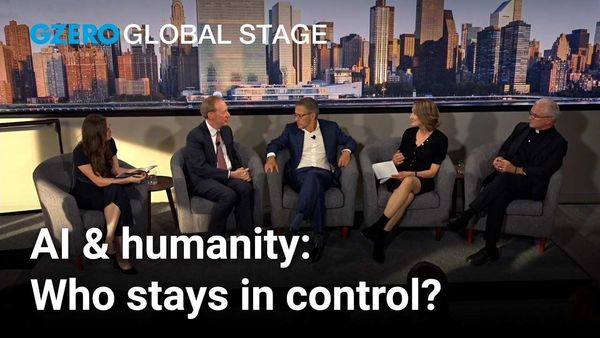
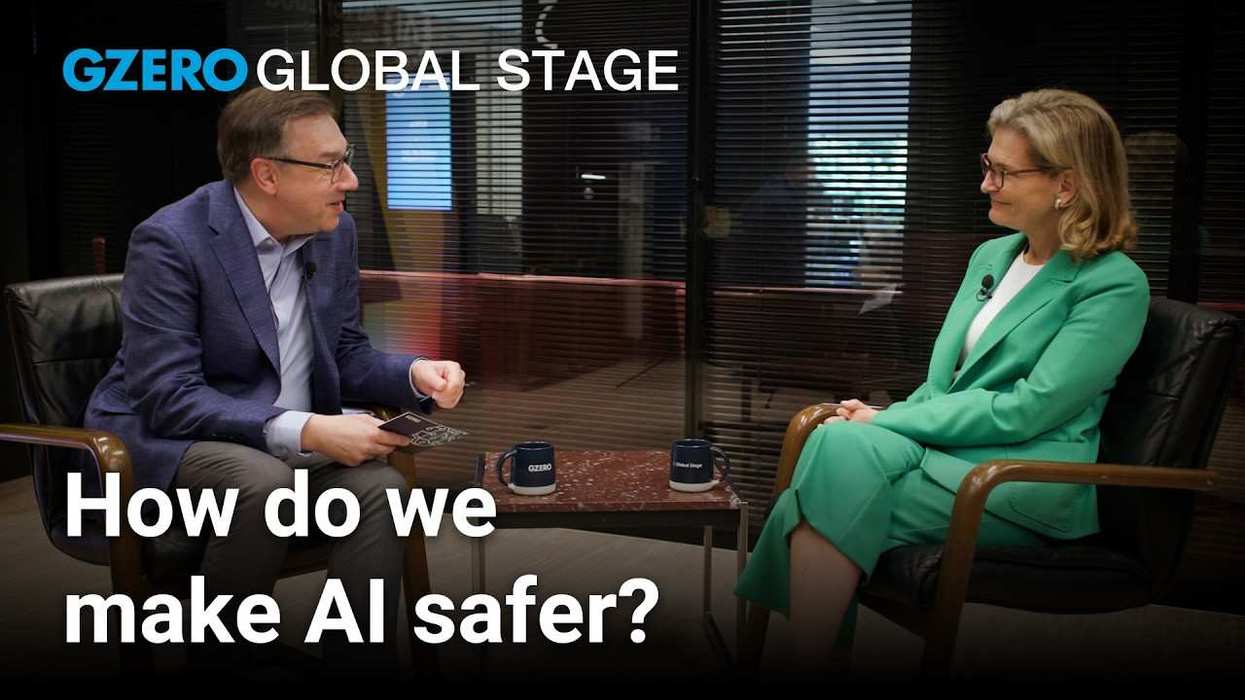
In this Global Stage panel, Becky Anderson (CNN) leads a candid discussion on how to close that gap with Brad Smith (Vice Chair & President, Microsoft), Peng Xiao (CEO, G42), Ian Bremmer (President & Founder, Eurasia Group and GZERO Media), and Baroness Joanna Shields (Executive Chair, Responsible AI Future Foundation).
What does “AI diffusion” actually require? Power first, then connectivity, then skills. As Brad Smith explains, “You can’t build AI in the sky, it needs a foundation: electricity, internet, and digital skills.” The panel explores the hard realities of energy capacity, data-center diplomacy, and why grid investment will determine which nations can compete in the next phase of AI development.
Building on that theme, Peng Xiao underscores the centrality of energy to progress: “The cost of intelligence will become the cost of energy.” His company, G42, is expanding AI infrastructure from the Gulf to Africa and Southeast Asia, leveraging regional power resources to unlock broader access.
From AI fluency to AI engineering and organizational change, the conversation also breaks down the capabilities countries need and how local ecosystems can create jobs rather than replace them. Ian Bremmer reminds the audience that geopolitics and skilling are linked: “AI is geopolitical by design. The winners who shape the algorithms will shape society.”
As AI races ahead of some societies’ ability to adapt, the panel highlights the UAE’s investment in national AI education, from early-age programs to university-level innovation, as a model for inclusive growth.
How do we embed responsibility into models, content, and agentic workflows? Baroness Joanna Shields calls this a defining moment: “This is a civilization-uplift moment we can’t afford to miss.” She stresses that responsible AI means empowering everyone equally, ensuring that local cultures, values, and languages shape the systems built for them.
The discussion explores emerging tools like watermarking and auditable agent interactions, alongside the global governance efforts led by the UN and multistakeholder coalitions, to balance innovation and accountability across regions.
The Global Stage series, presented by GZERO Media in partnership with Microsoft, convenes leaders from government, business, and civil society at major international forums to examine the critical issues at the intersection of technology, politics, and society, and to explore how global cooperation can deliver solutions in an era of accelerating change.