Cyberwarfare is escalating, with major players like China, Russia, Iran, and North Korea using digital attacks to advance geopolitical goals. As Anne Neuberger explains, “they play out with regard to sometimes groups aligned with countries or sometimes financially driven.” She points to the cyberattack Russia launched the night before its invasion of Ukraine, disrupting Ukraine’s military satellites, as a prime example. Neuberger also warns about the growing influence of Russian-backed criminal groups that “are impacting infrastructure around the world, notably significant growth in the healthcare sector, through ransomware attacks.” With cyber threats becoming more complex, it is sparking fears about long-term vulnerabilities that countries must be aware of.
More from Global Stage
How can AI enhance human progress?
September 24, 2026
As artificial intelligence becomes more powerful and more deeply embedded in everyday life, how can we ensure it remains a tool for human progress, and under human control?
How AI could accelerate global development
September 29, 2026
As countries work to meet development goals amid funding constraints, AI is emerging as a potential tool to accelerate progress and expand opportunity. Robert Opp of the United Nations Development Programme (UNDP) and Justin Spelhaug of Microsoft Elevate discuss how AI can support development and humanitarian efforts around the world.
How AI safety must evolve as agentic AI advances
September 29, 2026
As agentic AI reshapes how the technology is built and deployed, Partnership on AI CEO Rebecca Finlay explains why global cooperation on safety can't wait.
Preparing for El Niño: How better forecasts and AI can help
September 28, 2026
On the sidelines of the 81st United Nations General Assembly, GZERO Media’s Tony Maciulis sits down with Celeste Saulo, Secretary-General of the World Meteorological Organization (WMO), to discuss the developing El Niño, the growing importance of early-warning systems, and how artificial intelligence is changing weather forecasting.
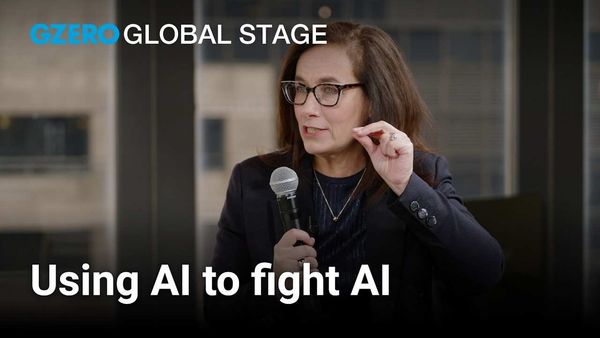
How AI is changing the cybersecurity battlefield
September 27, 2026
On the sidelines of the 81st United Nations General Assembly, GZERO Media’s Tony Maciulis sits down with Hayete Gallot, Executive Vice President of Security at Microsoft, to discuss how artificial intelligence is transforming cybersecurity, and why traditional defenses must evolve to keep pace.
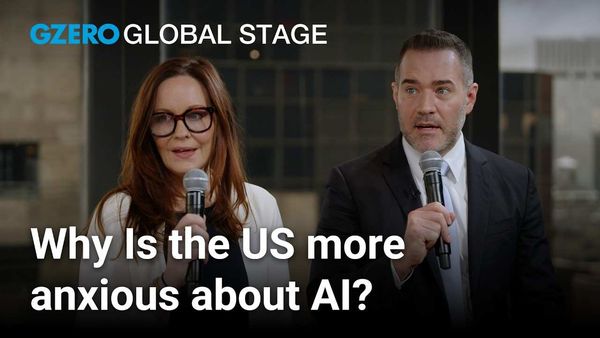
Why the world is more optimistic about AI than the US
September 26, 2026
As AI adoption expands around the world, a new Gallup-Microsoft survey reveals a striking divide in how people feel about the technology.
See more