AI adoption is accelerating worldwide, but “diffusion” isn’t just about who has the best models. It’s about who has the basics: affordable power, reliable connectivity, and the skills to actually use AI.
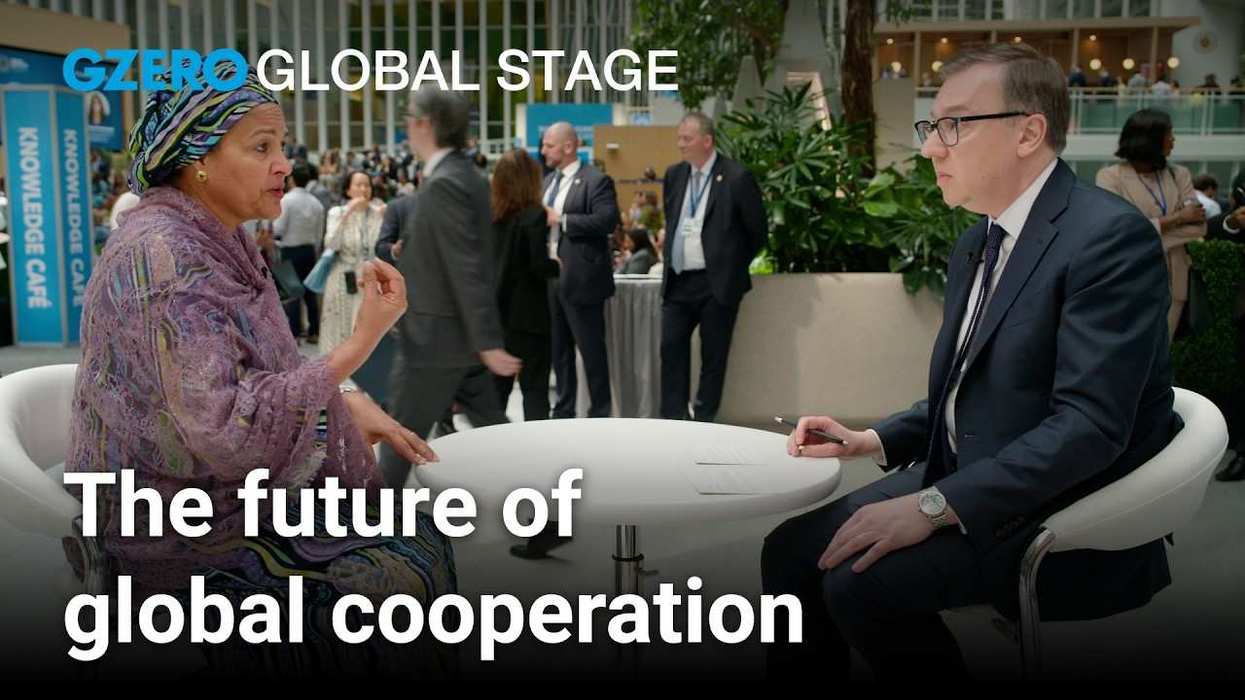
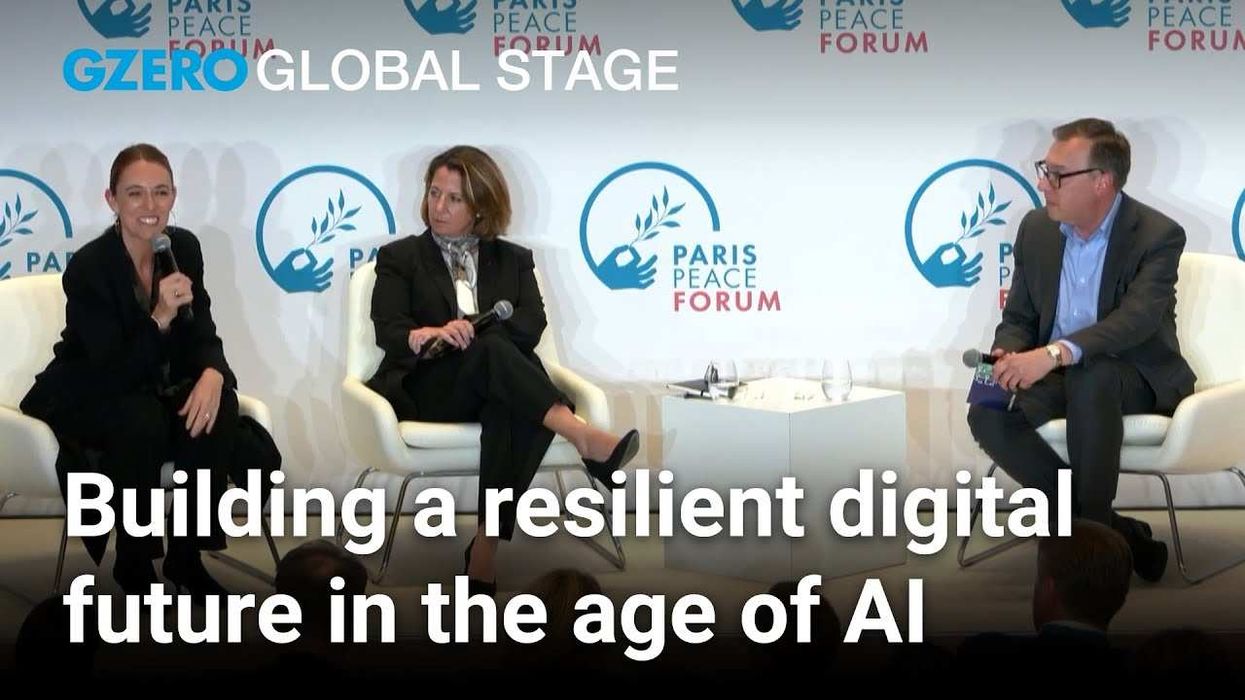
In a new GZERO Media Global Stage livestream from the 2026 World Economic Forum in Davos, Switzerland, CNN’s Richard Quest moderates a clear-eyed discussion on what it will take to broaden AI access, and what happens if the gap widens, alongside Brad Smith (Vice Chair & President, Microsoft), Ian Bremmer (President & Founder, Eurasia Group and GZERO Media), Rishi Sunak (former UK Prime Minister), Arancha González Laya (Dean, Paris School of International Affairs; former Foreign Minister of Spain), and Strive Masiyiwa (Founder & Executive Chairman, Cassava Technologies).
So, what does “AI diffusion” actually mean? As Brad Smith puts it, “Diffusion is a fancy word for adoption or usage,” and the early data shows a world splitting fast: “The global north… 25%… The global south… 14%.” That divide becomes starkest in infrastructure. Most of Africa remains below 10% adoption, raising the central question of the panel: what must be built first so AI can be used everywhere, not just talked about everywhere?
Strive Masiyiwa brings it down to the real economy: “It’s the picks and shovels time.” For countries trying to keep their data local and build “AI factories,” sovereignty isn’t an abstract debate; it’s a construction project. But the biggest barrier, he argues, isn’t imagination; it’s capital: “Cost and infrastructure… boils down to investment,” and without it, “people shouldn’t complain when China does the investment.”
Arancha González Laya widens the lens to the foundations many still lack: “700 million people, no access to electricity. Three billion… no access to internet. 1.5 billion adults don’t have digital skills.” Her plea is simple: don’t let the bottom of the market become the permanent bottleneck. “It’s not the world of undo,” she says. “It’s the world of redo,” where efficiency has to be “married with trust.”
Rishi Sunak frames diffusion as the real prize of this tech cycle: you don’t need to invent the breakthrough to benefit most from it, and AI can lower the cost of public goods in health and education at scale. But he also warns that policy is being reshaped by hard-power realities: “Technology is a facet of hard power today,” and sovereignty debates are now a daily feature of global decision-making. His approach to governance is pragmatic; don’t freeze innovation with premature laws, but build capacity to understand risk: “Be a little bit humble… accept that we have to… adapt as we go.”
Ian Bremmer argues the Davos mood is split between two simultaneous realities: “There are two Davos’es happening right now,” one defined by geopolitical rupture, another driven by private-sector problem-solving across borders. The danger, he suggests, is not just unequal adoption, but what AI does to societies themselves, especially if systems become “a trusted friend” shaping politics at scale.
The conversation also confronts a critical tension: speed versus safeguards. Prompted by a question from the UN Human Rights Office’s Peggy Hicks, the panel digs into what “doing diffusion right” requires; protecting children, privacy, and trust before backlash turns into a brake on progress. As Smith argues, you may not need regulation to do good, but you do need it “to fundamentally protect against the darkest side of human nature.”
The Global Stage series, presented by GZERO Media in partnership with Microsoft, convenes leaders from government, business, and civil society at major international forums to examine the critical issues at the intersection of technology, politics, and society, and to explore how global cooperation can deliver solutions in an era of accelerating change.