Skip to content
Search

Latest Stories

GZERO AI

FTC cracks down on deceptive claims with AI

FTC cracks down on deceptive claims with AI
Midjourney

The US Federal Trade Commission, the agency chiefly responsible for consumer protection, is taking a tougher stance on false business claims involving artificial intelligence.

On Sept. 25, the agency announced Operation AI Comply, a set of five law enforcement actions against companies inappropriately using AI to hype or sell products. Under the FTC Act of 1914, the agency has broad authority to crack down on unfair and deceptive marketing practices. “Using AI tools to trick, mislead, or defraud people is illegal,” FTC Chair Lina M. Khan wrote in a statement. “The FTC’s enforcement actions make clear that there is no AI exemption from the laws on the books.”


The FTC sued DoNotPay, which billed itself as the “world’s first robot lawyer,” purportedly using artificial intelligence to replace real legal advice. But the company wasn’t able to effectively do what it marketed and, thus, has settled with the FTC for $193,000. The feds also took action against Rytr, an AI writing assistant, that could generate fake “detailed customer reviews,” because they would be deceptive in nature. The FTC is considering a settlement and is working on a consent agreement for the company.

The FTC also sued three ecommerce companies — Ascend Ecom, Ecommerce Empire Builders, and FBA Machine — which promised customers passive income by operating online AI-powered storefronts. Those cases are headed to litigation in federal court.

“The FTC has been particularly focused on AI the past few years, and one of its stated approaches is to use its existing authorities to address issues it sees related to AI – for example, to address deceptive practices under the FTC Act,” said Duane Pozza, a partner at the law firm Wiley Rein and former assistant director of the FTC’s Bureau of Consumer Protection.

“A key message from these actions is that companies need to be careful in making claims about what AI can do, and follow existing FTC guidance on properly supporting their claims,” he said. “Even if companies are not engaging in the exact conduct addressed in these actions, the FTC is sending a signal that it is looking at AI-related claims throughout the marketplace.”

More For You

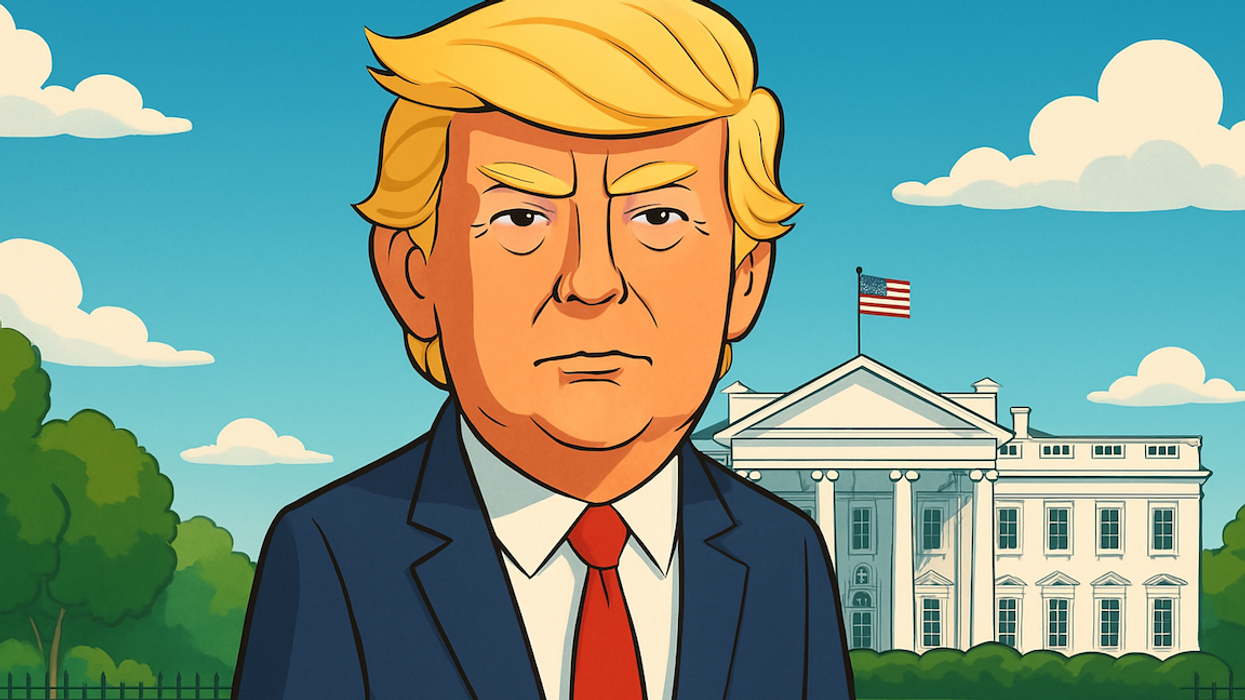
What we learned from a week of AI-generated cartoons
Courtesy of ChatGPT
Last week, OpenAI released its GPT-4o image-generation model, which is billed as more responsive to prompts, more capable of accurately rendering text, and better at producing higher-fidelity images than previous AI image generators. Within hours, ChatGPT users flooded social media with cartoons they made using the model in the style of the [...]
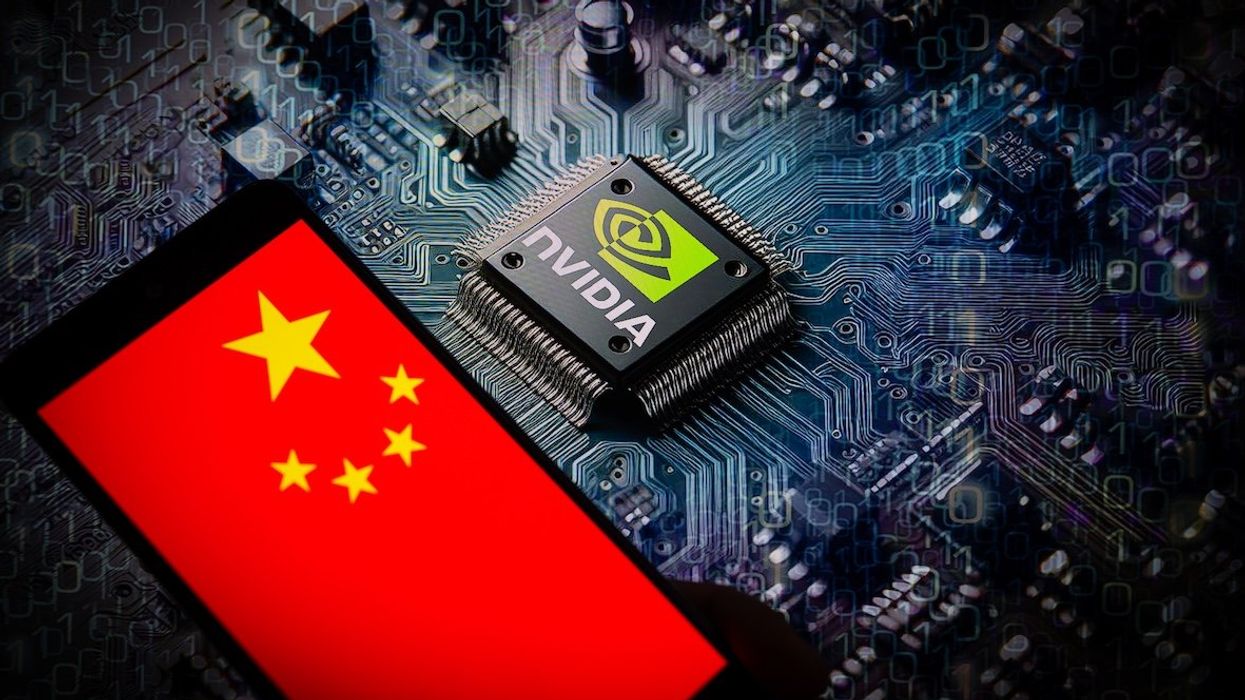
The flag of China is displayed on a smartphone with a NVIDIA chip in the background in this photo illustration.

The flag of China is displayed on a smartphone with a NVIDIA chip in the background in this photo illustration.

Jonathan Raa/NurPhoto via Reuters
H3C, one of China’s biggest server makers, has warned about running out of Nvidia H20 chips, the most powerful AI chips Chinese companies can legally purchase under US export controls. [...]
​North Korean leader Kim Jong Un supervises the test of suicide drones with artificial intelligence at an unknown location, in this photo released by North Korea's official Korean Central News Agency on March 27, 2025.

North Korean leader Kim Jong Un supervises the test of suicide drones with artificial intelligence at an unknown location, in this photo released by North Korea's official Korean Central News Agency on March 27, 2025.

KCNA via REUTERS
Hermit Kingdom leader Kim Jong Un has reportedly supervised AI-powered kamikaze drone tests. He told KCNA, the state news agency, that developing unmanned aircraft and AI should be a top priority to modernize North Korea’s armed forces. [...]
The logo for Isomorphic Labs is displayed on a tablet in this illustration.

The logo for Isomorphic Labs is displayed on a tablet in this illustration.

Igor Golovniov/SOPA Images/Sipa USA via Reuters
In 2024, Demis Hassabis won a Nobel Prize in chemistry for his work in predicting protein structures through his company, Isomorphic Labs. The lab, which broke off from Google's DeepMind in 2021, raised $600 million from investors in a new funding round led by Thrive Capital on Monday. The company did not disclose a valuation. [...]