Skip to content
Search

Latest Stories

GZERO AI

Hard Numbers: Pony time, Book deals, ByteDance sues an intern, Japan’s investment, Your death clock is ticking

A logo of the autonomous driving technology startup Pony.ai is seen on a screen during an event in Beijing, China, in 2021.

A logo of the autonomous driving technology startup Pony.ai is seen on a screen during an event in Beijing, China, in 2021.

REUTERS/Tingshu Wang/File Photo

13: Pony AI, a Chinese robotaxi company debuted on the Nasdaq stock exchange, the latest Chinese tech company to enter the US public markets. The company issued an initial public offering at $13 per share on Nov. 27 about two years after China started a high-profile crackdown on its companies listing on US markets. It raised $260 million during its IPO, with Bloomberg remarking that it signaled “strong investor interest” in the company.


8,000: A venture-backed startup named Spines plans to publish 8,000 books next year, charging authors $1,200–$5,000 for the production process, including AI-assisted proofreading, design, and distribution. While Spines says it can offer opportunities to would-be writers and save them weeks of labor, traditional publishing houses have criticized the startup for trying to make money off of these writers with technology that makes many in the industry uncomfortable.

1.1 million: ByteDance, the Chinese company that owns TikTok, is suing a former intern in a Beijing court for $1.1 million, alleging that the intern deliberately sabotaged its generative AI training model by manipulating and modifying its code. The company said, however, that rumors that it lost millions of dollars and thousands of powerful graphics processors were exaggerated.

9.9 billion: The Japanese government is earmarking an extra $9.9 billion for its semiconductor and artificial intelligence ambitions. Some of that money will likely go to Rapidus, the homegrown chipmaking initiative that’s been heavily funded by the Japanese government, which aims to achieve mass production by 2027.

1,200: Want to know when you’ll die? Death Clock, an AI-powered longevity app trained on 1,200 life expectancy studies with 53 million participants, promises to tell users exactly when they’re going to perish. The app costs $40 a year and suggests lifestyle changes to users so they can delay their ticking countdown.

More For You

What we learned from a week of AI-generated cartoons
Courtesy of ChatGPT
Last week, OpenAI released its GPT-4o image-generation model, which is billed as more responsive to prompts, more capable of accurately rendering text, and better at producing higher-fidelity images than previous AI image generators. Within hours, ChatGPT users flooded social media with cartoons they made using the model in the style of the [...]
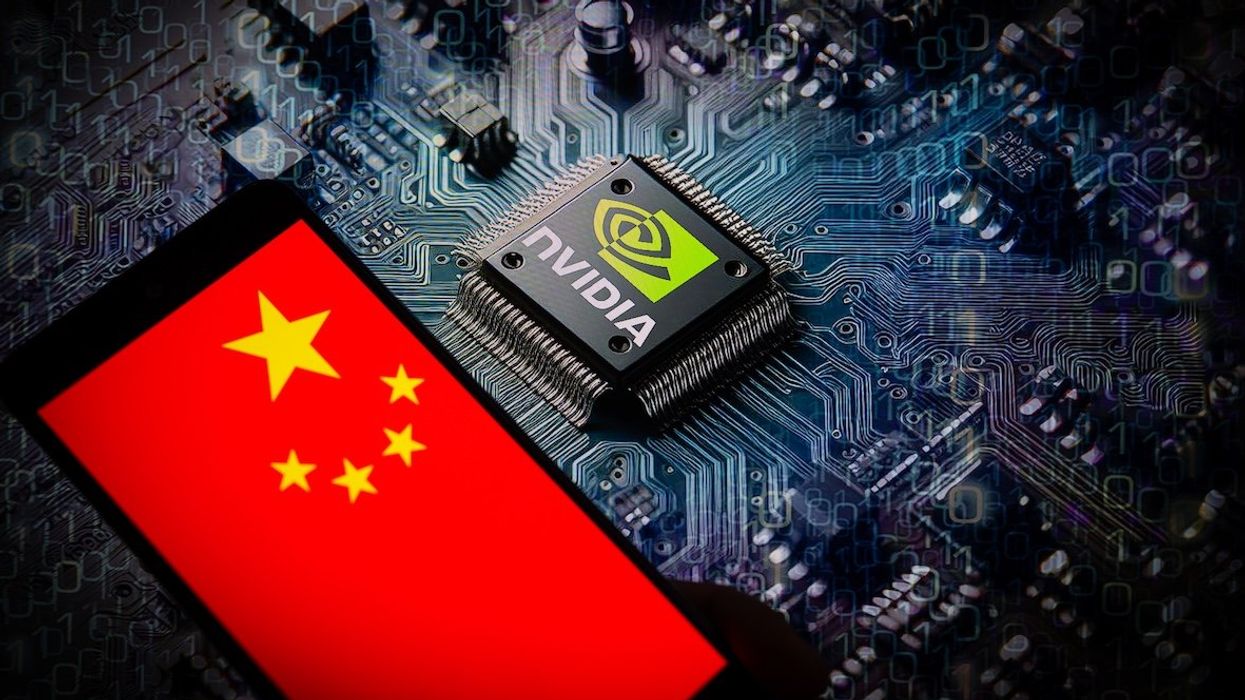
The flag of China is displayed on a smartphone with a NVIDIA chip in the background in this photo illustration.

The flag of China is displayed on a smartphone with a NVIDIA chip in the background in this photo illustration.

Jonathan Raa/NurPhoto via Reuters
H3C, one of China’s biggest server makers, has warned about running out of Nvidia H20 chips, the most powerful AI chips Chinese companies can legally purchase under US export controls. [...]
​North Korean leader Kim Jong Un supervises the test of suicide drones with artificial intelligence at an unknown location, in this photo released by North Korea's official Korean Central News Agency on March 27, 2025.

North Korean leader Kim Jong Un supervises the test of suicide drones with artificial intelligence at an unknown location, in this photo released by North Korea's official Korean Central News Agency on March 27, 2025.

KCNA via REUTERS
Hermit Kingdom leader Kim Jong Un has reportedly supervised AI-powered kamikaze drone tests. He told KCNA, the state news agency, that developing unmanned aircraft and AI should be a top priority to modernize North Korea’s armed forces. [...]
The logo for Isomorphic Labs is displayed on a tablet in this illustration.

The logo for Isomorphic Labs is displayed on a tablet in this illustration.

Igor Golovniov/SOPA Images/Sipa USA via Reuters
In 2024, Demis Hassabis won a Nobel Prize in chemistry for his work in predicting protein structures through his company, Isomorphic Labs. The lab, which broke off from Google's DeepMind in 2021, raised $600 million from investors in a new funding round led by Thrive Capital on Monday. The company did not disclose a valuation. [...]