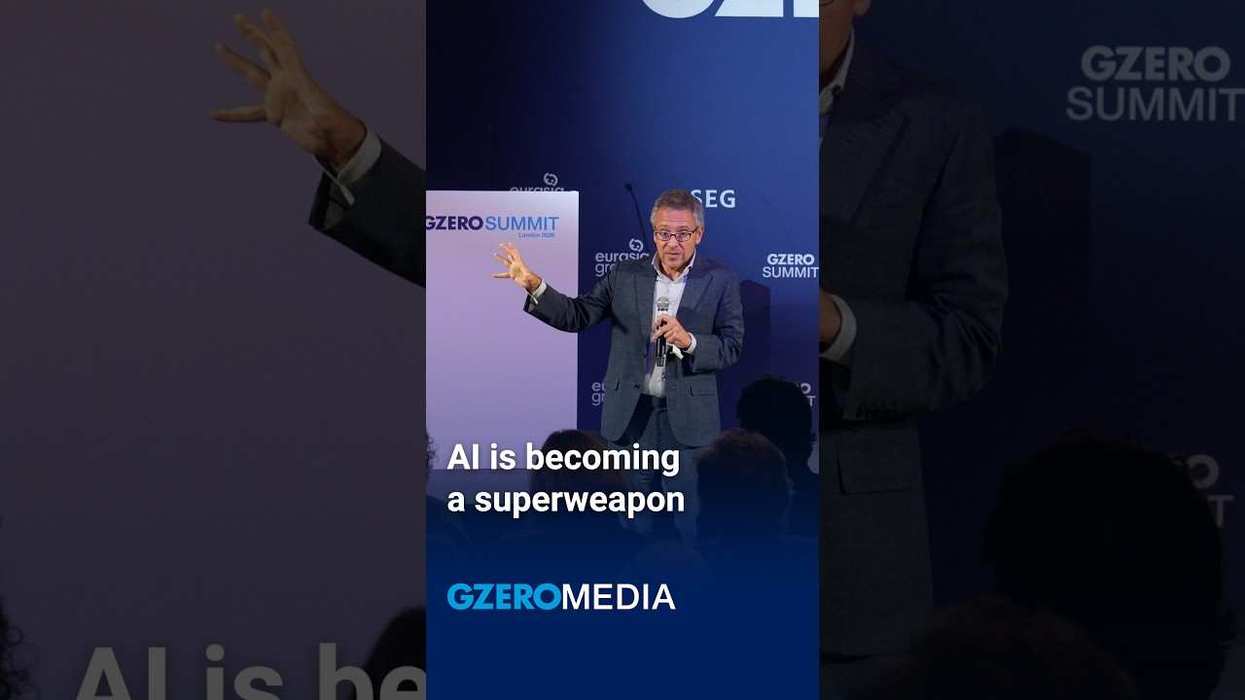
In a United Nations event called the Summit of the Future over the weekend, a panel of experts discussed their newly released report on artificial intelligence governance, titled “Governing AI for Humanity.” The panel, chaired by Eurasia Group and GZERO Media founder and President Ian Bremmer, included Carme Artigas, former Spanish secretary of state for digitalization and AI; Vilas Dhar of the Patrick J. McGovern Foundation; Jian Wang, Alibaba’s CTO; Volker Türk, the UN high commissioner for human rights; Alondra Nelson from the Institute for Advanced Study; and James Manyika, senior vice president of research, technology, and society at Google.
Bremmer said that one of his earliest conversations with António Guterres, the UN secretary-general, told him that his two biggest priorities were stopping the charge of climate change and dealing with the consequences and opportunities of disruptive technology. (Watch Bremmer’s recent interview with Guterres about AI here.)
Due to its complex nature and ever-changing technology, Türk said it was a “minor miracle” that the report was completed. He cautioned that the biggest challenge with AI governance is loss of control, noting “Once the genie is out of the body, how do you control the genie?”
The panel discussed its recommendations in the report, which include a global fund for AI, an AI office within the secretariat, and an international scientific panel on AI. Artigas noted that the group stopped short of recommending a brand-new UN agency on artificial intelligence and felt they had the existing frameworks to accomplish their goals.
Google’s Manyika stressed the importance of building trust in AI. “If this technology’s going to have the impact that we think it’s gonna have, the public has to trust it, the public has to feel that we and everybody else that’s developing, deploying, and using it is held accountable,” he said. “We have a profound responsibility.”
The group looked ahead to the Global Digital Compact and the Pact of the Future, UN proposals adopted at the Summit of the Future, which call for enhanced international governance of artificial intelligence in ways that are “human-centric,” respect human rights, and advance the UN’s Sustainable Development Goals, or SDGs. During the panel conversation, Manyika also cited research from the International Telecommunication Union that found that most of the SDGs could be achieved with help from AI. Bremmer and Co. said that the focus of AI governance shouldn’t just be how to rein in the technology – though that’s a huge part – but also how to use the technology to help society move forward.