Moonies out of the Japanese government
Japan's Prime Minister Fumio Kishida on Wednesday removed all cabinet ministers linked to the controversial Unification Church from South Korea, whose members are known as Moonies (after founder Sun Myung Moon). The ruling Liberal Democratic Party came under intense scrutiny over its ties to the church following the shocking assassination last month of former PM Shinzo Abe, whose assassin blamed the church for his family’s financial ruin. Abe was not a member but praised the conservative values of the Moonies, who campaigned on behalf of his brother — the biggest name to get a pink slip from Kishida. The PM — with no ties to the church — has had a wild ride in the polls lately. His approval rating initially skyrocketed out of sympathy for the slain leader, sweeping the LDP to a big victory in the upper house elections just days later. But now his popularity has tanked to the lowest level since he took office due to a backlash against the church, long suspected of pulling the LDP's strings. The cabinet reshuffle may help boost Kishida’s numbers a bit, but he’s not out of the woods: COVID infections keep rising, and a slim majority of Japanese citizens oppose the government-funded state funeral for Abe planned for Sept. 27.
Zelensky’s bold statement
Two new plot twists raise fresh questions about the direction of Russia’s war in Ukraine. A series of explosions at a Russian airbase in Crimea on Tuesday marked a significant escalation in the aggressiveness of Ukrainian counterattacks. A senior Ukrainian official has credited Ukrainian forces for the blasts, and video evidence and Russian officials in Crimea have directly contradicted earlier Russian claims that no one was killed and that little damage was done. Later in the day, Ukraine’s President Volodymyr Zelensky, without mentioning the attack, asserted during a speech that “This Russian war … began with Crimea and must end with Crimea — with its liberation.” One of the great questions in this war — for Ukraine, for Russia, and for everyone the war impacts – is how each side defines victory. Russia has occupied Crimea since 2014, though few countries recognize its sovereignty there. The combination of the attack and Zelensky’s plain language suggests some confidence in Kyiv that Ukraine has the military tools it needs to reverse Russia’s gains, not just those of 2022 but also those of 2014. We’ll be watching for Russia’s response in the coming days and to see whether Zelensky’s confidence is misplaced.
India’s energy bill passes first hurdle
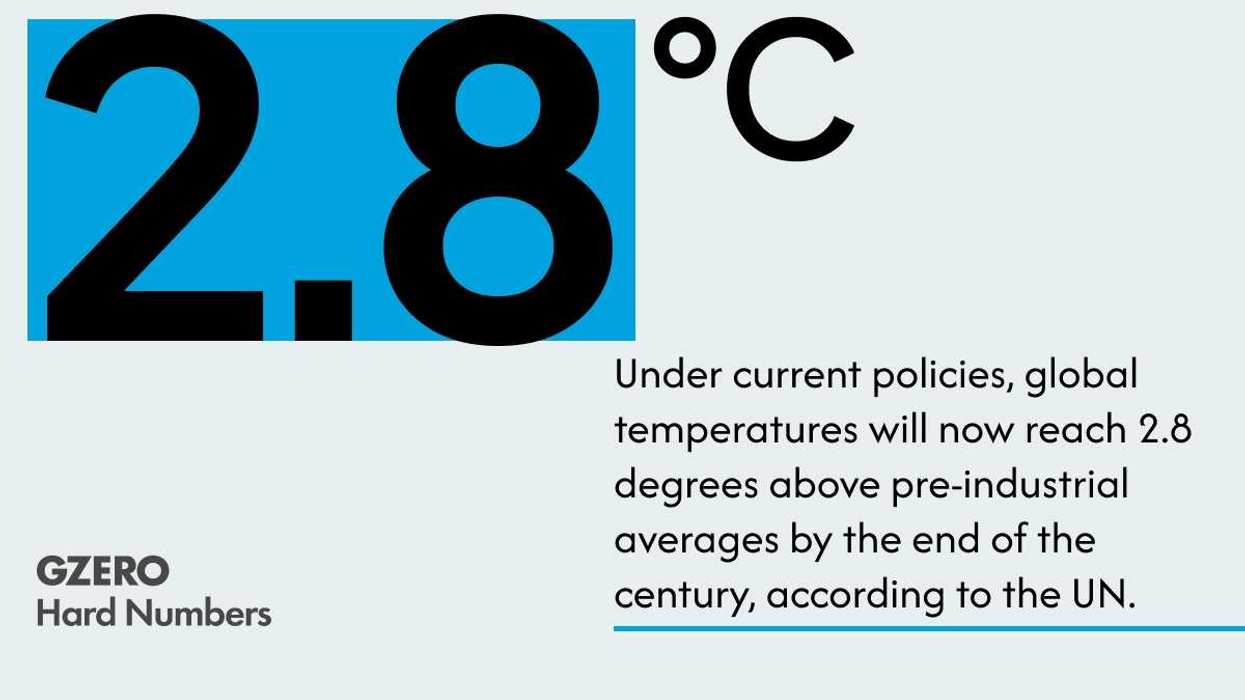
India’s lower house of parliament passed an energy bill on Wednesday setting out new minimum requirements of renewable energy use for businesses and residences, as well as penalties for corporations that fail to meet their targets. The bill also proposes the country’s first-ever carbon trading system. Climate activists hailed this as a positive step for India, which has been criticized for setting lofty climate goals (it aims to be carbon neutral by … 2070) and could soon become the world’s top carbon emitter after China and the US made more ambitious pledges to reach carbon neutrality. Delhi, for its part, says that countries across North America and Europe that benefited from rapid industrialization should not place unfair expectations on emerging markets to ditch fossil fuels so soon. But environmentalists say that’s largely irrelevant now given that India – which has suffered several extreme weather events in recent years – is at risk of many climate-induced disasters over the next two decades if it doesn't get its act together. Later this year, the bill heads to the upper house of parliament, where it's expected to pass.This comes to you from the Signal newsletter team of GZERO Media. Subscribe for your free daily Signal today.