New Zealand’s Jacinda Ardern throws in the towel
In a shock announcement on Thursday, New Zealand’s PM Jacinda Ardern said she no longer has “enough in the tank” to continue in the top job and will step down on Feb. 7. Ardern, a darling of the center-left who in 2017 became the world’s youngest female head of government, led the nation of 5 million through a host of challenges in recent years, including the horrific massacre at two Christchurch mosques, the pandemic, and a volcanic eruption on Whakaari/White Island that killed 22 people. Like much of the developed world, New Zealand is currently in the throes of an inflationary crisis that’s forced the central bank to aggressively raise interest rates. What’s more, as the cost of living crunch hurts ordinary New Zealanders, Ardern’s Labour Party is falling behind the center-right National Party in the polls ahead of the next general election in Oct. 2023. It’s unclear who will replace her, but Ardern’s deputy, Grant Robertson, already said he does not want the gig. In a rare act of political civility – and yet another reason why we should all move to New Zealand – Ardern’s rival, Christopher Luxon, head of the National Party, thanked Ardern for her service and for giving her all to a "demanding job."Could Crimea be key to Ukraine’s victory?
Ukraine’s President Volodymyr Zelensky on Wednesday asked his Western friends to quickly deliver tanks and air defenses. That’s precisely what European leaders plan to discuss on Friday in Germany with US Defense Secretary Lloyd Austin, just as the US is reportedly preparing to unveil its biggest-ever Ukraine aid package. But an even bolder move may be afoot. With the one-year anniversary of the invasion (Feb. 24) approaching, Washington is reportedly considering whether to help Kyiv target the Crimean Peninsula. Since the war began, President Joe Biden has refused to give Ukraine weapons that could target Russian forces on the peninsula that Moscow annexed in 2014, which is now used by Russians to launch attacks against Ukraine. Biden’s team now seems to believe that Vladimir Putin’s nuclear leverage has been overplayed and that showing muscle in Crimea could help turn the tide in Ukraine’s favor. However, for Alex Brideau, Eurasia Group’s top Russia analyst, “it is not clear that this debate in Washington about Crimea is fully settled.” And such an escalation could be dangerous. “Major setbacks in Crimea would be far more important to Putin than the recent boost in weaponry the Ukrainians have received from NATO,” he says.
Israel’s impending constitutional crisis
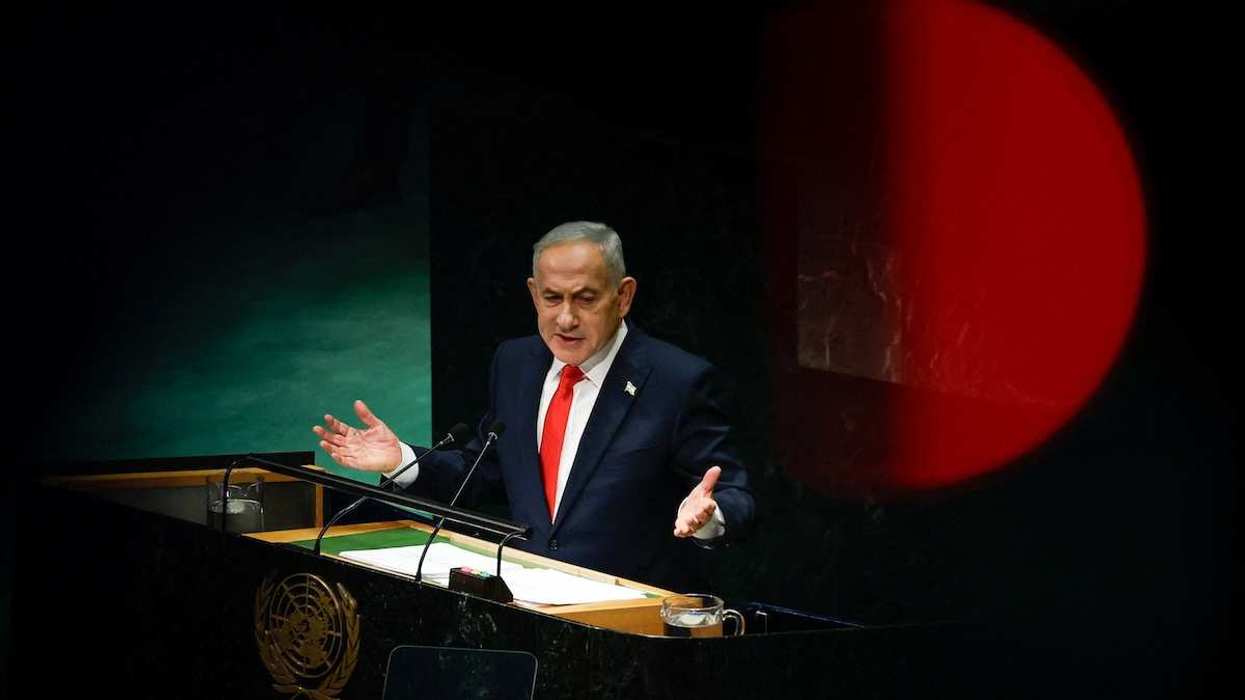
In a bombshell decision on Wednesday, Israel’s High Court of Justice ruled 10-1 that Aryeh Deri – head of the ultra-Orthodox Shas Party and a key ally of PM Benjamin Netanyahu – is ineligible to hold a senior cabinet post due to a previous criminal conviction. (In Jan. 2022, Deri received a suspended sentence on tax fraud charges on the condition that he would not return to political life – or the case would need to be reheard.) The court's decision mandates that Netanyahu replace Deri, who last month was sworn in to head the interior and health ministries. In line with the ruling, Attorney General Gali Baharav-Miara demanded on Thursday that Netanyahu fire him from the cabinet. But members of the Shas Party have threatened to pull support for Netanyahu’s wobbly government if the PM fires their boss. What’s more, there’s widespread concern that the government, which has already proposed a slate of rules gutting the judiciary’s independence, might try to expedite these reforms – including enforcing a new law that would invalidate the High Court’s jurisdiction to rule on this matter. Not wanting to risk the collapse of his government, which includes a ragtag group of right-wing, far-right, and ultra-Orthodox parties, Netanyahu appears to be backing Deri (for now). Yet after 80,000 Israelis protested against the judicial reforms last week, the seasoned politician knows he runs the risk of a full-blown constitutional crisis and mass social unrest.