by ian bremmer
Putin: The real winner of the US-Iran war?
Three weeks into the US-Israeli war against Iran, the list of losers is unusually long. Iran is getting devastated. The United States is trapped in an asymmetric conflict it can't exit.
As the war intensifies, chances of a clean exit from Iran are slipping further out of reach for President Trump. Brookings Institution's Thomas Wright joins Ian Bremmer to unpack the crisis and outline possible endgame scenarios.
Ian Bremmer sits down with Thomas Wright, Brookings Institution fellow and former Senior Director at the US National Security Council, to unpack the deepening war in Iran and the divergent strategies shaping it.
Listen: Ian Bremmer sits down with Thomas Wright, Brookings Institution fellow and former Senior Director at the US National Security Council, to unpack the deepening war in Iran and the divergent strategies shaping it.
What are the possible outcomes for the widening conflict in Iran? What began as a dramatic opening strike has evolved into a far more complex war, with Washington, Jerusalem, and Tehran all pursuing different aims. Wright argues this isn’t simply about degrading military capability; it’s about competing endgames that may pull the region in unpredictable directions.
As Wright explains, the United States is hoping for a pragmatic partner inside Iran, while Israel pushes for full regime change. “Trump couldn’t care less if Larijani runs Iran. The Israelis do… They’re going to go full bore for regime change,” he says. At the same time, efforts to fragment the country risk creating “a much bigger problem… a Syria civil war on steroids.”
The conversation also examines how other global players are responding. Europe has been muted, trying to accommodate the US, while China and Russia tread carefully, balancing economic and strategic interests without directly confronting Washington. Wright also discusses domestic implications, including the Pentagon’s evolving relationship with Silicon Valley and how frontier technologies like AI are intersecting with national security concerns.
Looking ahead, Wright outlines both best-and worst-case scenarios — from the emergence of a more legitimate leadership to the specter of fragmentation that could intensify regional instability. With no clear exit ramp in sight, this conversation explores what might come next and why the endgame of this war remains so uncertain.
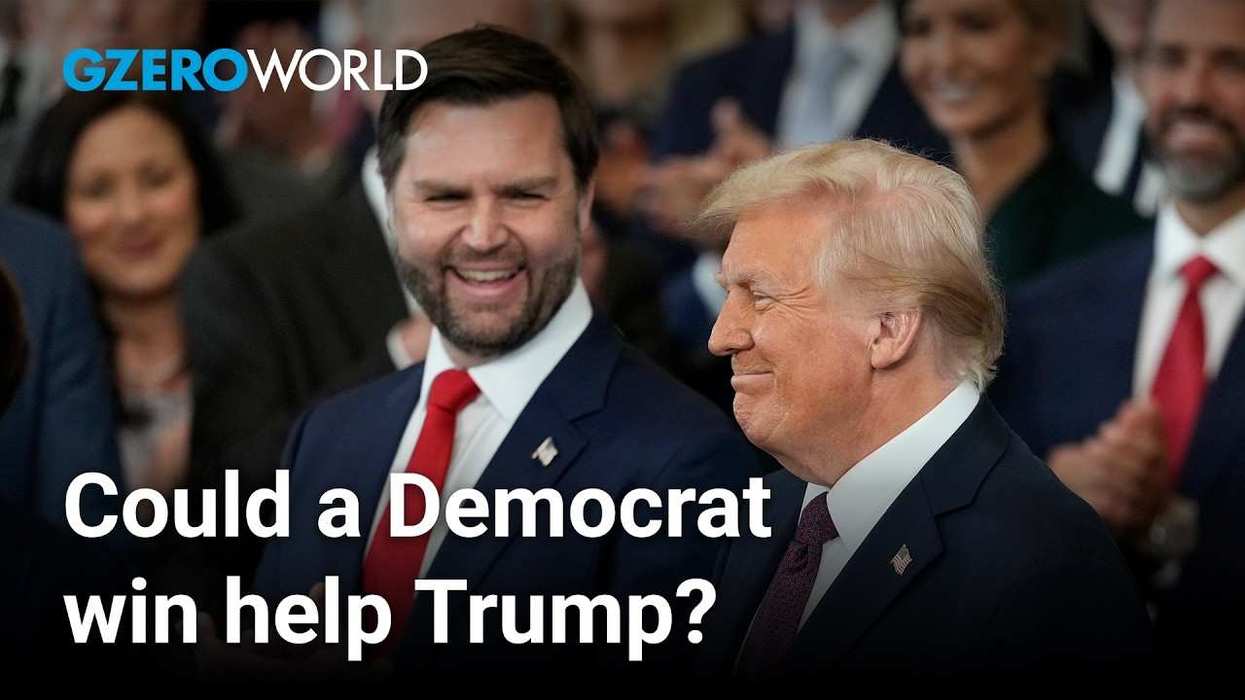
Donald Trump is polling underwater on the economy in a critical midterm election year. What can he do to change voters’ perceptions?
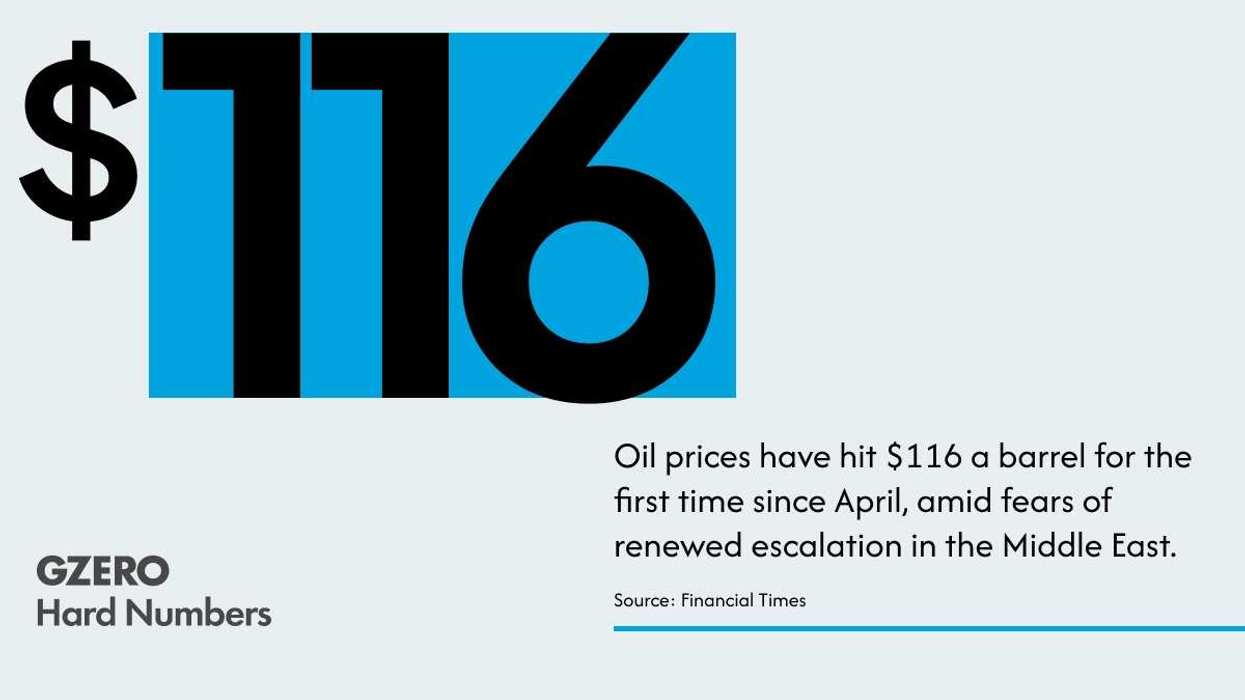
The US has paused Russian oil sanctions in a bid to stabilize energy markets rocked by the war with Iran. Administration officials stress that it’s a “tailored” measure, applying only to oil already loaded onto tankers, but it’s still a gift to Russia, which has already been clocking an extra $150 million daily in oil revenues since the war began.
Two weeks into his war against Iran, the US president is now calling on other countries to send forces to help secure the Strait of Hormuz.
(very) strongly worded stuff. #PUPPETREGIME
Younger millennials have seen the monthly auto loan payments jump nearly 60% since 2019, and the EV demand has cooled. What does it mean for the road ahead?
Get the full analysis from Bank of America Institute and subscribe for more economic insights.
Think you know what's going on around the world? Here's your chance to prove it.
With conflict with Iran squeezing global oil supplies and rattling markets, dozens of countries made a major decision this week. What was it?
Take the quiz to see if you guessed correctly!
GZERO Media is a company dedicated to providing the public with intelligent and engaging coverage of global affairs. It was created in 2017 as a subsidiary of Eurasia Group, the world's leading political risk analysis firm.
Interest in global affairs is soaring these days, and yet traditional sources of insight are either too politicized, too polarizing, or too boring.
We believe there's a better way to help people understand the forces that are reshaping their world. By delivering deep insight with a light touch. By taking a global view. By pushing beyond predictable opinions and formats to inform, engage, challenge, and entertain.
Our approach is at once journalistic, analytical, and creative. We not only explain the most important stories in the world today — we tease out the critical connections between them, so you can be smart about what comes next.
Whether you get the daily dish on global affairs from our GZERO Daily newsletter, see global leaders in a different light on GZERO World with Ian Bremmer, or get your fix of laughter and outrage from our political satire show PUPPET REGIME, we hope that you come away with a broader and deeper understanding of the world.
For decades, a small number of leading countries regularly came together – in formats like the Group of Seven (G7) or the wider Group of 20 (G20) – to seek collective solutions to the world's most pressing challenges. What's more, the United States used its power, for better or worse, as a kind of "G1" to underwrite global norms of global commerce, finance, and security.
Today, that order is slipping away. No single power or group of powers is willing or able to set a global agenda. It's a world of many pretenders, but no leaders. Welcome to the GZERO.

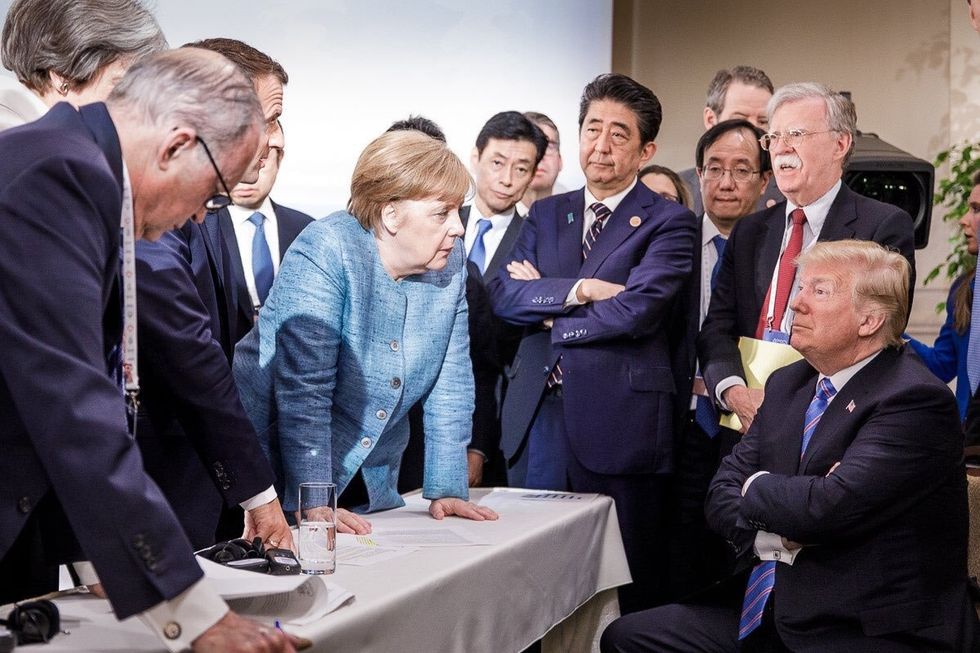
President Donald Trump seated surrounded by foreign leaders including Germany's Angela Merkel, Japan's Shinzo Abe and France's Emmanuel Macron
Getty Images

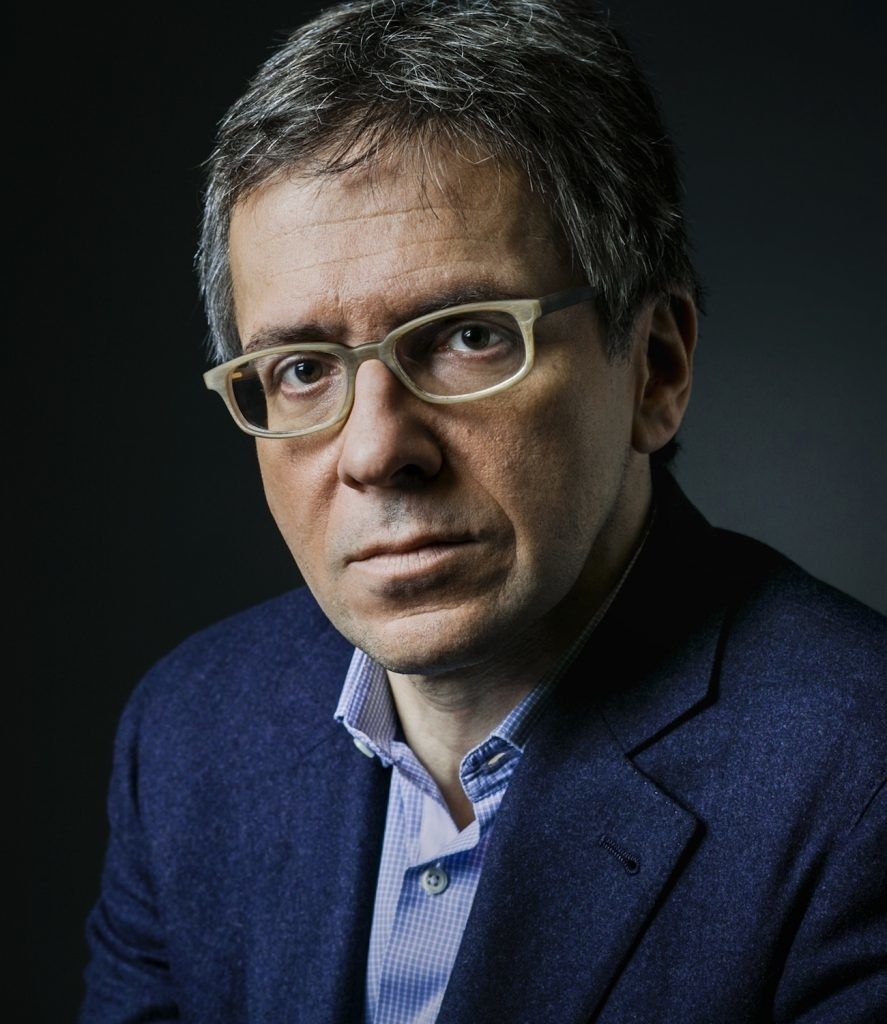
Ian Bremmer is President and Founder of GZERO Media. He hosts the weekly digital and broadcast show, GZERO World with Ian Bremmer, where he explains the key global stories of the moment, sits down for an in-depth conversation with the newsmakers and thought leaders shaping our world, and takes your questions.
Ian is also the President and Founder of GZERO Media's parent company, Eurasia Group, the leading global political risk research and consulting firm. Ian is a New York Times bestselling author of eleven books including "Us vs Them: The Failure of Globalism," "Every Nation for Itself: Winners and Losers in a G-Zero World," "The End of the Free Market: Who Wins the War Between States and Corporations?" and "Superpower: Three Choices for America's Role in the World." His latest book, "The Power of Crisis," draws lessons from global challenges of the past 100 years—including the pandemic—to show how we can respond to three great crises unfolding over the next decade.
Ian earned a master's degree and a doctorate in political science from Stanford University, where he went on to become the youngest-ever national fellow at the Hoover Institution. Although he might not admit it, Ian's secretly jealous of his puppet's interviews with the world's most powerful leaders.
Justin Kosslyn is Interim Publisher at GZERO Media and a Special Advisor at Eurasia Group. Previously, he was the Director of Product Management for Google's News Ecosystem, overseeing products such as Google Trends, Search Console, Reader Revenue Manager, Site Kit, Pinpoint, and R&D efforts in Generative AI.
Before that, Justin was Head of Digital Products at TED, the organization behind TED Talks. He also spent a decade at Google Jigsaw, where he led teams developing software tools to enhance digital and information security. His work included managing Google's warnings for government-backed cyberattack targets and developing ClaimReview, a fact-checking tool now widely used across major tech platforms.
Justin graduated from Yale University with a BS in Computer Science. He lives in New York with his wife and two children.

From Davos and the Munich Security Forum to the UN General Assembly, our livestream discussions convene heads of state, business leaders, technology experts from around the world for critical debate about the geopolitical and technology trends shaping our world.
In a new Global Stage livestream from the 2026 Munich Security Conference, New York Times White House and national security correspondent David Sanger moderates a conversation with Ian Bremmer (President & Founder, Eurasia Group and GZERO Media), Brad Smith (Vice Chair & President, Microsoft), Benedetta Berti (Secretary General, NATO Parliamentary Assembly), and Wolfgang Dierker (Global Head of Government Affairs, SAP) on how technology and defense are colliding in real time.
Keep up with what’s going on around the world - and why it matters.