El Niño, the natural climate phenomenon that happens every three to seven years, is back. Researchers are warning that it has formed and could become the strongest on record. If that happens, the consequences for economies and for food security around the world could be severe.
The UN’s Food and Agriculture Organization (FAO) this week said the risk is particularly high in the Sahel, across Southern Africa, in South and Southeast Asia, and in Central America’s dry corridor and the Caribbean. In some agricultural and grazing areas, there’s a 50% chance of drought in the next few months. El Niño can also bring heavier rains and flooding to other regions, including the Horn of Africa and North America, damaging staple crops.
El Niño develops when sea surface temperatures in the Pacific Ocean are 0.5º Celsius (0.9º Fahrenheit) higher for several months. Moderate El Niños could push those temperatures up 1º Celsius above the norm. But the biggest El Niño episodes of the past half-century – in 1982, 1997, and 2015 – have seen temperatures jump by 2º Celsius or more. Each of those caused major economic fallout, triggered harvest failures and livestock losses, and unleashed migration in search of food. Between 2015 and 2016 alone, El Niño impacted more than 60 million people and prompted $5 billion in humanitarian appeals across 23 countries.
Other studies have shown that the economic effects of El Niño can top trillions: one recent paper found that the 1997 to 1998 episode caused $5.7 trillion in global losses.
This year could be even more dramatic. Many forecasts say El Niño could increase by an unprecedented 3º Celsius (roughly 5º Fahrenheit).
Of course, forecasts aren’t destiny. There’s a chance El Niño could prove weaker than expected, and the world is better prepared than it was during previous episodes. Weather monitoring is more sophisticated, many governments hold strategic grain reserves, and no one is predicting a large-scale famine. Yet, if the predictions are right, El Niño could also strike at a particularly precarious moment.
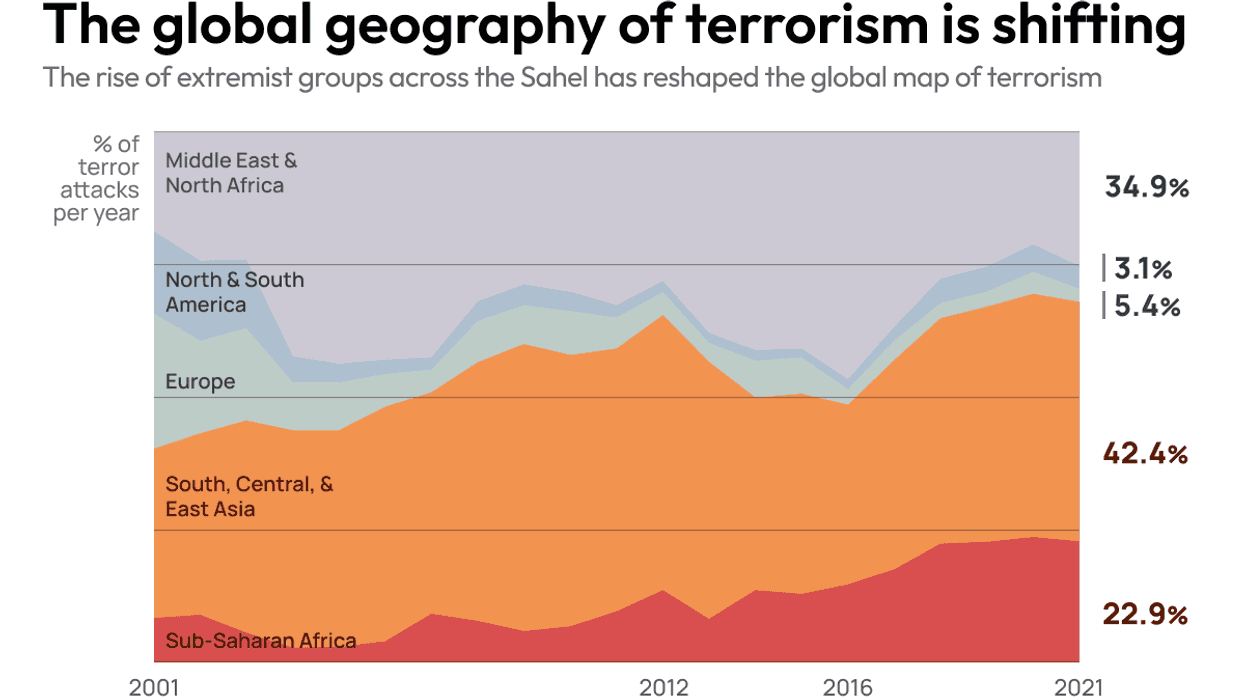
More than 80% of the agricultural impacts of El Niño are expected to hit low- and middle-income countries. In the Sahel, food insecurity has deepened for five straight years, while conflicts are raging in Mali, Burkina Faso, and Nigeria, and have made it harder to reach vulnerable communities.
Meanwhile in India, El Niño could weaken the summer monsoon, putting rain-fed crops like rice and maize under pressure in a sector that employs 45% of the country’s workforce. Scientists say climate change is making El Niño more erratic, sometimes bringing unpredictable, short, intense bursts of rain and prolonged, damaging dry spells.
The wider geopolitical backdrop isn’t helping. The Iran war’s disruption of shipping through the Strait of Hormuz has made fertilizer more expensive and scarce as many farmers prepare to plant. At the same time, dramatic cuts to foreign aid over the last year and a half by the United States and others have weakened a longstanding safety net for poorer countries.
The world has weathered severe El Niños before, but this time, there may be less room for error.