Skip to content
Search

Latest Stories

Europe

Hard Numbers: Indian hijab protests, Chinese windfall for sub-Saharan Africa, Germany running low on gas, Russian political zoo

Hard Numbers: Indian hijab protests, Chinese windfall for sub-Saharan Africa, Germany running low on gas, Russian political zoo

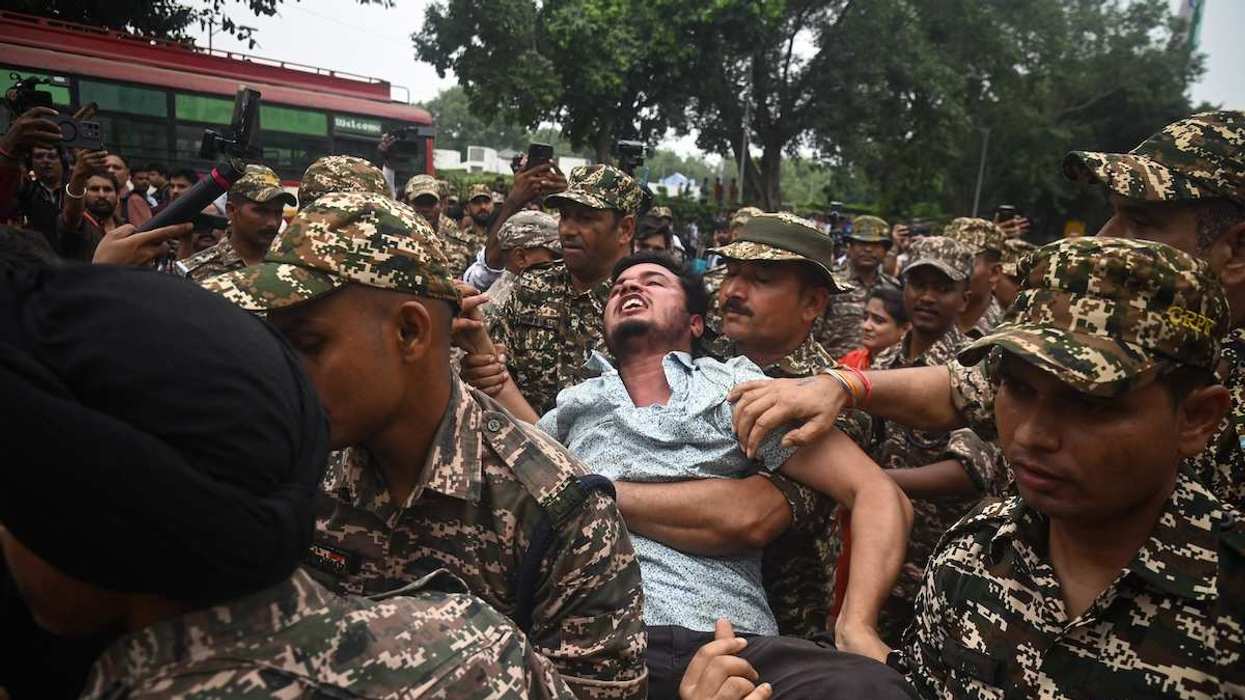
A Muslim student joins a protest against the recent hijab ban in India's Karnataka state.

REUTERS/Rupak De Chowdhuri
Make us preferred on Google

3: Hundreds of students took to the streets and blocked roads on Wednesday in Kolkata, India, to protest a ban on wearing the hijab in classrooms in southern Karnataka state. Karnataka previously shut down schools and colleges for three days to ease tensions between Muslims and Hindus over the head covering. (Karnataka is run by the Hindu nationalist BJP Party of PM Narendra Modi, while West Bengal, which is home to Kolkata, is governed by a top Modi critic.)


23 billion: Chinese development banks pumped $23 billion into infrastructure projects in sub-Saharan Africa from 2007 to 2020, according to a new study by the Center for Global Development. That’s more than double the combined amount provided in the same period to the region by Western international financial institutions.

36: Germany’s natural gas reserves have fallen to about 36 percent of their maximum capacity — less than enough for a week of very cold temperatures. The country gets more than half of its gas from Russia, which is concerning given the rising tensions with Ukraine and delayed approval of the Nord Stream 2 pipeline.

25,000: A Russian zoo canceled an online poll to pick a new mascot after it first got political and later reeked of fraud. An orangutan backed by an ally of top Vladimir Putin critic Alexei Navalny was ahead until it was overtaken by a (presumably independent) snow leopard, which got 25,000 votes in just four hours — but only from 2,000 visitors to the website.
More For You

Is Russia the biggest geopolitical tail risk today?
- YouTube
What is the biggest geopolitical tail risk today? At the 2026 US-Canada Summit, hosted by Eurasia Group and RBC in Toronto, Ian Bremmer assesses the geopolitical risks shaping an increasingly volatile global landscape. He highlights Russia as one of the most significant tail risks today, driven by the ongoing war in Ukraine and the potential for [...]
Iranian President Masoud Pezeshkian displays a memorandum of understanding after signing it in Tehran, Iran, on June 18, 2026.

Iranian President Masoud Pezeshkian displays a memorandum of understanding after signing it in Tehran, Iran, on June 18, 2026, after the document was signed by US President Donald Trump.

Iranian Presidency via ZUMA Press
What does the US-Iran deal mean for Tehran? The interim agreement to end the war, signed by both sides on Wednesday, appears to tilt toward Iran: it lifts the US naval blockade of Iranian ports, grants sanction waivers for Iranian oil products – meaning Tehran no longer has to sell oil at a discount – and gives the Islamic Republic access to [...]
The growing strategic importance of the Arctic
- YouTube
As global competition intensifies in the Arctic, Greenland has reemerged as a strategic focal point for the United States and its allies. From the sidelines 2026 US-Canada Summit, hosted by Eurasia Group and RBC in Toronto, Tony Maciulis sits down with Thomas Dans, chairman of the US Arctic Research Commission, to discuss why the Arctic is [...]
Israeli PM Benjamin Netanyahu at a news conference

Israeli Prime Minister Benjamin Netanyahu holds a news conference, following a US-Iran deal, in Jerusalem, June 15, 2026.

REUTERS/Ronen Zvulun/Pool
US-Iran deal could spell disaster for NetanyahuIsraeli Prime Minister Benjamin Netanyahu was already struggling in polls ahead of elections later this year, but his situation might get worse after Washington and Tehran agreed to a deal (pending its signing on Friday). Why the issue with ending the war? Israel ploughed resources into the war, its [...]