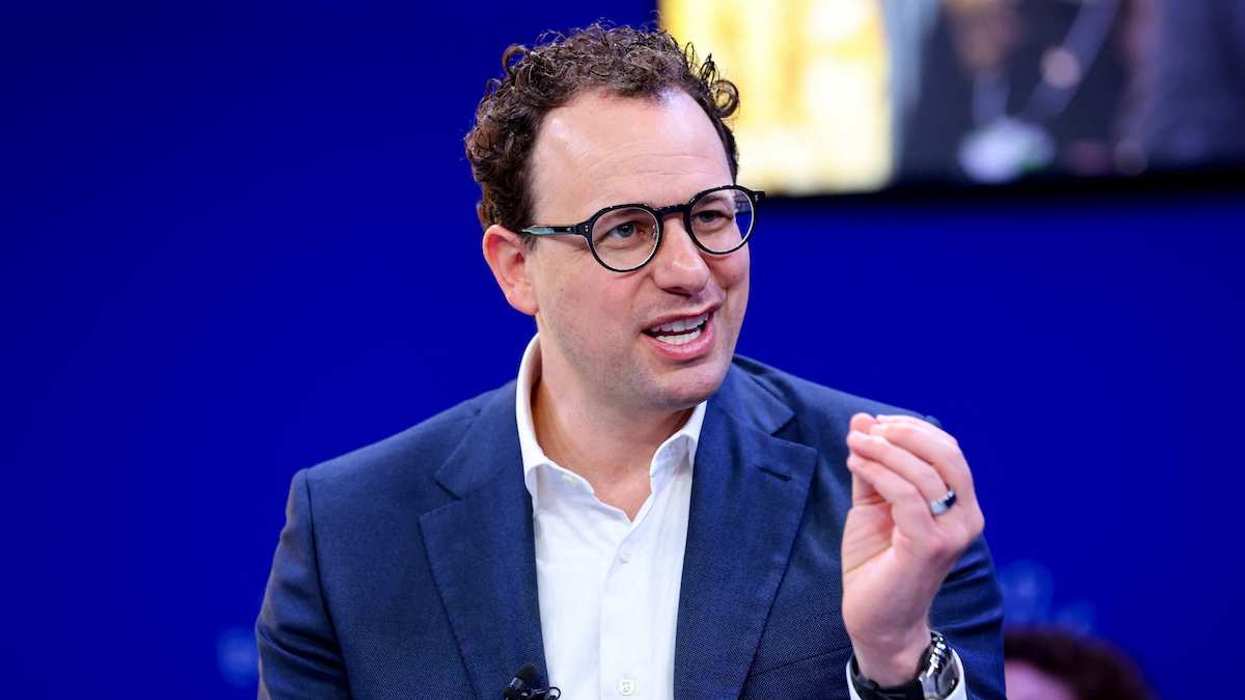
At first glance, Hungary’s Prime Minister-elect Péter Magyar may appear to be the antithesis of the man he defeated in the April 12 election, Viktor Orbán. After all, the two were embroiled in a bitter campaign that featured accusations of sabotage, Russian interference, and blackmail over a sex tape.
Yet the pair might be closer than you think – both on policy and politics.
On the one hand, Magyar has put some clear daylight between himself and Kremlin-pal Orbán on their stance toward the European Union and Russia. He has pledged to end corruption in government, an issue that became endemic in Hungary during Orbán’s premiership. He also plans to restore judicial independence, which Orbán had effectively eroded through constitutional and legal changes.
Yet on other issues, Magyar is quite close to Orbán – hardly a surprise, given the incoming PM was a member of Orbán’s right-wing Fidesz party before defecting to the center-right Tisza. Both have hardline views on immigration – Magyar even took a harsher stance than Orbán on temporary work visas for non-EU nationals (otherwise known as “guest workers”). Both are skeptical of Ukraine joining the European Union. Both infuse a certain level of nationalism into their politics.
Magyar – whose name literally means “Hungarian” in Hungarian – has continued to display this nationalist streak since he won the election earlier this month. Right after his victory, he cited the Austro-Hungarian empire as a reason for boosting relations with Vienna. Then, last week, he called Slovakia’s PM Robert Fico and demanded he repeal the Beneš Decrees, a set of orders implemented in postwar Czechoslovakia that permitted the expulsion and expropriation of ethnic Germans and Hungarians alike.
Magyar also offered to meet Ukrainian President Volodymyr Zelensky – but it’s the location that’s noteworthy. He proposed a confab in Berehove, a Ukrainian town where the majority of residents are ethnically Hungarian.
For a country that is only a third of the size it used to be at the height of its empire – a fact that embitters many Hungarians to this day – the key question is how Magyar’s instinct will translate into policy.
To better understand how Magyar’s foreign policy will take shape — and where it may diverge from or echo Orbán’s – GZERO spoke to Eurasia Group’s in-house Hungary expert, Orsolya Raczova. This conversation is edited for clarity.
GZERO: Do you expect Magyar to have a better relationship with Hungary’s neighbors than Orbán?
Raczova: Definitely with Poland (which isn’t a neighbor but is part of the Visegrad Four alliance with Hungary, the Czech Republic and Slovakia). The relationship with Poland deteriorated under Orbán. With Slovakia, no, because Orbán had good relations with Fico. The Czech Republic is an interesting question, because Czech President Andrej Babiš is in the Patriot group – alongside Orbán – in the European Parliament. But I do think that Babiš is more pragmatic; he never went too far on either reforms or disagreeing with Brussels. Austria, definitely. Romania has its own political crisis, so they will see what happens there.
Let’s back up a second: how do Hungarians feel about the country being a third of its former size?
That’s a very good question. It’s very important for Hungarians. They still have these grievances about the Treaty of Trianon of 1920, when they lost the land. This is something that’s actively been talked about in Hungary for decades, so there is this bitter feeling and grievance towards that. This is why some of the movements towards the extreme right have been successful, like the Jobbik, for example. And that’s why this rhetoric often works as well, because it resonates with the people. But I don’t think Magyar would go too much into it, because it's a very sensitive question if you want to build good relations with your neighbor.
Editor’s note: The Jobbik, or "Movement for a Better Hungary," is a ring-wing, ultra-nationalist party that was founded in 2003.
Many EU leaders celebrated Magyar’s victory. But is there potential for conflict down the road?
We have already seen a couple of potential conflicts. For example, Magyar’s members of the European Parliament (MEPs) voted against the EU-Mercosur trade deal. Magyar also has a firm stance on migration. But on Ukraine, there is flexibility.
Ultimately, he will want to balance his domestic agenda with keeping good relations with the EU. Because in parallel, he will work on unlocking EU funds for Hungary on a very strict timeline. So I don't think he can afford to make enemies now with leaders in Brussels.
Given the growing number of right-wing leaders in central Europe, is a confrontation between them inevitable?
I think it's unavoidable. But what makes me still optimistic is that Magyar has very good technocrats. I think they will try to reach a compromise with these leaders. Orbán barely tried to do this, and this is where it will be completely different. Even when you look at Fico, he’s confrontational, but he was never as confrontational as Orbán. Babiš is also a good example – he’s also a pragmatist (although he’s just been elected, so it’s too early to say for sure). So I think there will be topics where they fight harder, and others where they aim for compromise.
Final thing: what are Magyar’s priorities once he comes into office?
EU funding is his first priority. Unlocking €10 billion in funds from the EU’s Recovery and Resilience Facility – of which €6.4 billion is in grants, the rest in loans – that will already include a bunch of legislative steps that are needed for this. On the legislative side, it will be the anti-corruption agenda, health care and education, and, of course, last but not least, balancing the budget.