Russia and China have always had a complicated relationship. They almost went to war over a border dispute in 1969, and have historically regarded each other as neither friends nor enemies, but rather competitors for influence in Asia and elsewhere.
But that all started to change in 2014, the year Moscow and Beijing saw a US hand in the revolutions that prompted Russia to seize Crimea from Ukraine, and China to crack down on umbrella-wearing protesters in Hong Kong. China is increasingly thirsty for Russian oil and natural gas, and both have a common interest in standing up to “the West.”
Vladimir Putin and Xi Jinping are now showing off their authoritarian bromance in the face of growing animosity from the US and its allies over flashpoints such as Ukraine and Taiwan.
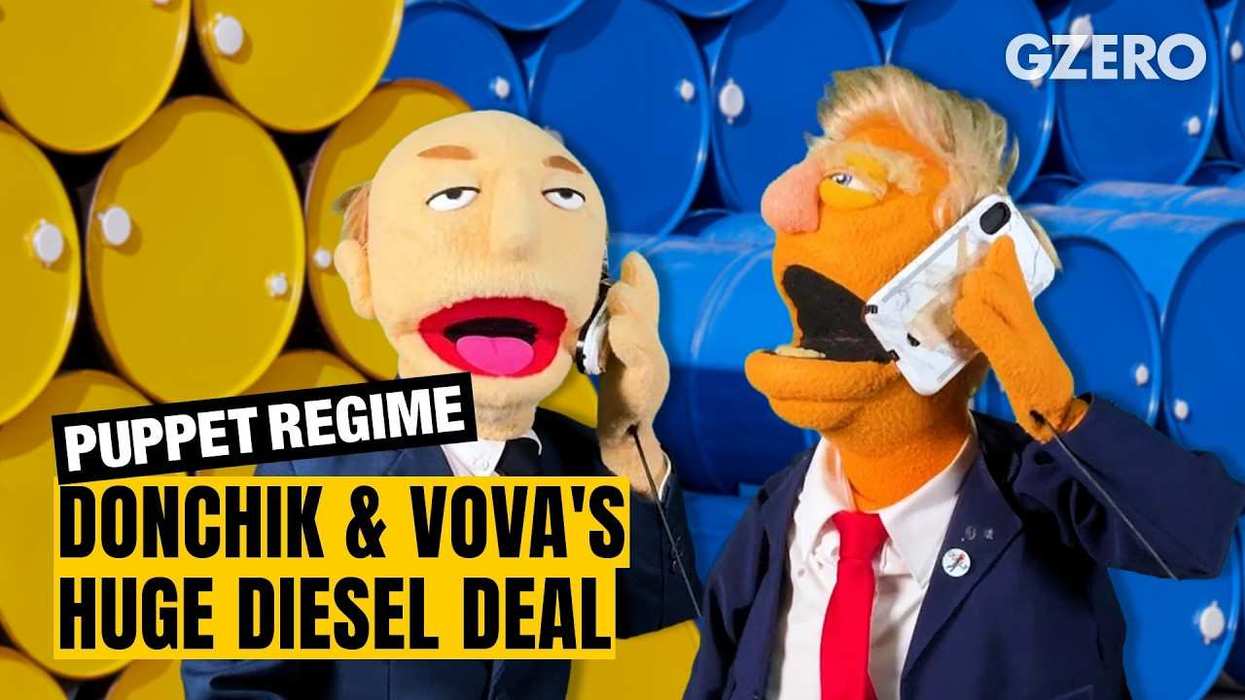
We know how much of the West views Russia and China. But how do Russia and China view the West? Here's a hypothetical recent catch-up video call between BFFs Putin and Xi.
Xi: My dear Vladimir, what’s your Ukraine endgame? The Americans and NATO clearly think you're going to invade, and threaten to punish you for it. The question is, as always, will theywa walk the talk on sanctions that'll hurt them too, especially the Europeans who need your gas? Probably not.
The most they’ll do is send the Ukrainians weapons to fight you. They’ll put lots of NATO troops on alert, but no boots on the ground inside Ukraine.
You know China has your back. And if push comes to shove, we're already working on an alternative to the global SWIFT payments network if the Americans kick you out. It's about time we do business on our own system, without the US sanctimoniously telling us how to behave in our own backyard.
Putin: Yes, my old friend, the West is freaking out — as usual. First, I never said I’d invade. In fact, my boys told them that was not my plan, though I’m happy they don’t quite believe that. Second, I’m baffled at all the uproar over my red lines when I've simply asked NATO to stop encroaching on former Soviet territory.
China has much to gain if I get my way with the Ukrainians. If the US and NATO agree to even some of my demands, that'll demonstrate the West is weak and in decline, while the East, our two great nations, are strong and on the rise. The world will be right to wonder how America would respond to you making similar plays for the South China Sea or Taiwan.
Xi: For sure, but no need to rush. After all, you have the Americans and the Europeans exactly where you've always wanted them: outraged, but at odds over how to respond. They can't call your bluff, if you are indeed only posturing, because they're not a united front like us.
So, can you please hold off for a month or so? I have the Beijing Winter Olympics coming up, and my zero-COVID policy hasn't made things easy. And don't get me started on Xinjiang, which has nothing to do with the Games — and is no one else's business anyway — yet has all my international sponsors in a tizzy.
Putin: I guess we have a scheduling conflict then. If I wait until after the Olympics, the terrain will be too muddy for my soldiers.
What’s more, now we have an opportunity to carve out our respective global spheres of influence: China’s in East and Southeast Asia, and Russia’s in the former Soviet Union. Why should the Americans get to dictate what we get to do on our borders when they are thousands of miles away, and can't even get their own democratic house in order?
Xi: Absolutely. It's time for a multipolar world. China is ready to lead it, and we won’t forget our friends in Moscow. We’d still like a longer chat about Kazakhstan, and maybe Siberia too.
Putin: Uh, sorry, my friend. You’re breaking up a bit. Bad wifi. Let’s talk later…