Trending Now
We have updated our Privacy Policy and Terms of Use for Eurasia Group and its affiliates, including GZERO Media, to clarify the types of data we collect, how we collect it, how we use data and with whom we share data. By using our website you consent to our Terms and Conditions and Privacy Policy, including the transfer of your personal data to the United States from your country of residence, and our use of cookies described in our Cookie Policy.
{{ subpage.title }}
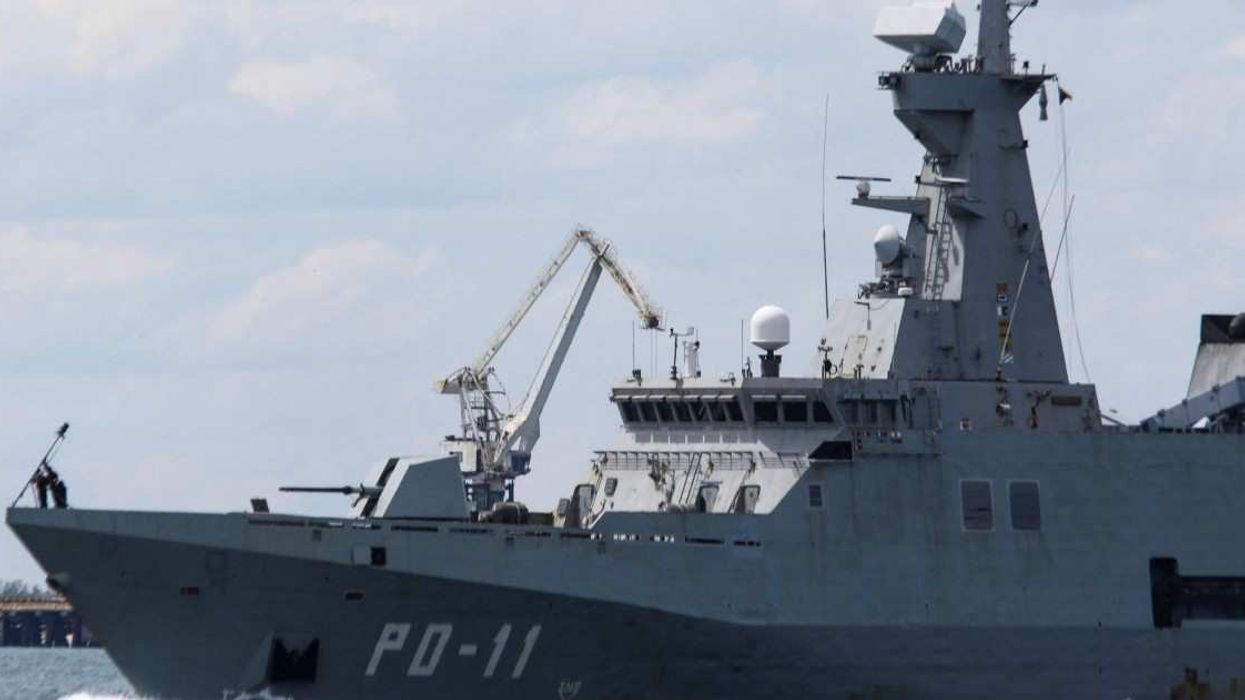
A Venezuelan Navy patrol boat sails off the Caribbean coast, amid heightened tensions with the U.S., in Puerto Cabello, Venezuela, October 24, 2025.
Is Trump aiming for regime change in Venezuela?
On Monday, the US struck four boats off the Pacific coast of Central America, killing 14 people who the White House said were smuggling narcotics. Over the past few weeks, the Trump Administration has killed at least 57 alleged drug smugglers in the waters of the Caribbean and Eastern Pacific, as part of a widening campaign against drug cartels that the White House says are linked to the Venezuelan government. Critics say these are extrajudicial killings, the Administration says they are permitted under anti-terrorism laws.
But is the US gearing up for strikes within Venezuela itself? Senator Lindsey Graham told CBS’s Face the Nation on Sunday that President Donald Trump plans to brief members of Congress when he gets back from Asia about “future potential military operations against Venezuela and Colombia” and “a potential expanding from the sea to the land.” Trump himself has suggested as much, telling reporters earlier this month that “We are certainly looking at land now, because we’ve got the sea very well under control.”
There’s reason to wonder. Over the past few weeks, the US has moved thousands of troops and military equipment into the region, including a state of the art aircraft carrier. It marks the largest buildup of US forces there at least since the 1990 invasion of Panamá to oust estranged former CIA partner Manuel Noriega.
The US military is currently conducting military drills with Trinidad and Tobago — just 7 miles off Venezuela’s shores. The extent of the build-up suggests that the real target may be Venezuela’s leader Nicolás Maduro, experts say.
“I think this is about domestic policy objectives – migration and stemming drug flows – and a desire to remove Maduro from power,” says Eurasia Group Latin America expert Risa Grais-Targow.
There are a few ways Maduro could be pushed out. The US could try to peel off his inner circle or top generals with pressure, sanctions, and quiet offers of exile. It could back a covert operation or special forces strike to take him down directly — or, less likely, use limited airstrikes to cripple his military’s capabilities before taking out Maduro himself. One option that doesn’t seem to be on the table: the US launching a sustained ground invasion of Venezuela, a potential quagmire which could fly in the face of Trump’s stated opposition for “forever wars.” Still critics say even more limited operations would require Congressional approval and oversight.
What happens if Maduro is removed from power? While a Venezuelan pro-democracy movement – led by Maria Corina Machado – waits in the wings and is advocating for Trump to oust Maduro, Grais-Targow cautions that any post-Maduro transition would be “chaotic.” “The ruling party and armed forces control all relevant institutions,” she says, “and any eventual competitive elections or handover of power would require difficult negotiations around power-sharing, along with economic and amnesty guarantees.”
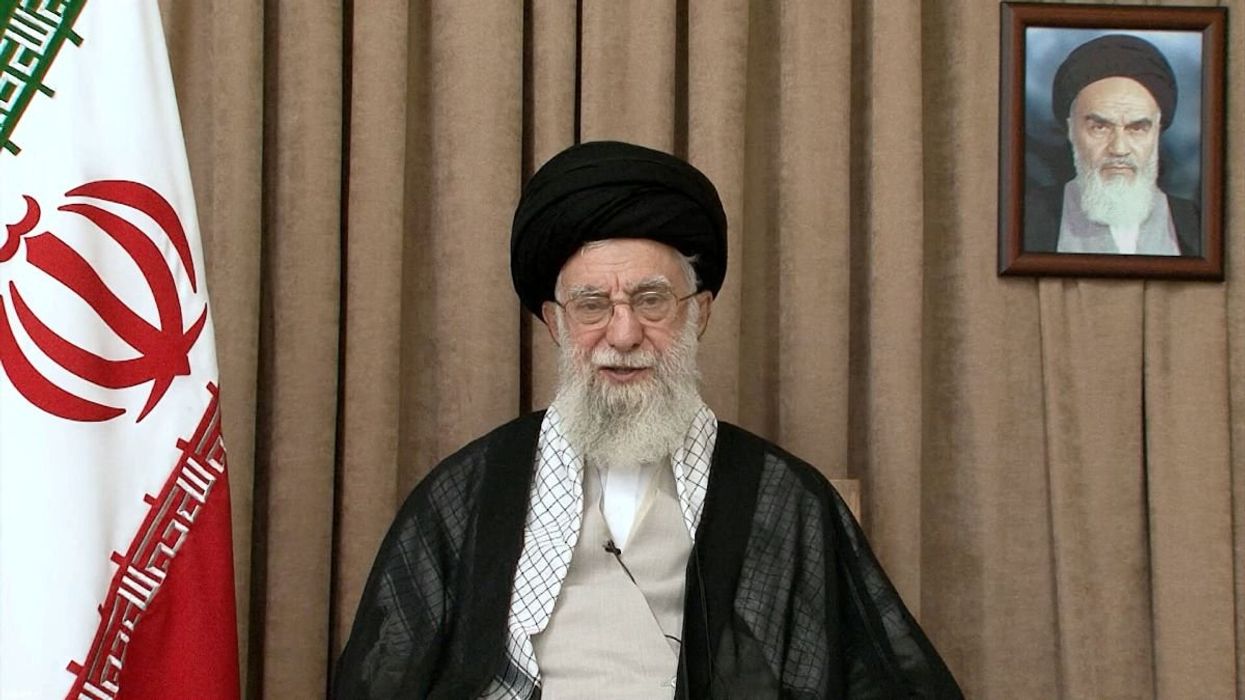
Iran's Supreme Leader Ayatollah Ali Khamenei speaks in a televised message, after the ceasefire between Iran and Israel, in Tehran, Iran, June 26, 2025.
What We’re Watching: Khamenei emerges from bunker, North Korea opens beach resort, & More
Iran’s leader reappears, but big challenges await
Iranian Supreme Leader Ali Khamenei has finally emerged from his bunker, delivering a public video message for the first time since the United States bombed three key nuclear sites in his country last weekend. The Ayatollah claimed “victory” and sought to downplay the effects of the US strikes. His week-long absence had reportedly left many Iranians worried. He faces a myriad of challenges now, including reasserting his power in the wake of Israel’s wave of assassinations of top commanders and aides. He also will need to decide what’s next for Iran’s damaged nuclear program.
Putin and Xi to miss BRICS summit
In a week where the alliance between Europe and the US rebounded at the NATO summit, the premier Global South grouping appears to be trending in the opposite direction: Chinese President Xi Jinping and Russian President Vladimir Putin will skip the BRICS summit, which starts on July 6. Putin is wary of his outstanding war crimes arrest warrant from the International Criminal Court, while Beijing says Xi won’t go because he’s already met Brazilian President Luiz Inacio Lula da Silva twice in the last year. Brasilia sees this as a snub.
North Korea to open… a beach resort.
Looking for a last-minute summer get-away? Seeking a quiet spot that’s off the beaten track? The new Wonsan Kalma beach resort in North Korea might be just the place for you! Supreme Leader Kim Jong-un hopes the coastal enclave, formerly a missile-testing site, will help to boost tourism. The idea was born seven years ago, in part because of Donald Trump’s musings about the appeal of North Korean beaches. The resort will officially open on July 1.
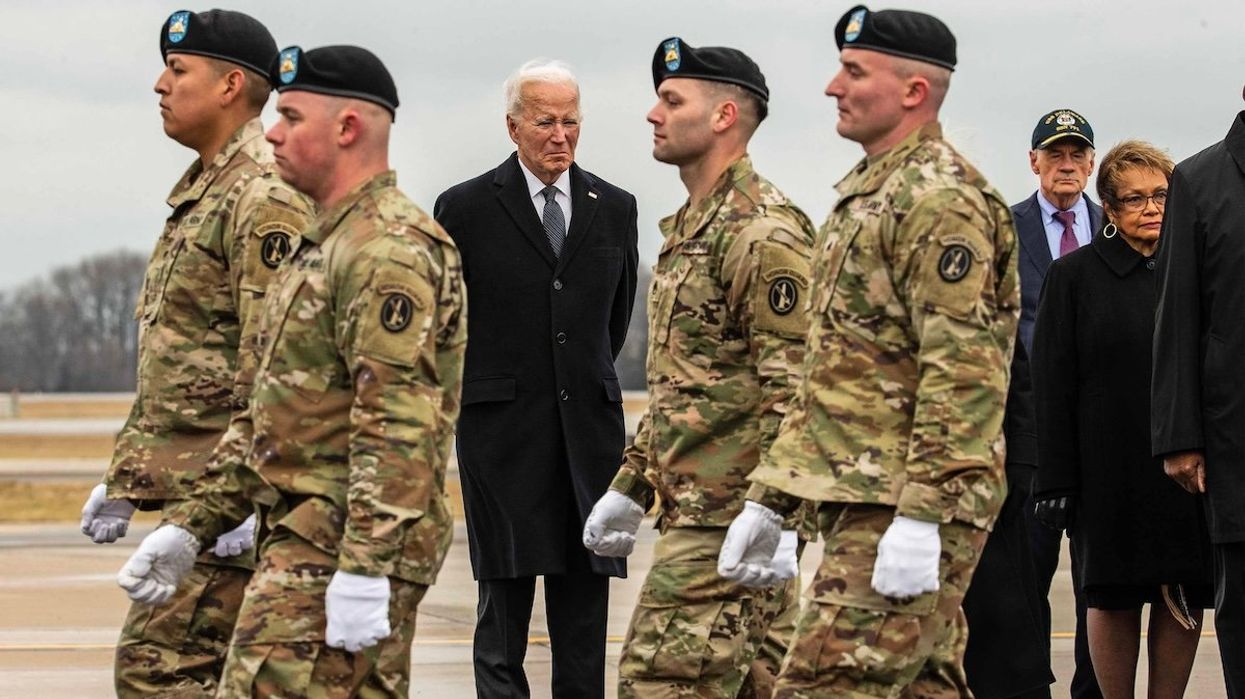
By the way, it just so happens that GZERO’s puppet satire series PUPPET REGIME actually has a song about this – you can rock along on Instagram or YouTube.President Joe Biden attends the return of the remains of the three slain US soldiers — Sgt. Breonna Alexsondria Moffett, Sgt. William Jerome Rivers, and Sgt. Kennedy Ladon Sanders — at Dover Air Force Base on Friday.
US strikes back after deadly drone attack
Nearly a week after a drone attack killed three American service members at a small US base in Jordan, the US responded late Friday by launching strikes against more than 85 targets in Syria and Iraq. The Pentagon blames the Iran-backed Islamic Resistance in Iraq for the deadly drone attack.
The strikes hit command and intel centers and storage facilities affiliated with the Quds Force, a unit of Iran’s Islamic Revolutionary Guard Corps, and local Iran-supported militias.
Tehran condemned the US strikes, calling them a “strategic error.” Baghdad said the attacks killed at least 16 people, including civilians. Syria, meanwhile, criticized the US and said the attacks would “fuel conflict in the Middle East in a very dangerous way.” The Syrian Observatory for Human Rights, a Britain-based watchdog, said the strikes in Syria had killed 23 pro-Iran fighters, but no civilians.
The strikes came hours after President Joe Biden, first lady Dr. Jill Biden, and US Defense Sec. Lloyd Austin attended the return of the remains of the three slain US soldiers — Sgt. Breonna Alexsondria Moffett, Sgt. William Jerome Rivers, and Sgt. Kennedy Ladon Sanders — at Dover Air Force Base on Friday.
Biden had threatened to deliver a “tiered response” over time, so these strikes are expected to be just the first salvo of a broader campaign. We’ll be watching for Washington's next moves — and for any signs of escalation in the form of responses from Iran, Iraq, or Syria.