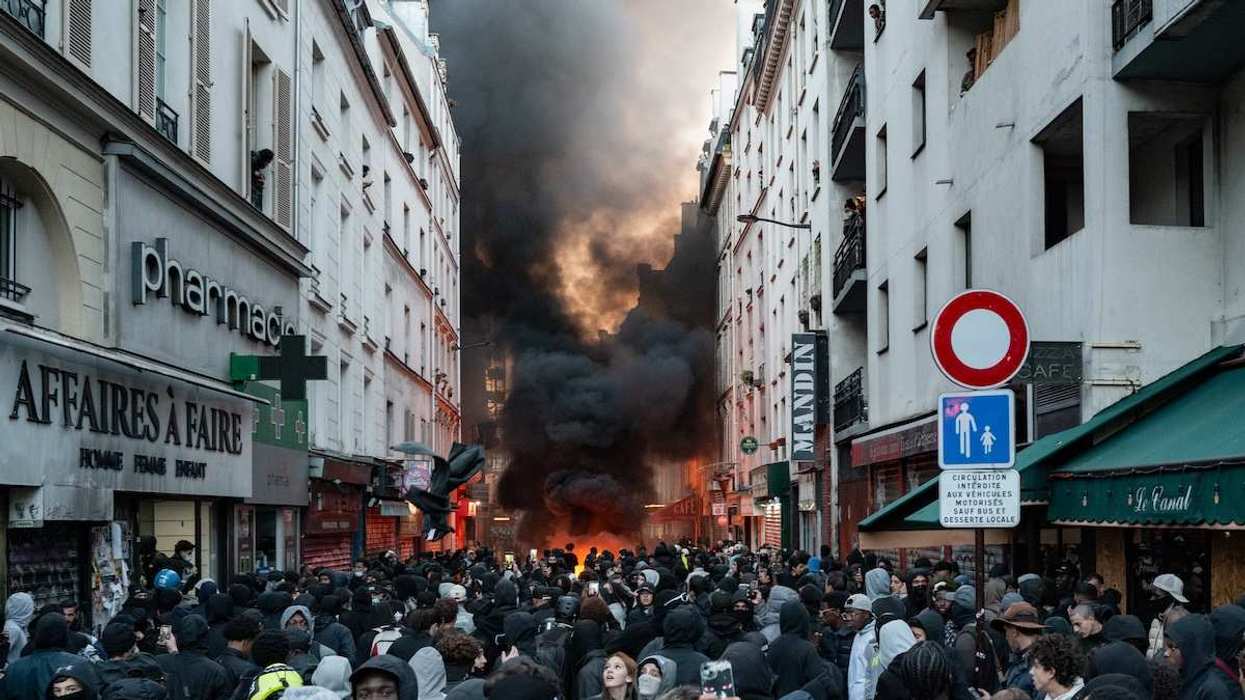
Le Pen and Macron falter in regional elections: This weekend's regional elections across France were a massive blow for both President Emmanuel Macron and his La République En Marche party (LREM), as well as for his rival Marine Le Pen and her far-right National Rally party. Le Pen, who has been soaring in the polls in recent months ahead of presidential elections in May 2022, was hoping her party would win a state-wide race for the first time, but National Rally failed to pull through even in conservative regions like Provence-Alpes-Côte d'Azur, where exit polls suggest that the center-right Republicans party, which has been almost irrelevant in recent years, will likely come out on top. Macron's LREM also performed terribly, taking just 10 percent of the vote nationwide. Macron and Le Pen tried to nationalize the regional polls by focusing on country-wide issues like COVID and immigration, but extremely low voter turnout makes it hard to draw broader conclusions. A second round of voting will take place next Sunday (two rounds of voting are conducted unless parties win more than 50 percent of the vote) and the National Rally is hoping for a comeback.
The Taliban's making moves: As the US prepares for a full withdrawal from Afghanistan, the Taliban is already swooping in to reclaim territory that it previously lost to US-backed Afghan security forces. After seizing nearly two dozen districts this weekend alone, they've now taken over about 60 out of 387 of Afghanistan's districts, over the past two months. Amid a growing perception that a Taliban takeover is inevitable after the full US withdrawal in September, reports suggest local leaders are racing to engage with the insurgents in hopes of getting better deals with them. President Ashraf Ghani said on Sunday that his government would arrest local leaders and Afghan security forces who broker deals with the Taliban, but can he enforce that? Ghani has also appointed a new defense minister, army chief and a new minister of interior to oversee the police. But so far, his warnings seem to have fallen on deaf ears. Ghani and the chairman of Afghanistan's High Council for National Reconciliation, Abdullah Abduallah, who have a power-sharing government, will meet with President Biden at the White House on Friday. But the US already has one foot out the door — 50 percent of its personnel and equipment are already gone — is it too late to stop the dominoes from falling the Taliban's way?
Sweden's government collapses: For the first time ever, Sweden's government has lost a no-confidence vote, forcing Social Democrat Prime Minister Stefan Lovfen to either resign or call snap elections. Lovfen's minority coalition government with the Green party was already on fragile footing, but the final straw came in a dispute over rent controls. In a bid to placate conservative opposition parties, Lofven — who actually supports the controls — said he'd look into the possibility of removing them for new homes. That triggered a backlash from the Left party, which withdrew from the government and called the no-confidence vote, which rightwing opposition parties supported. Rent control is a big issue in Sweden: close to 90 percent of the country's municipalities report housing shortages, as new construction has failed to keep pace with a growing and highly-urbanized population.
Gotham goes to the polls: A little more than a year after New York City became the epicenter of the coronavirus pandemic, New Yorkers will vote on Tuesday for the person they want to lead them out of the worst economic and public health crisis to hit the city in a century. Strictly speaking, the vote is just a Democratic Party primary, but given the party's lock on the city, the winner is all but assured to win the general election this fall. Whoever that is will take over the world's largest urban economy amid massive challenges: unemployment in New York City is double the national average, violent crime is rising, and gaping socioeconomic and racial inequalities have been laid bare by the pandemic. After a nasty and contentious campaign, the frontrunners are the Black former police officer and current Brooklyn borough president Eric Adams, former presidential candidate and entrepreneur Andrew Yang, and former Sanitation Department head Kathryn Garcia, all of whom are centrists. But progressive candidates including former city hall adviser Maya Wiley and city comptroller Scott Stringer are in the hunt as well, particularly since the election will use a ranked-choice system whereby voters rank their top five candidates and runoffs are calculated automatically until one candidate has more than 50 percent of the vote. For superb coverage, check out the online local NYC paper The City.