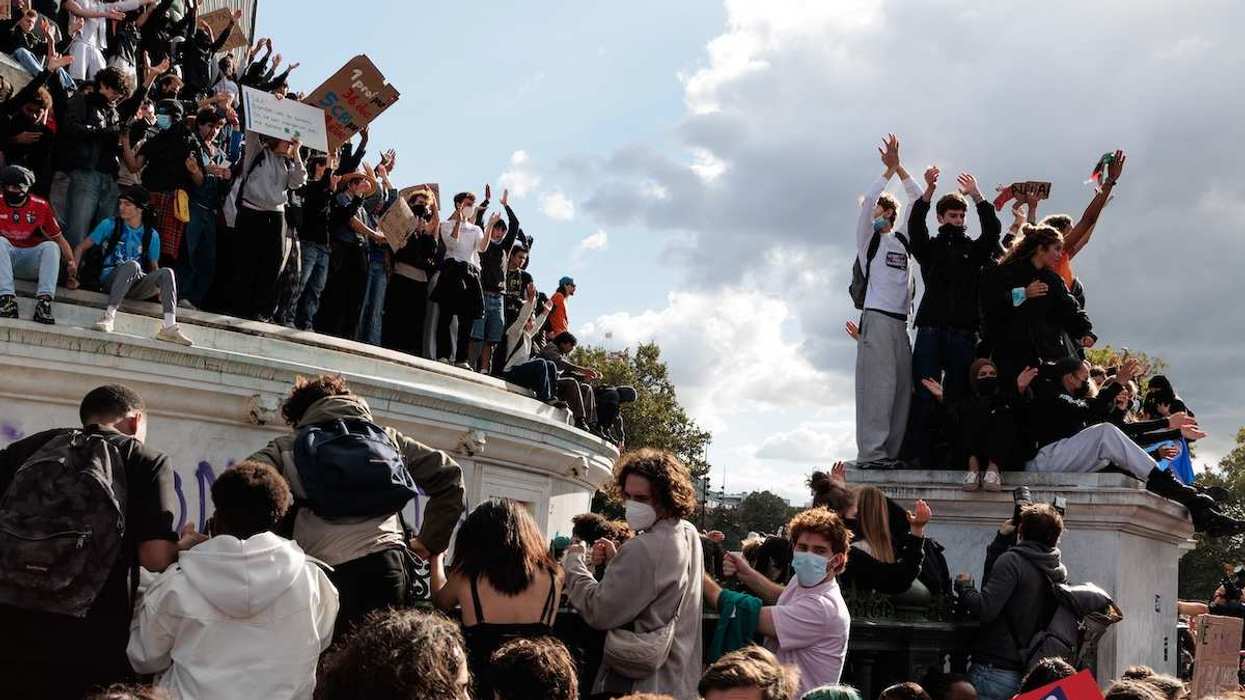
Will Putin, or won't he? In his first public remarks on the unrest in Belarus, Russian President Vladimir Putin said Thursday that he's ready to send a special police squad into the country to restore order if "extremist elements" cause things to spin "out of control." As protests against Belarusian strongman Alexander Lukashenko's bogus re-election continue, Putin's remarks are the clearest indication yet that the Kremlin is mulling a direct intervention. But are we really headed for a Ukraine 2014 redux? It's complicated. Putin can't stand Lukashenko, and would love to see him gone, but he also wants to prevent the Belarusian opposition from succeeding in a way that might inspire Russians. What's more, intervening directly in Belarus would probably be a harder sell at home than he had to make in 2014: for Russia, Belarus' cultural, economic, and strategic importance all pale next to Ukraine's. But Putin also has a reflexive fear of instability: if the situation deteriorates significantly next door — and his pledge of support could well encourage Lukashenko to push things too far — Putin could roll the dice and send in the troops.
Life in jail for NZ mosque shooter: A New Zealand court on Thursday sentenced Brenton Tarrant to life in prison for murdering 51 people at a Christchurch mosque in March 2019. Tarrant — an Australian white supremacist who pleaded guilty, defended himself and showed no remorse during the trial — is the first person in New Zealand's history who will spend the rest of his life behind bars without any chance of parole. The worst mass murder the country has ever seen prompted a wave of anti-gun legislation, including a ban on semi-automatic weapons and a government amnesty and buyback program for other arms. It also ignited a global debate about how to combat online hate speech and Islamophobia (Tarrant live streamed the entire massacre on Facebook). However, the libertarian-minded New Zealand First Party, a junior partner in the coalition government led by Jacinda Adern, the progressive prime minister, has so far resisted attempts to pass sweeping laws that many experts believe would help curb the spread of intolerance on the internet.
Coup leaders free ousted Mali leader: Mali's ruling military junta has released former President Ibrahim Boubacar Keita over a week after he was arrested and forced to resign following a coup by rebel army officers. Keita's release had been demanded by the Economic Community of West African States (ECOWAS), which has imposed trade and financial sanctions on post-coup Mali and is pressing the coup leaders for a timeline to make a transition to a civilian government. The junta wants to stay in power for three years, but ECOWAS wants elections a year from now. Meanwhile, there are concerns that armed jihadi groups linked to al-Qaeda and the Islamic State may take advantage of the current instability to make further inroads in Mali. France has committed to keeping its troops there for now, but we're watching whether the coup leaders will be able to restore order not only in the capital but also in swaths of the country controlled by Islamic militants. Back in 2012, instability after a coup enabled jihadis to take control of a huge chunk of northern Mali for over a year.