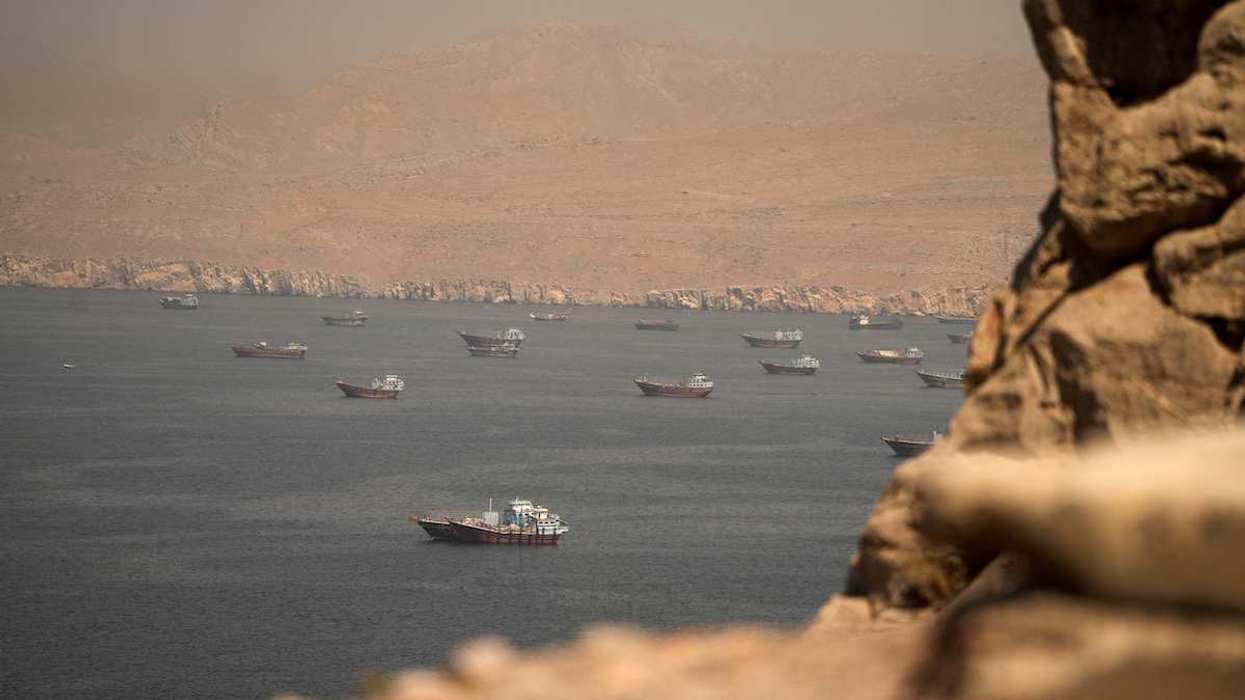
On June 14, the United States and Iran announced a deal to end the war that began in late February. A signing ceremony is set for Friday. The terms, as Washington describes them, include an immediate ceasefire on all fronts including Lebanon, the reopening of the Strait of Hormuz and lifting of the US naval blockade, an Iranian pledge never to pursue nuclear weapons, some form of financial payout for Iran, and 60 days of negotiations toward a final deal.
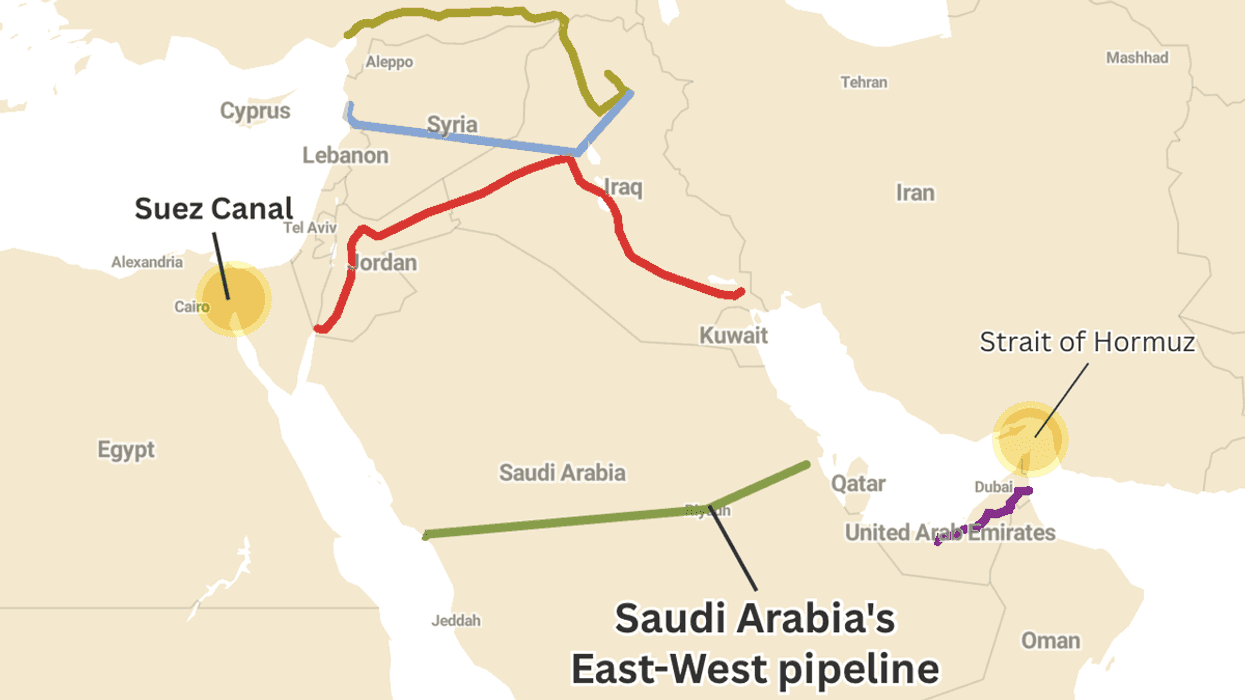
With both sides spinning the deal as a victory and contradicting each other on what’s been agreed, there are plenty of ways for this to go south before Friday. But markets have rallied, oil has come down, and governments from Tokyo to Berlin are breathing a sigh of relief. And rightly so. Reopening the Strait pulls the most dangerous variable out of the global economy, and a negotiated agreement was the only way to do that. It always beat the alternatives. But that doesn’t mean it’s a good deal.
Iran’s nuclear program survived. So did its ballistic missiles, its drones, and its proxies across Iraq, Lebanon, and Yemen. The regime President Donald Trump set out to break is still standing – battered but unbroken, stronger strategically than when the war began, and now due to be paid to allow passage through a waterway that was open before the US and Israel fired the first shot. Achieving none of the war’s stated objectives after four months of regional destruction and global disruption, this is the worst US foreign policy blunder since the Iraq war.
But whether the signing happens on schedule or gets delayed, and whether the ceasefire holds through the year or collapses, the war’s most lasting legacy has less to do with Iran than with America’s standing in the region. That’s the subject of “The Long Shadow of the Iran War,” an essay my Eurasia Group colleague Firas Maksad and I just published in Foreign Affairs.
You’ll want to read the whole thing, but the gist is that the war has accelerated the collapse of the US-anchored order that held the Middle East together for decades. That arrangement kept oil flowing, rival powers out of the region, and Washington the broker of everything that mattered – from Iranian containment to the more recent Arab-Israeli normalization process. It was already fraying before the fighting started. The war broke it.
The problem isn’t just that the US failed to deliver a decisive win against Iran. It’s how it got there – and who paid for it. Gulf states watched Trump let Israel’s Benjamin Netanyahu drive the offensive while they paid the price of Iranian retaliation – missiles and drones landing in Bahrain, Kuwait, Qatar, Saudi Arabia, and the UAE – with no say in the decisions that put them in the crosshairs. The takeaway in regional capitals: an American security guarantee now comes with a question mark attached.
The region’s powers are doing what states do when the guarantor starts to wobble: they’re splitting into camps. Two of them, on opposite sides of nearly everything.
On one side, an Abrahamic coalition anchored by Israel and the UAE, tightly bound to Washington, occasionally pulling in Greece and India on defense, energy, and trade. On the other, an Islamic coalition built around the Sunni heavyweights – Turkey, Saudi Arabia, Pakistan, and increasingly Egypt – who still lean on Washington for security but have decided that dependence is now a liability worth hedging against.
Both coalitions agree that Tehran is a threat, but they diverge on how to deal with it going forward. Saudi Arabia and its Islamic partners want to balance against Iran, deter it, and keep the door open to an eventual accommodation. Israel and the UAE see the regime as a permanent enemy to be confronted, not managed. Containment versus confrontation – and no broker left that both sides trust to referee.
Iran isn’t the only fault line. The Islamic coalition is increasingly uniting against what its members see as unchecked Israeli power from Gaza and the West Bank to Syria, Lebanon, and beyond. Their wake-up call came in September 2025, when Israel struck a Hamas negotiating team inside Qatar, the first such strike on a GCC member. Washington did nothing. Riyadh took the lesson that Israel, like Iran, could turn into a destabilizing force the United States wouldn’t – or couldn’t – restrain. Saudi Arabia proceeded to sign a mutual defense pact with nuclear-armed Pakistan, and 13,000 Pakistani troops and a fighter squadron have since deployed to Saudi soil. Riyadh is working on a similar pact with Turkey and talking with Egypt and Somalia about a coalition to counter Israel and the UAE in the Horn of Africa.
Abu Dhabi has drawn the opposite conclusion and bet accordingly. Where Saudi Arabia sees Israeli unilateralism as the threat, the UAE sees Israel as a bulwark against Iran and central not just to the region’s future but to its own security – a judgment cemented under Iranian missile fire when Israel offered air defense unprompted while Egypt, after years of Emirati support, dithered for weeks before sending jets. So the Emiratis are doubling down on deeper defense and intelligence ties with Israel and the US.
The split runs through economics too. In May, the UAE exited OPEC, spelling the functional end of the oil producers’ cartel. That suits Abu Dhabi’s strategy of pumping as much as possible, as fast as possible, and using the proceeds to decouple its already diversified economy fully away from fossil fuels. It also suits Washington’s interest in weaker OPEC pricing power. But it lands hard on Riyadh, whose entire Vision 2030 transformation is built on oil staying valuable long enough to pay for it. And the institutions that once let the region find consensus are gridlocking along the same lines. Such is the case of the Saudi-led GCC, where Kuwait and Qatar are drifting toward Riyadh, Bahrain toward Abu Dhabi, and Oman is keeping its own channel open to Tehran.
This is a region sliding into the G-Zero, where no single power or group of powers is both willing and able to keep order. The United States is still the strongest military actor in the Middle East, but its partners no longer trust it to use that strength predictably and to their benefit.
Into this fragmenting landscape steps China, a country with no enemies in the region and no interest in the burdens of policing it. Beijing’s principal advantage is contrast. To a region exhausted by American volatility, the absence of whiplash is plenty. It can gain more influence through trade and diplomatic mediation than aircraft carriers. Beijing already brokered the 2023 Saudi-Iran normalization, which gives it standing in the Islamic camp that the US can’t match – and it can keep working the commercial relationships with the UAE and the other trade-first states at the same time. Riyadh is now floating a GCC-Iran nonaggression pact modeled on the Helsinki process, and with ties to every party, leverage over Tehran, and no stake in the sectarian fight, no outside power is better placed to mediate it than China.
The logic isn’t confined to diplomacy … or to the Middle East. China’s grip on the critical minerals, batteries, and solar panels powering the energy transition already makes it indispensable to every energy importer in Asia regardless of who guarantees their security. Europe is building toward strategic autonomy and buying fewer American weapons. Latin America is deepening trade ties within the region and with the EU rather than with Washington. The diagnosis is identical on every continent – American reliability can no longer be assumed, and reducing dependence on the US has gone from luxury to necessity. Beijing doesn’t need to take on the burdens of replacing Washington to win from this – it just needs to be there when the US isn’t.
Trump’s war in Iran was supposed to project American power. It projected the opposite, moving the Middle East definitively into the G-Zero. The rest of the world will follow.
Read the full argument in Foreign Affairs.