Skip to content
Search

Latest Stories

GZERO AI

What Sam Altman wants from Washington

What Sam Altman wants from Washington
Courtesy of Midjourney
In a July 25 Washington Post op-ed, OpenAI cofounder and CEO Sam Altman laid out the stakes for the global artificial intelligence landscape: a race between democratic and authoritarian visions — the United States vs. China and Russia. Altman argues that continued US leadership in AI development is crucial to ensure the technology benefits all Americans rather than become concentrated in the hands of authoritarian regimes.

Altman’s argument is not new, but his policy prescriptions are more detailed than before. In addition to the general undertone that Washington should trust the AI industry to regulate itself, the OpenAI chief calls for improved cybersecurity measures, investment in infrastructure, and new models for global AI governance. He wants additional security and funding for data centers, for instance, and says doing this will create jobs around the country. He also urges the use of additional export controls and foreign investment rules to keep the AI industry in US control, and outlines potentially global governance structures to oversee the development of AI.

We’ve heard Altman’s call for self-regulation and industry-friendly policies before — he has become something of a chief lobbyist for the AI industry over the past two years. His framing of AI development as a national security imperative echoes a familiar strategy used by emerging tech sectors to garner government support and funding.

Scott Bade, a senior geotechnology analyst at Eurasia Group, says Altman wants to “position the AI sector as a national champion. Every emerging tech sector is doing this:

‘We’re essential to the future of US power [and] competitiveness [and] innovation so therefore [the US government] should subsidize us.’”

Moreover, Altman’s op-ed has notable omissions. AI researcher Melanie Mitchell, a professor at the Santa Fe Institute, points out on X that there’s no mention of the negative effects on the climate, seeing that AI requires immense amounts of electricity. She also highlights a crucial irony in Altman’s insistence to safeguard intellectual property: “He’s worrying about hackers stealing AI training data from AI companies like OpenAI, not about AI companies like OpenAI stealing training data from the people who created it!”

The timing of Altman’s op-ed is also intriguing. It comes as the US political landscape is shifting, with the upcoming presidential election no longer seen as a sure win for Republicans. The race between Kamala Harris and Donald Trump is now considered a toss-up, according to the latest polling since Harris entered the race a week and a half ago. This changing dynamic may explain why Altman is putting forward more concrete policy proposals now rather than counting on a more laissez-faire approach to come into power in January.

Harris is both comfortable with taking on Silicon Valley and advocating for US AI policy on a global stage, as we wrote in last week’s edition. Altman will want to make sure his voice — perhaps the loudest industry voice — gets heard no matter who is elected in November.

More For You

What we learned from a week of AI-generated cartoons
Courtesy of ChatGPT
Last week, OpenAI released its GPT-4o image-generation model, which is billed as more responsive to prompts, more capable of accurately rendering text, and better at producing higher-fidelity images than previous AI image generators. Within hours, ChatGPT users flooded social media with cartoons they made using the model in the style of the [...]
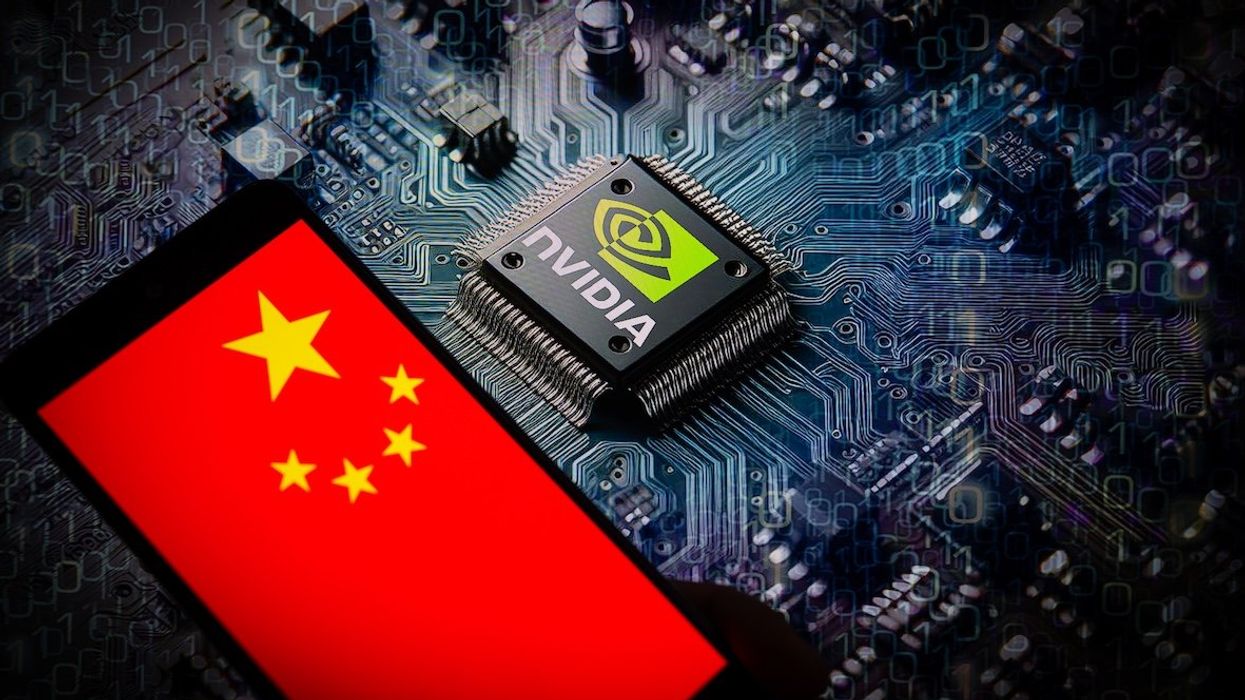
The flag of China is displayed on a smartphone with a NVIDIA chip in the background in this photo illustration.

The flag of China is displayed on a smartphone with a NVIDIA chip in the background in this photo illustration.

Jonathan Raa/NurPhoto via Reuters
H3C, one of China’s biggest server makers, has warned about running out of Nvidia H20 chips, the most powerful AI chips Chinese companies can legally purchase under US export controls. [...]
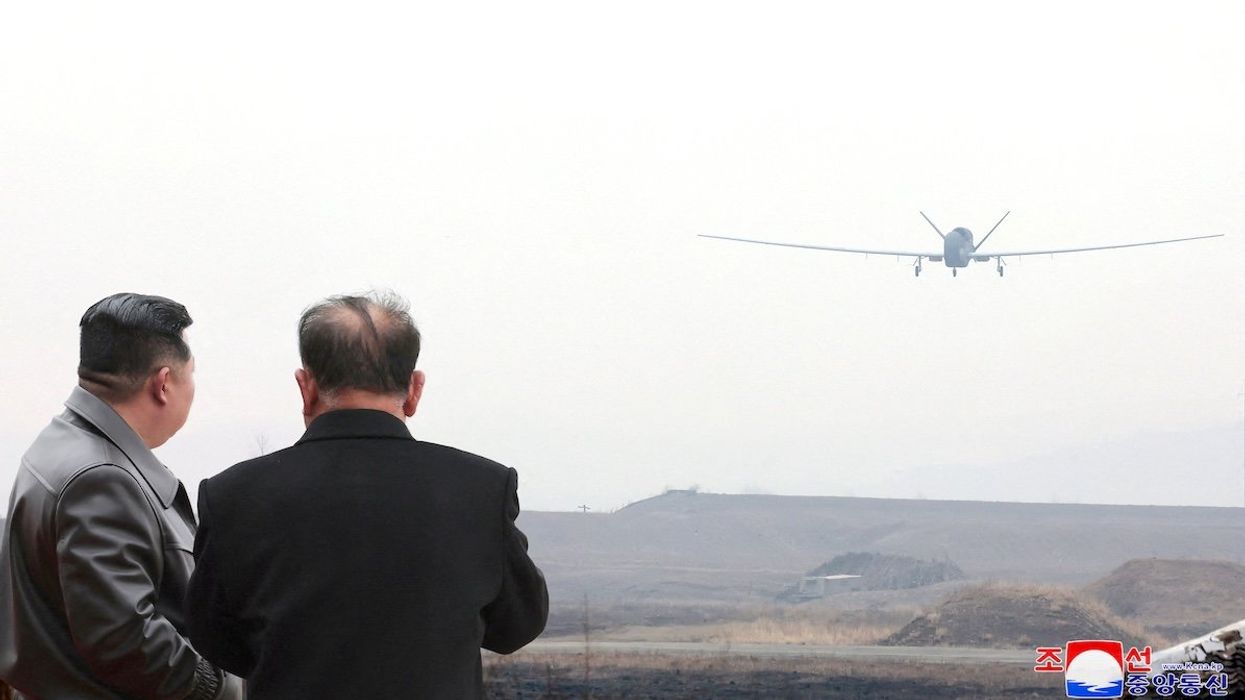
​North Korean leader Kim Jong Un supervises the test of suicide drones with artificial intelligence at an unknown location, in this photo released by North Korea's official Korean Central News Agency on March 27, 2025.

North Korean leader Kim Jong Un supervises the test of suicide drones with artificial intelligence at an unknown location, in this photo released by North Korea's official Korean Central News Agency on March 27, 2025.

KCNA via REUTERS
Hermit Kingdom leader Kim Jong Un has reportedly supervised AI-powered kamikaze drone tests. He told KCNA, the state news agency, that developing unmanned aircraft and AI should be a top priority to modernize North Korea’s armed forces. [...]
The logo for Isomorphic Labs is displayed on a tablet in this illustration.

The logo for Isomorphic Labs is displayed on a tablet in this illustration.

Igor Golovniov/SOPA Images/Sipa USA via Reuters
In 2024, Demis Hassabis won a Nobel Prize in chemistry for his work in predicting protein structures through his company, Isomorphic Labs. The lab, which broke off from Google's DeepMind in 2021, raised $600 million from investors in a new funding round led by Thrive Capital on Monday. The company did not disclose a valuation. [...]