Skip to content
Search

Latest Stories

News

Indonesia: Jokowi For The Win, But With What Baggage?

Indonesia: Jokowi For The Win, But With What Baggage?
Make us preferred on Google

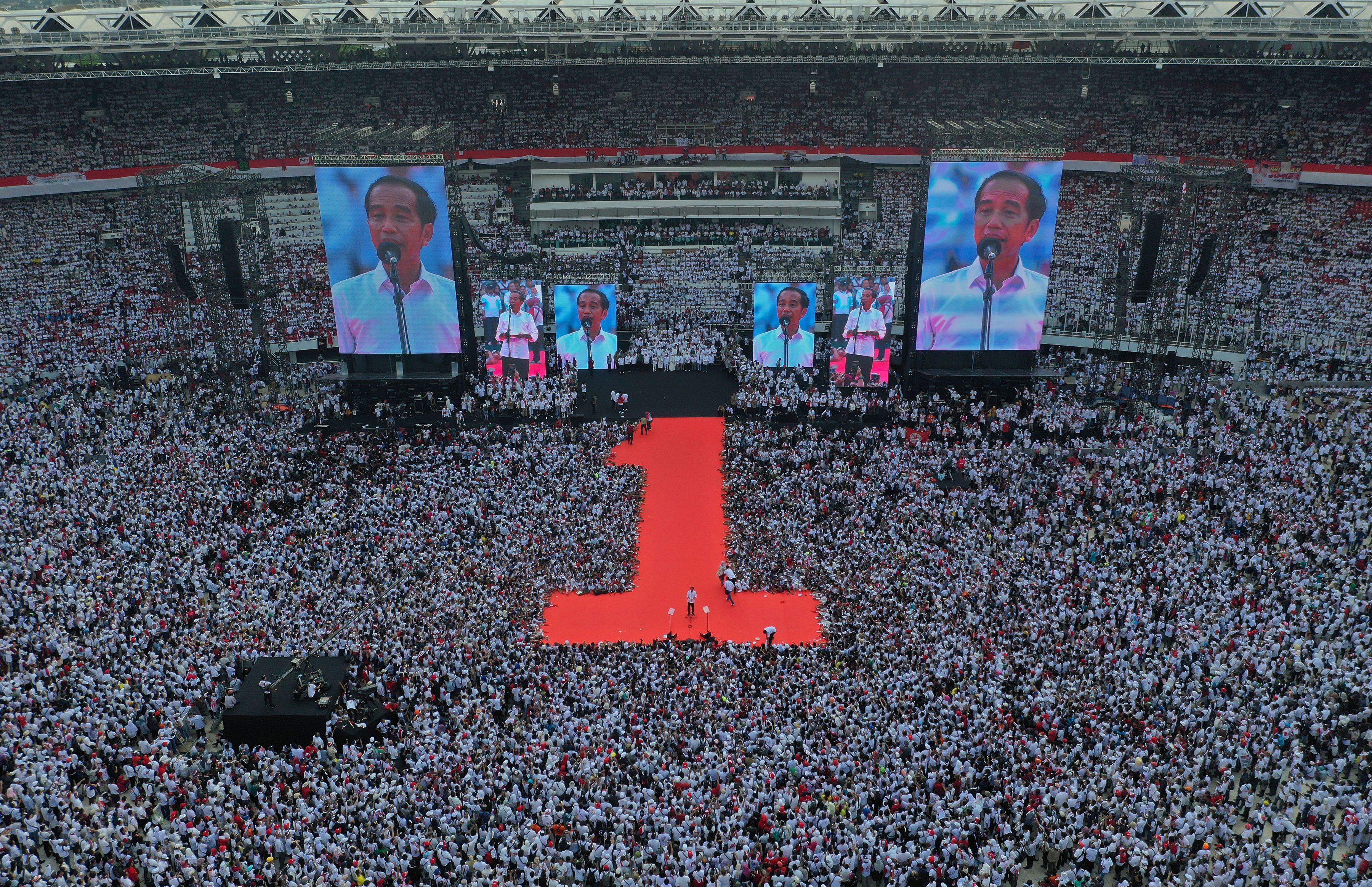
Earlier this month, the capital of Indonesia opened its first-ever underground metro line. For a traffic-choked megalopolis that had been waiting for the line since the mid 1980s, it was a godsend. For President Joko Widodo, who heads into national elections tomorrow, it was perfect timing.

Mr. Widodo, a former furniture exporter who served as governor of Jakarta and is a major metalhead, was elected five years ago as a refreshing political outsider with a down-to-earth style and a compelling anti-corruption message.


Since then he has stayed popular – way more popular than most other democratically elected leaders -- by building lots of new roads and rail lines (like that Jakarta metro), cutting red tape, and expanding access to healthcare. These are basic things that resonate with voters, particularly the poorer and rural Indonesians who are among his most loyal supporters.

But he's also made some curious compromises. Ahead of this year's 2014 election rematch against Prabowo Subianto – a tough talking military man wistful for Indonesia's authoritarian past – Mr. Widodo has cozied up to other generals linked to the 30-year long Suharto dictatorship, which ended in 1998. He has also used new anti-defamation laws to cow political opponents, raising concerns among human rights watchdogs.

Lastly, in a bid to secure the vote of Indonesia's sizable population of conservative Muslims, the ostensibly secular-minded Widodo chose to run alongside an influential ultra-conservative cleric who, back in in 2017, helped to land a Christian political ally of Widodo's in jail on dubious blasphemy charges.

Upshot: Widodo's winning personality and effective policies have put him in a strong position to win tomorrow, but so too have his political compromises. If he wins, the influence of the clerics and generals will be a big story to watch in Widodo's second term.

Want more? Check out our primer on Indonesia's big election

.

More For You

People vote in the legislative elections in Algiers, Algeria, on July 2, 2026.

People vote in the legislative elections in Algiers, Algeria, on July 2, 2026. The electorate, including the diaspora, consists of 24,727,041 registered voters. These elections will elect the 407 members of the tenth legislature of the People's National Assembly (APN), with a mandate of five years.

Billel Bensalem/APP/NurPhoto
Algerians are headed to the polls today to elect their next members of parliament. Nearly 25 million people are eligible to vote, selecting from over 1,200 candidates for 407 seats in the lower house. It’s the country’s second parliamentary election since the pro-democracy Hirak movement swept the country in 2019 – the peaceful uprising that [...]
​Smoke rises from an oil refinery following a Ukrainian drone attack, in Moscow, Russia, on June 18, 2026.

Smoke rises from an oil refinery following a Ukrainian drone attack in the course of Russia-Ukraine conflict, in Moscow, Russia, on June 18, 2026.

SOCIAL MEDIA/via REUTERS
With refiners ablaze, Russia is now importing fuel from IndiaYes, you read that correctly: Russia, one of the world’s largest oil exporters and a huge supplier of crude to India, is now buying fuel from its Soviet-era ally. The reason? Ukraine’s widening barrage of drone and missile strikes on Russian petrochemicals facilities has knocked out [...]
Over a million migrants seek legal status in Spain
Farida Dowidar
Spain has taken a very different tack from other European countries toward migrants, with Sánchez welcoming them into the country and pledging to grant legal status to half a million undocumented migrants under a new program. However, the PM underestimated how many people would apply: his government had expected 750,000 applications. With [...]
Trump’s most disruptive days on the world stage are behind him
I’ve said it before: since Donald Trump took office for the second time a year and a half ago, the United States has been the largest single driver of global political risk. Not Moscow, not Tehran, not Beijing – Washington. When the leader of the most powerful country in the world – the one that built and upheld the global order for eighty years – [...]