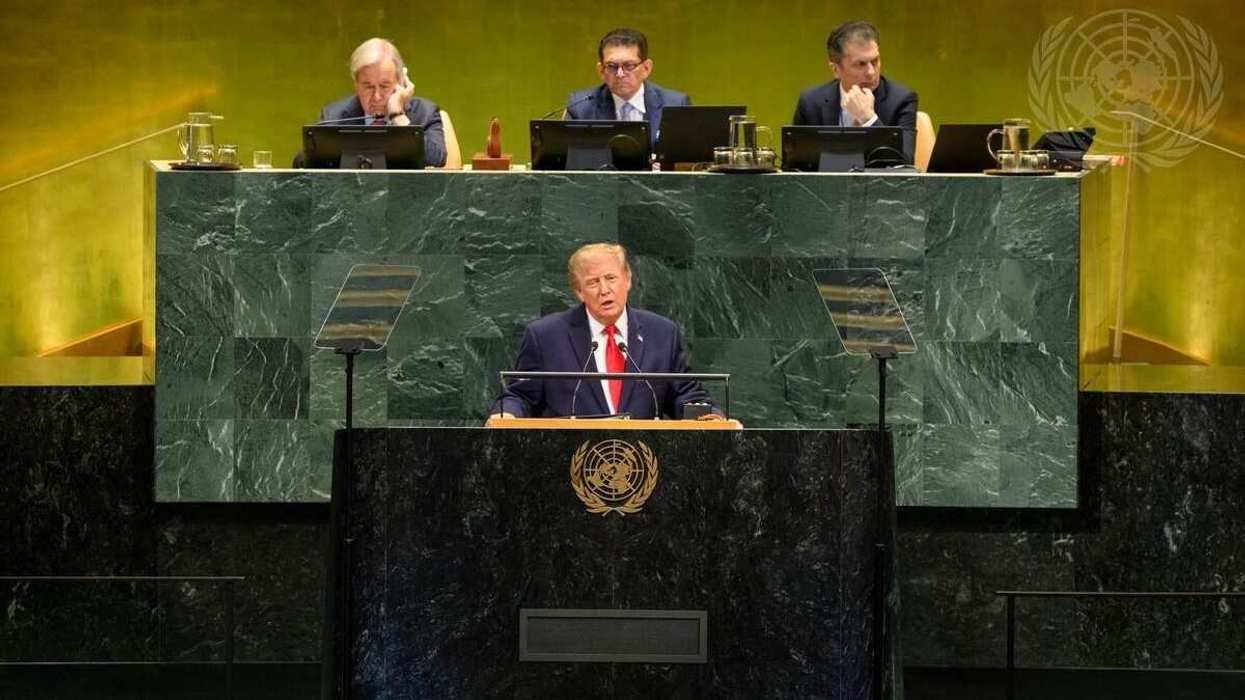
Donald Trump has broken more norms than I have space to detail in 700 words. But suffice it to say that he is a politician who thrives on challenging, and often overcoming, assumptions about how politics work in a democracy.
So how do politics work in democracies these days? It’s a question that we had a lot of fodder to answer this year, being that more people voted in elections in 2024 than ever before. By some measures, some two billion eligible voters weighed their options across more than 70 countries.
One big thing we learned is that where voters have a real choice, they want to “throw the bums out” almost immediately. In election after election, incumbent leaders or parties got thrashed. The licking was even worse for many “establishment” parties.
In the UK, Tory PM Rishi Sunak surrendered power to the Labour Party for the first time in 14 years. In France, only a strange bedfellows tie-up with the resurgent hard left kept Emmanuel Macron’s centrists from losing to the far-right party of Marine Le Pen. And in the EU Parliament, rightwing anti-establishment groups made big gains too.
Meanwhile, South Korea’s midterm elections delivered a rebuke to conservative President Yoon Suk Yeol that was so resounding that this week he tried to pull off a coup just to marginalize the opposition. (Spoiler: It didn’t last long or go well.)
In some places, long-ruling incumbents held on but were taken down a peg. In India, home to the “largest election on earth,” popular PM Narendra Modi’s BJP-led alliance, now in power for a decade, won the contest but still fell more than 100 seats shy of its expectations.
And in South Africa, the African National Congress lost its absolute majority for the first time since bringing down Apartheid 30 years ago – capping what one observer has called “an annus horribilis for parties of power in Africa’s democracies.”
With the exception of Mexico, where an immensely popular populist managed to bequeath his magic to a preferred successor, incumbents in democracies had a lousy time.
Why is that? Naturally, each unhappy country is unhappy in its own way. But writ large, voters are simply pissed off and impatient. Prices are rising, and trust in governments is falling.
The catastrophic social and economic shocks of the pandemic are still working their way through societies around the globe. Once-fringe criticisms of free trade, alliances, and immigration are now mainstream.
Trust in institutions of all kinds – government, media, experts – continues to plummet, and anger at “the establishment” is a defining feature of our time.
Nowhere was this more apparent than in what was, globally speaking, the most consequential election of all. Trump, felony convictions and all, handily defeated Vice President Kamala Harris, who was unable to escape the sense that the Biden administration had presided over “bad times.”
But now Trump faces a familiar challenge: Elected by people who are unhappy about the way things are going, he will soon be the person responsible for the way things are going.
That’s even more true since his Republican Party will (narrowly) control both chambers of Congress, and the Supreme Court features the conservative-leaning bench that he helped to shape during his first term.
Trump will, of course, have immense leeway to pursue the radical agenda that people voted for: imposing hefty tariffs to bend trading partners to US terms, deporting potentially millions of undocumented migrants from towns and cities across America, taking a chainsaw to the federal bureaucracy.
But these are plans that, even in the best scenarios, will inflict significant short-term disruptions on America’s economy and society. Take tariffs, for example. Even if you accept the argument – and you don’t have to! – that in the longer term they will help to secure better trade deals and resuscitate manufacturing jobs in the US, they are virtually certain to nudge up inflation, one of the key grievances that caused people to break so strongly Trumpward in November.
If prices go up, will it be Trump’s fault? Or will he be able to pin it on the usual suspects: The Deep State, The Media, The Radical Left?
It’s a delicate balancing act for a leader known for many things other than delicacy. But if the buck stops at all now, it’ll stop with Trump. Will he face a comeuppance in the 2026 midterms? Will whoever he chooses to carry the mantle of MAGA into the 2028 race be able to buck the trend of anti-incumbent outrage?
Or might the new rules of democracy – where no one keeps power for long – help the Democrats to find a way back from their richly deserved wilderness sooner than they think?