While Iran fights in a new war against Israel and the United States, its neighbors to the east have been drawn into a conflict of their own. Growing violence between Pakistan and Afghanistan has escalated into “open war,” according to Pakistan's Defence Minister Khawaja Muhammad Asif. The United Nations says nearly 66,000 people have been displaced after a week of hostilities along the countries’ shared border.
Despite calls for negotiations from Turkey, which, along with Qatar, had mediated a ceasefire between the parties in October 2025, neither side appears willing to come to the table. Observers say the fighting is the fiercest in years between Pakistan, which has one of the largest militaries in Asia, and Afghanistan, where the Taliban has extensive experience in guerrilla warfare.
How tensions boiled over
Earlier this month, Pakistani forces launched airstrikes into eastern Afghanistan targeting camps belonging to Tehrik-e-Taliban Pakistan (TTP) fighters, near the border, killing 13 civilians according to the UN. Pakistan said the strikes were in retaliation for a series of TTP terror attacks in Pakistan over the last few weeks, including a suicide bombing near the Afghan border on February 17 that killed 10 Pakistani security personnel.
Soon afterward, Afghanistan's defense ministry said Taliban forces captured a Pakistani military post in the southern Kandahar region. Pakistan reported fighting at more than two dozen locations, including a weapons storage facility in Jalalabad and a military base in Nangarhar province, just across the Afghan border.
Many of these claims are difficult for news outlets to verify, but the Afghanistan Defense Ministry claims that 110 civilians, including 65 women and children, had been killed and 123 wounded. It puts its own troop losses at 150, while Pakistan says more than 430 Afghan soldiers have been killed.
At the center of the confrontation is Pakistan’s repeated accusation that Kabul harbors the TTP, whose members have killed hundreds of Pakistani security forces in a yearslong insurgency. Kabul denies these charges and claims that Pakistan's “unprovoked” actions constitute a violation of Afghan sovereignty. However, in 2024, Taliban Information Minister Khairullah Khairkhwa described TTP fighters as “guests” whom the Afghan nation has a commitment to safeguard. Reports have shown that the Taliban provides the TPP with refuge at the very least.
What is the TTP?
Founded by the late Pakistani militant Baitullah Mehsud in 2007, the TTP sought to unify a number of hardline Sunni Islamist groups. The group is often referred to as the Pakistani Taliban since it was inspired by and aligns itself with the Afghan Taliban. Today, it’s estimated at around 30,000 members. According to the UN Security Council, the TTP’s objective is to remove the Pakistani government and “establish an emirate based on its interpretation of Islamic law.”
The group targets Pakistani military installations and military-run businesses, with suicide bombings killing hundreds of members of the Pakistan defense forces, law enforcement personnel, and civilians. In 2018, a TPP leader claimed the group was responsible for the assassination of former Pakistani Prime Minister Benazir Bhutto in 2007. The group has also intensified attacks in Pakistan since the withdrawal of US troops from Afghanistan in 2021, and the Taliban was able to return to power.
From allies to adversaries
The two countries haven’t always been at odds. After the Soviet Union invaded Afghanistan in 1979, Islamabad funneled covert American aid to the Afghan mujahideen, Islamist guerrilla fighters who resisted Soviet occupation. Following the Soviet withdrawal in 1989, Afghanistan descended into civil war between rival mujahideen groups. Out of that turmoil, the Taliban emerged, pledging stability to a country exhausted by conflict. Pakistan initially supported the Taliban as a bulwark against long-standing rival India, which was also seeking influence in Afghanistan.
In 1996, Pakistan, together with Saudi Arabia and the United Arab Emirates, recognized the Taliban regime and provided it with military support and resources. But that regime collapsed in late 2001, after the US and its allies occupied Afghanistan when it refused to hand over the leader of Al-Qaeda and mastermind of the 9/11 terror attacks. The intervention led to the establishment of a US-backed government in Afghanistan.
Some Afghan Taliban fighters fled and sought refuge in Pakistan with local jihadists. They regrouped in the so-called Federally Administered Tribal Areas (FATA), a semi-autonomous region in the northwest. From there, the Taliban rebuilt their command structure.
Under US pressure, the Pakistani government began cracking down on militant sanctuaries inside the country. Pakistan’s violent campaign ultimately spurred militants in the territory to unite under a new banner: the TTP, formed six years after the US invasion of Afghanistan and aligned with both the Afghan Taliban and Al-Qaeda.
Tensions between Kabul and Islamabad also take root over the Durand Line, a 2,600-kilometer border that was drawn during British colonial rule. The border split the lands of the Pashtun people, an ethnic group with a large presence in both countries, prompting calls for “Pashtunistan,” an independent state encompassing Pashtun areas on both sides of the border. It has been a major flashpoint involving forces from both sides of the border, including the TTP. In November 2022, the TTP unilaterally ended a ceasefire with Islamabad after negotiations on the border dispute collapsed.
Could the US get involved?
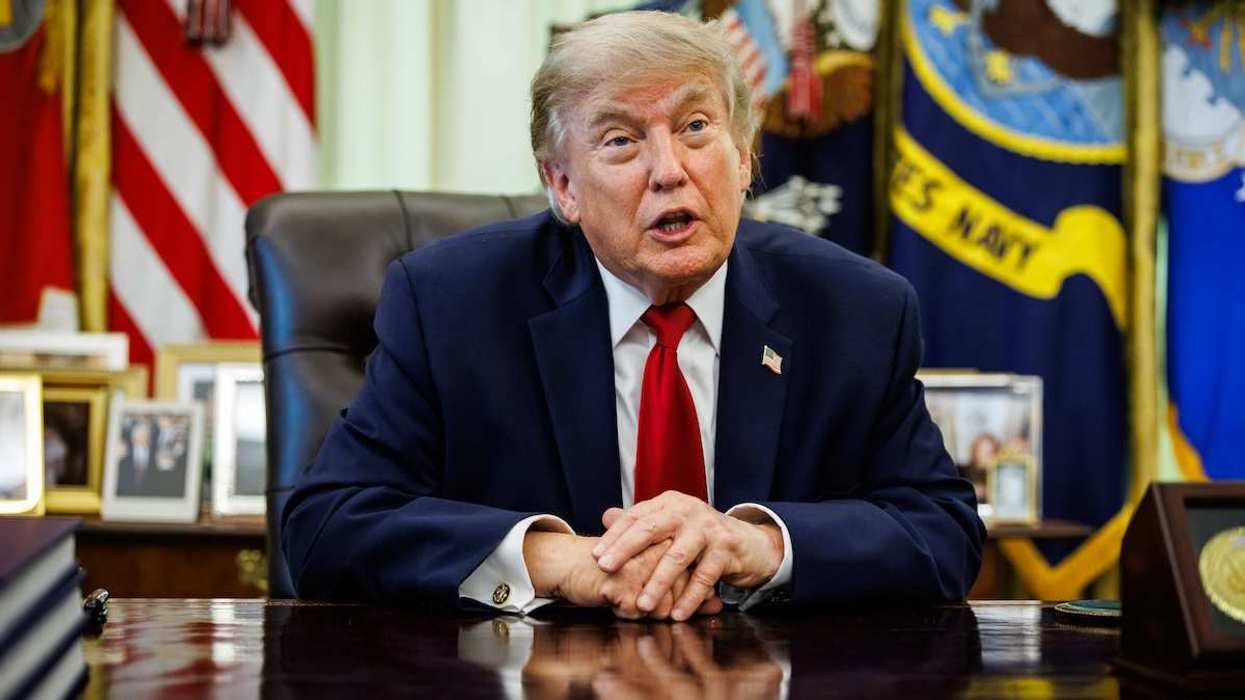
When asked last Friday whether he would intervene to stop clashes between Afghanistan and Pakistan, US President Donald Trump said, “Well, I would. I get along with Pakistan, as you know, very well.” Trump has claimed to have diffused tensions between India and Pakistan that surfaced in May 2025 by threatening to cut trade ties. Washington also considers Islamabad a key ally and designates the Afghan Taliban as a terrorist group.
But the day after Trump made his comments, the US began its war against Iran, which is now consuming political oxygen across the globe. International pressure from Washington or Turkey may also not be enough to de-escalate the situation. Kabul hasn't shown willingness to crack down on the TTP, and the TTP doesn’t appear to be handicapped by Pakistani attacks against them. Those two factors indicate that the conditions that fueled the “open war” between the former allies are unlikely to disappear anytime soon.